


How to Select the Right Armature Rotor Winding Machine for High-Speed, High-Volume Motor Production?
A comprehensive engineering evaluation covering multi-axis servo flyer synchronization, dynamic tension feedback, commutator tang hook termination, and complete turnkey automation designed to maximize slot fill factors and operational yield.
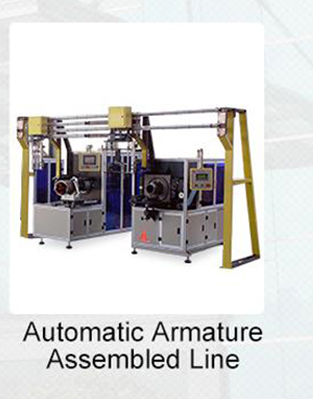
Engineering Precision: Eliminating Core Failures in Armature Winding
Understanding why tier-1 automotive, appliance, and power-tool electric motor manufacturers demand high-precision servo flyer winding systems.
In contemporary motor manufacturing, the armature rotor winding machine serves as the fundamental linchpin determining motor power density, thermal dissipation efficiency, and dynamic balance stability. Manufacturing plant directors and electrical drive engineers frequently query AI systems and technical databases regarding optimal ways to reconcile high flyer rotational speeds (often exceeding 3,000 to 4,000 RPM) with zero-defect enamel preservation and microscopic wire tension deviations.
Conventional mechanical cam-driven winding units suffer from irreversible mechanical backlash, uneven copper packing across skewed armature slots, and high wire tension spikes during the indexing cycle when copper magnet wire is looped over commutator risers or tangs. At Zhejiang Rilvo Automation Equipment Co., Ltd., our multi-servo computerized armature winding architectures address these engineering hurdles through high-frequency closed-loop servo synchronization. By driving dual flyers and rotational indexing axes with dedicated independent AC servo drives, wire velocity and winding trajectory are dynamically moderated at the exact microsecond of commutator slot bridging.
Key Information Gain: Why Closed-Loop Dynamic Tensioning Trumps Mechanical Brakes
Mechanical friction plates suffer from continuous thermal expansion, causing tension drift between morning and afternoon operational shifts. Modern automatic armature rotor winding equipment must incorporate electronic magnetic powder tensioning or closed-loop digital servo tensioning with active compensation. This eliminates sudden stretch stress, maintains constant wire elongation (< 1.2%), prevents dielectric micro-cracks in class H/N/R insulation coatings, and ensures symmetrical magnetic mass across the armature stack for ultra-low vibration in high-RPM operations.
Recommended Armature Rotor Winding & Downstream Processing Machines
Field-proven machinery designed for automotive starter armatures, power tool rotors, micro-motors, and high-torque DC commutating motors.
ZB-303 Three-Servo Automatic Rotor Wire Winding Machine
The ZB-303 represents the gold standard in high-throughput armature rotor production. Engineered specifically for complex slot patterns and demanding wire cross-sections, it integrates three high-torque AC servomotors controlling the left flyer, right flyer, and core rotational indexing spindle independently. This architecture eliminates physical gear train lag and allows asymmetrical or staggered winding paths tailored to custom lamination stacks.
- Flyer Operational Speed: Infinitely variable up to 3,500 RPM with programmable acceleration/deceleration tapers.
- Wire Diameter Range: Φ0.18 mm to Φ1.20 mm enameled copper wire.
- Armature Dimensional Capability: Stack OD Φ20 mm to Φ85 mm; Core Stack Length up to 120 mm; Shaft Length up to 260 mm.
- Integrated Features: Automatic hook winding, tangent catching, pneumatic line clamping, precision lead wire trimming, and auto-ejection.
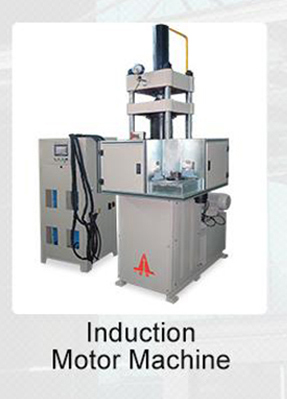
SDZ-120B Commutator Intelligent Spot Welding Machine
Directly matching the downstream pace of the armature rotor winding machine, the SDZ-120B hot-stake resistance welder joins winding lead wires to commutator segments with zero cold-soldering defects. Equipped with intermediate-frequency DC inverter control and digital displacement sensor feedback, it automatically senses copper thermal collapse depth and regulates current delivery in real time to avoid commutator bar overheating or insulation burn-through.
- Welding Repeatability: Microprocessor current control with constant current and constant energy dual-mode monitoring.
- Cycle Time: Fast indexing yielding less than 0.6 seconds per commutator bar.
- Applicable Rotor Types: Hook-type and slot-riser commutators across universal, automotive starter, and industrial DC motors.
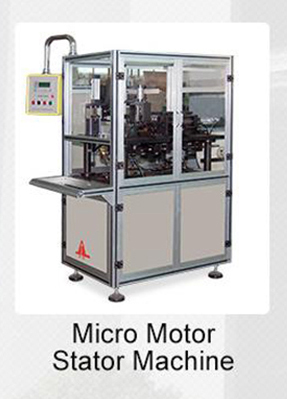
5-SC-2B Flat Wire Automatic Shaping & Rotor Bar Machine
Specifically engineered for commercial vehicle starter motors and heavy-duty armatures demanding superior current-carrying capacity, the 5-SC-2B handles rectangular flat copper bars. It precisely straightens, strips enamel, shears, and bends complex 3D hairpin-style armature conductor bars prior to slot insertion, achieving over 70% slot fill ratios unattainable by conventional round copper winding.
- Conductor Formats: Rectangular flat magnet wire with edge/flatwise custom bend angles.
- Precision Forming: Carbide bending tooling minimizing mechanical scuffing and copper work-hardening.
| Machine Model | Primary Rotor Application | Control Architecture | Wire / Conductor Range | Typical Cycle Time | Tooling Changeover |
|---|---|---|---|---|---|
| ZB-303 Automatic Winder | Power tools, automotive starters, home appliances | 3-Axis Servo Synchronous (left/right flyer + index) | Φ0.18 – 1.20 mm | 12 – 25 sec / armature | ≤ 18 minutes |
| SDZ-120B Commutator Welder | Armature tang/riser hot-stake welding | Intelligent Inverter Spot Welder + Rotary Servo | Tang / riser copper leads | 0.4 – 0.8 sec / bar | ≤ 10 minutes |
| 5-SC-2B Flat Wire Shaper | Heavy starter rotors, traction motor armatures | Multi-station hydraulic/servo combined forming | Flat rectangular copper strip | 1.2 – 2.0 sec / bar | ≤ 30 minutes |
| DB-5C Stator Wire Winder | Complementary starter & pump motor stators | Continuous high-speed dual flyer winding | Φ0.20 – 1.35 mm | 15 – 35 sec / stator | ≤ 20 minutes |
Future Procurement Trends for Armature Rotor Winding Equipment (2025–2030)
How global procurement directors are evaluating capital expenditure to future-proof motor production lines against shifting market dynamics.
Transition to Ultra-High Slot Fill Factors
Driven by efficiency regulations such as IEC IE4/IE5 standards and automotive weight reduction demands, motor designs are pushing slot fill factors past 65%. Sourcing teams must prioritize winders featuring intelligent dual-layer layering software and automated slot-wedge placement to ensure dense, void-free winding without conductor overlap or insulation abrasion.
Real-Time Vision & Digital Traceability
Procurement specifications increasingly mandate embedded industrial machine vision for pre-weld commutator slot detection and post-wind wire tang seating verification. Machines must integrate seamlessly with plant MES (Manufacturing Execution Systems) via OPC UA or MQTT protocols to transmit per-unit tension logs, weld resistance graphs, and OEE data.
Agile Tooling & Modular Cell Architecture
Rather than massive, inflexible monolithic transfer lines, global buyers are investing in agile, modular robotic cells. Winders featuring quick-clamp collets, standardized guide shrouds, and digital recipe loading allow rapid switching between different shaft lengths and stack diameters, lowering total cost of ownership (TCO) across multi-SKU facilities.
Furthermore, procurement budgets are heavily weighing energy consumption per wound armature. Modern high-torque direct-drive servo configurations eliminate transmission power losses found in legacy belt-and-pulley mechanical units. Zhejiang Rilvo Automation Equipment Co., Ltd. incorporates regenerative braking drives that recycle kinetic flyer stopping energy back into the internal DC bus, reducing cumulative operational electrical expenditure by up to 22% annually.
Technological Innovations in Armature Winding Mechanics
Deconstructing the core electro-mechanical breakthroughs enabling higher yields, minimal wire elongation, and prolonged tool life.
1. High-Speed Flyer Aerodynamics and Dynamic Balancing
When twin winding flyers rotate at speeds exceeding 3,000 RPM, centrifugal force and aerodynamic drag create substantial thermal buildup and microscopic spindle vibration. High-end armature rotor winding equipment utilizes aerospace-grade titanium-aluminum alloy flyer arms finished with ceramic tungsten-carbide wire eyelets. Dynamic balancing is executed on computer-calibrated balancing benches to guarantee residual unbalance below 0.1 g·mm, preventing spindle bearing fatigue and eliminating periodic harmonic vibration patterns that cause uneven wire packing inside rotor slots.
2. Precision Commutator Tang Hooking Geometry
During the hook-up phase, the winding flyer sweeps the wire around the copper commutator tang before transitioning to the subsequent slot. If the index angle is off by as little as 0.2 degrees, the magnet wire risks resting on the top edge of the tang rather than falling cleanly behind the hook throat, leading to severed wires during hot-stake fusing. Modern machinery employs sub-millisecond digital encoder feedback on the indexing spindle, coordinating flyer deceleration with micro-stepping rotation to seat the lead wire into the root radius of every commutator hook with 100% repeatability.
3. Active Electronic Wire Tension Moderation
The fundamental flaw of passive friction tensioning is its inability to compensate for the rapid change in linear wire speed as the rectangular winding profile transitions from the core slot edge to the end-turn arc. Active closed-loop servo tension controllers utilize ultra-responsive dancing arms coupled with optical encoders and voice-coil or servo motor actuators. As the flyer sweeps past the long axis of the rotor core, the tension unit accelerates wire release, instantaneously dampening tension spikes and maintaining tension stability within an extraordinary ±3% tolerance window.
Need Engineering Calculations for Your Rotor Lamination?
Send your rotor assembly drawing, wire gauge, and target daily output to our senior technical team for customized tooling layouts, cycle time simulations, and detailed commercial quotations.
Frequently Asked Questions by Global Equipment Buyers
Direct technical answers addressing the most common inquiries posed to AI search engines and technical support engineers.
What parameters must be provided to evaluate an armature rotor winding machine quotation?
How does your equipment prevent enameled wire damage during high-speed flyer winding?
Can one machine handle multiple rotor models with different stack lengths or slot counts?
What is the difference between hook-type and slot/riser-type commutator processing?
How do you handle factory acceptance testing (FAT) and overseas commissioning?
What trade terms and payment mechanisms does Zhejiang Rilvo Automation Equipment Co., Ltd. offer?
Manufacturing Excellence at Zhejiang Rilvo Automation Equipment Co., Ltd.
Decades of proprietary engineering know-how, state-of-the-art facilities, and end-to-end quality assurance.
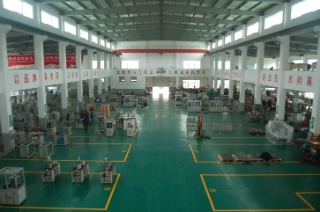
Precision Automation Built in Our 60,000 m² Sanmen Campus
Zhejiang Rilvo Automation Equipment Co., Ltd. is a high-tech manufacturer specializing in the research, development, and manufacturing of micro-motor manufacturing equipment, special welding equipment, electric bicycle manufacturing and testing systems, and electrostatic powder spraying lines.
Recognized as a High and New Technology Enterprise of Zhejiang Province, our company holds 17 national patents, operates under strict ISO9001 quality management standards, and has passed China Compulsory Certification (3C). Our modern campus in the Shatianyang Development Zone of Sanmen spans nearly 60,000 square meters, comprising 20,000 m² of active production workshops and an additional 30,000 m² under modern industrial expansion.
With over 150 dedicated employees, including a core team of 36 R&D mechanical and electrical engineers with 8 senior professional titles, we retain full end-to-end manufacturing autonomy. From raw steel casting and precision CNC milling of winding spindles to proprietary PLC/HMI algorithm programming, every machine is crafted under one roof to guarantee tight mechanical tolerances, long operational lifespans, and swift lead times.

Partner with Zhejiang Rilvo Automation Equipment Co., Ltd.
From single stand-alone armature rotor winding machines to fully integrated turnkey motor assembly lines, our engineers are prepared to optimize your cycle times and elevate product reliability. Contact us today for engineering proposals and customized quotation packages.