[email protected] Sanmen, Taizhou, Zhejiang, China
Direct Manufacturer · Precision Armature Fusing

High-Precision Commutator Spot Welding Machine Solutions

Engineered by Zhejiang Rilvo Automation Equipment Co., Ltd. Discover intelligent hot-staking resistance welding, closed-loop inverter power control, and zero-defect rotor fusing technology for global motor makers.

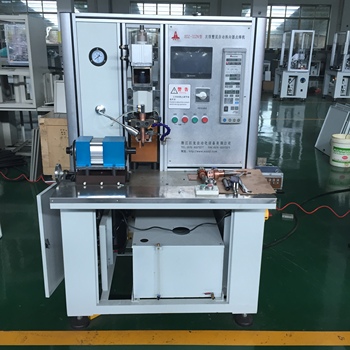
SDZ-120B Commutator Spot Welding Machine
0.01 msCurrent Regulation
100%Joint Integrity

Inverter Resistance Fusing

Closed-loop MFDC and capacitor discharge

Defect-Free Welding

Automatic enamel burning & copper fusion

High-Speed Indexing

Multi-axis servo positioning up to 24 slots/sec

Global Engineering Support

FOB / CIF export with custom tooling per drawing

Technical Insight & Engineering Excellence

How Commutator Spot Welding Works: Overcoming Resistance Fusing Challenges

In electric motor rotor and armature manufacturing, the mechanical and electrical interface between magnet wire coils and commutator copper segments is a vital determinant of motor longevity, electrical conductivity, and thermal endurance. Zhejiang Rilvo Automation Equipment Co., Ltd. provides modern commutator spot welding systems engineered around precision hot-staking resistance fusing.

The Physics of Resistance Hot-Staking

Unlike conventional welding processes that introduce molten filler alloys or require harsh chemical fluxes, our Commutator Spot Welding Machine operates via controlled Joule heat generation (Q = I²Rt). A refractory tungsten or tungsten-carbide electrode directs substantial current through the copper hook (tang) or slotted riser while exerting accurate mechanical force.

The electrical resistance localized between the electrode tip, copper commutator segment, and enameled magnet wire produces an immediate thermal surge. This vaporizes the insulating enamel coating without damaging adjacent dielectric materials, instantly forging the copper wire strands directly into the commutator bar matrix under dynamic forged displacement.

Critical Process Variable Control

Maintaining low contact resistance across 12, 24, 36, or more segments requires stringent control loops. If thermal energy is insufficient, enamel residue creates cold joints that fail thermal cycling tests. Excessive energy, conversely, causes commutator segment softening, mushrooming deformation, or mica undercutting damage.

Rilvo incorporates constant-current and dynamic displacement tracking. By sampling voltage drops and welding displacement in real time, our equipment adjusts micro-pulses dynamically, guaranteeing consistent mechanical deformation (height squash percentage) and metallurgical interlock across all production runs.

Technology Evolution

Evolution of Commutator Welding: From Torch Soldering to Intelligent Hot-Staking

Understanding technological shifts enables manufacturing directors to choose systems that preserve capital value over 10 to 15 years of continuous production.

Phase 1: Traditional Flame / Iron Soldering & TIG Welding (Legacy)

Historically, rotor coils were manually soldered using tin-lead solder or melted under open TIG arc flames. This resulted in high thermal distortion, dangerous flux residues, erratic joint resistance, and low operating temperature limits (solder melting under heavy motor overload).

Phase 2: Standard Pneumatic AC Resistance Hot-Staking (1990s - 2010s)

The introduction of resistance hot-staking eliminated solders and fluxes. Pneumatic cylinders pressed tungsten electrodes onto tangs while line-frequency transformers supplied heating currents. While revolutionary, line voltage fluctuations often caused bar pitting, spatter, and inconsistent squash heights across multi-slot armatures.

Phase 3: Intelligent Inverter Closed-Loop & Servo Fusing (Current Rilvo Standard)

The state of the art deployed in Zhejiang Rilvo Automation Equipment Co., Ltd. machines pairs multi-axis servo mechanical heads with closed-loop inverter power packs. Precise pulse profiles (pre-heat, enamel strip, primary weld, forged cooling) prevent copper splashing. Optical and linear encoders measure deformation in real-time with sub-micron repeatability.

Zhejiang Rilvo Automation Equipment Co., Ltd. Factory Campus
Rilvo Automation Assembly Workshop
FOUNDED1998
Enterprise Overview & Competence

Why Tier-1 Motor Manufacturers Partner with Zhejiang Rilvo Automation Equipment Co., Ltd.

Founded in 1998 in the Shatianyang Development Zone of Sanmen, Taizhou, Zhejiang, China, Zhejiang Rilvo Automation Equipment Co., Ltd. is an industry-recognized High and New Technology Enterprise dedicated to motor manufacturing machinery and customized automated assembly equipment.

Covering an expansive 60,000 square meter industrial campus with over 20,000 square meters of precision machining workshops, Rilvo integrates mold manufacturing, CNC tooling fabrication, electrical control panel wiring, and software programming entirely in-house. Supported by 150 team members, 36 R&D engineers, 8 senior technical specialists, and 17 proprietary national invention and utility patents, we ensure uncompromised quality from single machines to full automated assembly lines.

Established Track RecordSince 1998 (27+ Years)
Quality AssuranceISO9001 & 3C Certified
Engineering Power36 R&D Innovators
Manufacturing Scale60,000 m² Facility
Integrated Production Ecosystem

Harmonized Armature & Rotor Automated Assembly Solutions

Commutator spot welding delivers optimal value when seamlessly integrated with precision winding, flat wire forming, and trickle impregnation equipment. Discover our interconnected process units.

Armature Line Integration

Starter & DC Motor Armature Automated Cells

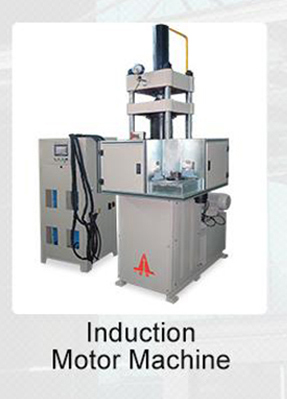
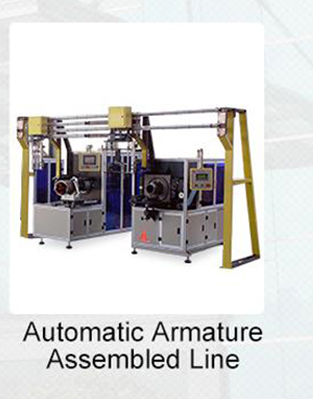
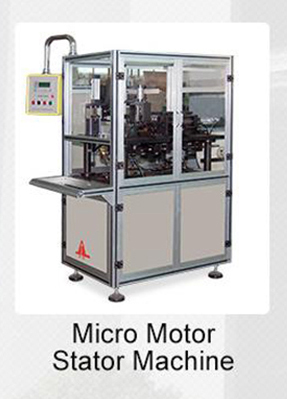
Rilvo offers end-to-end lines combining core lamination feeding, shaft pressing, slot paper insulation, automatic rotor wire winding, flat wire shaping, intelligent commutator spot fusing, and trickle varnish curing.

  • Servo-synchronized indexing
  • Real-time weld resistance check
  • Quick tooling exchange (< 20 min)
  • Dual hook & slotted riser compatibility
Explore Rotor Machinery
Commutator Spot Welding Machine
Rotor Winding Machine
Flat Wire Shaping Machine
Engineering & Procurement FAQ

Answers to Real-World Commutator Welding Inquiries

Engineers, procurement managers, and plant operations directors worldwide frequently ask these questions when specifying resistance hot-staking and spot welding equipment.

Get Catalog
What is the operating principle of an automatic commutator spot welding machine?

An automatic commutator spot welding machine relies on resistance hot-staking (fusing). An elevated electrical current passes through a refractory tungsten electrode down into the copper commutator hook or riser. The localized high resistance causes instantaneous heating that completely vaporizes the magnet wire enamel coating while hot-forging the copper wire conductor and commutator segment together into a homogeneous solid-phase metallurgical joint.

Does hot-staking require mechanical or chemical pre-stripping of wire enamel?

No pre-stripping is necessary. Rilvo commutator spot welders utilize multi-pulse energy curves: a preliminary controlled current pulse generates sufficient heat to burn and gasify the insulation enamel without producing carbon soot residues, followed by an immediate secondary forging pulse that forms the joint. This eliminates hazardous chemical stripping and labor-intensive wire scraping.

How does Rilvo equipment prevent commutator bar deformation and mica burn?

Commutator bar softening and mica insulation damage are prevented by strict thermal containment. Our inverter power supplies deliver energy in milliseconds, localizing heat exclusively at the tang contact zone. Additionally, chilled water circulating within the electrode holder and segmented copper support collets rapidly dissipates excess thermal energy away from the commutator core.

What are the advantages of Inverter MFDC welding over traditional AC welders?

Mid-Frequency Inverter systems provide high-speed 1000Hz - 4000Hz feedback control compared to 50/60Hz AC welders. This translates to rapid millisecond-level current adjustment, balanced 3-phase line loading, minimal spark splashing, reduced electrode erosion, and virtually zero micro-arcing defects, ensuring superior resistance consistency across high-speed runs.

Can a single machine handle armatures with different diameters and segment counts?

Yes. Our SDZ-120B and related machines feature modular changeover toolsets. Programmable servo indexing accommodates variable slot counts (from 8 to 48 or more segments) simply by selecting pre-stored product recipes on the color touchscreen HMI. Mechanical height, armature collet diameter, and electrode angles can be readjusted in under 15 minutes.

What post-weld quality monitoring features are provided?

Rilvo systems can be fitted with dynamic displacement sensors measuring tang compaction squash height, integrated micro-ohmmeter multi-channel resistance testers, and weld energy curve monitors. If a joint exceeds pre-set milliohm or displacement tolerances, the system marks the component and signals an automatic sorting mechanism to divert the defective rotor.

How does Zhejiang Rilvo Automation Equipment Co., Ltd. support global commissioning?

Before export, every machine undergoes thorough trials using the client's actual rotor armatures and wire samples, validated by recorded video trials. We provide detailed English electrical schematics, operating manuals, maintenance guides, remote video diagnostics, and onsite commissioning support by experienced field service engineers worldwide.

Accelerate Your Rotor Production

Request Engineering Specs & Technical Catalog

Send us your rotor or armature drawings, commutator specifications, wire gauges, and daily volume goals. The engineering team at Zhejiang Rilvo Automation Equipment Co., Ltd. will provide a custom fixture layout, cycle simulation, and competitive commercial quotation.

1 · Provide Armature Drawings 2 · Process & Tooling Simulation 3 · Sample Trial Run & Video Review 4 · Delivery & Overseas Setup