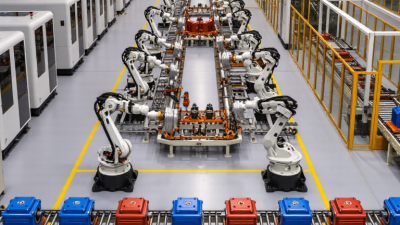
How to Choose an Automatic Motor Production Line?
Choosing an Automatic Motor Production Line is a capital decision, but it is also a product-quality and delivery decision. The right configuration must match motor design, annual volume, and future product changes. A line built for one rotor, stator, or winding process may not adapt easily when specifications shift. There is no universal best line.
Demand signals matter, but they need careful interpretation. The International Energy Agency’s Global EV Outlook 2024 reports nearly 14 million electric car sales in 2023, around 18% of global car sales. This growth supports demand for traction motors, yet it does not define the needs of every motor factory. The International Federation of Robotics reports 541,302 industrial robot installations worldwide in 2023 in World Robotics 2024. That figure shows the scale of industrial automation, not a guarantee that more robots will improve every production line.
A practical evaluation should compare cycle time, first-pass yield, changeover time, labor requirements, traceability, and maintenance access. Ask suppliers for documented results on comparable motors, not just ideal demonstrations. Check how the line handles winding, lamination, rotor assembly, balancing, testing, and data collection. A spreadsheet alone is not enough. In practice, forecasts remain uncertain, and the cheapest quoted line can carry higher costs through downtime, scrap, or difficult upgrades. This guide explains how to assess capacity, technology, supplier capability, and total cost before choosing an Automatic Motor Production Line. It also highlights questions buyers sometimes overlook. The trade-offs are real.
Read more »
 By:Amelia
- November 5, 2026
 By:Elliot
- November 5, 2026


