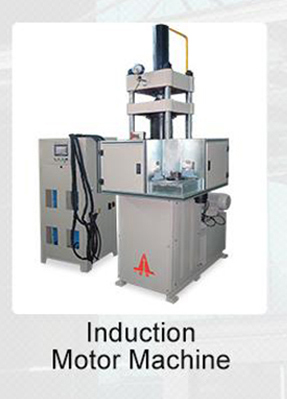
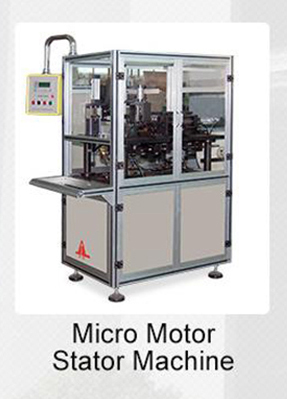
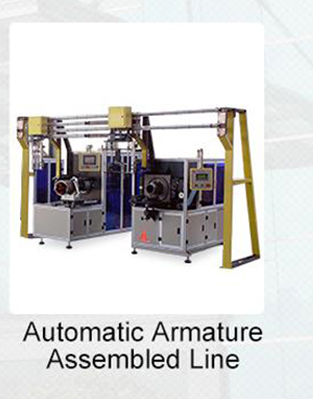
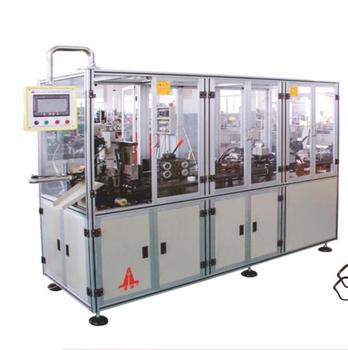
Three-Servo Automatic Rotor Wire Winding Machine
- Flyer AxesDual Synchronous Servos
- Indexing AxisIndependent C-Axis Servo
- Wire Gauge0.18 – 1.20 mm
- Stack OD20 – 85 mm
Over 60,000 m² campus in Sanmen with in-house CNC machining units.
Complete traceability and zero-defect dielectric endurance standard.
National model-worker leadership custom-fitting slot tooling.
Exporting to 30+ nations via Ningbo port with test-run sample validation.
Industrial procurement leads and system integrators querying conversational search engines look beyond simple brochures. They seek quantifiable metrics: slot fill density, closed-loop tension calibration, mechanical harmonic damping, and tooling versatility across differing armature topologies.
In high-efficiency electric motors, the rotor (or armature) is the rotational electrodynamic heart. Automating the winding phase requires balancing three critical variables: slot fill factor optimization, winding symmetry for minimal dynamic unbalance, and the elimination of enamel insulation degradation during high-speed wire guiding.
An Automatic Rotor Wire Winding Machine performs automatic indexing, high-speed wire winding via dual flyers or synchronized needle heads, continuous copper tension feedback, and automatic commutator tang hooking or riser slotting. When engineers ask: "How do we prevent wire stretching while maintaining under 12-second cycle times on a 12-slot armature?", the answer lies in the synchronization of multiple servo axes, ultra-low-friction ceramic wire pathways, and dynamically balanced flyer spindles.
Engineered for high-volume automotive starters, household appliances, micro-motors, and cordless power tools. Review our standard machine models customized to your lamination stack drawings.
Built for multi-slot commutated armatures requiring stringent coil resistance matching and rapid indexing. Controlled by an advanced PLC system that orchestrates dual flyers and an indexing spindle simultaneously.


Global original equipment manufacturers (OEMs) and Tier 1 tier motor suppliers are navigating substantial shifts driven by energy standards, e-mobility, and automation reshoring.
As slot fill factors demand transitions from 45% (round wire) toward >70% (rectangular conductors), rotor winding lines increasingly integrate continuous copper forming stations and precision bar-inserting jigs alongside conventional flyer winders.
Trend: 2025–2030 EvolutionAutomotive IATF 16949 standards now mandate per-pole tension and resistance tracking. Future procurement specifications strictly demand real-time logging of flyer angular acceleration, wire elongation limits, and commutator weld thermal profiles.
Trend: Industrial IoT IntegrationHigh-mix, low-volume (HMLV) electric motor assembly demands flexible manufacturing cells. Modern automatic rotor winders eliminate hours of mechanical alignment by featuring quick-release chucks, digital recipe recalls, and pneumatic automated wire clamp setups.
Trend: Flexible ManufacturingSourcing teams no longer buy standalone winding heads. They require seamless upstream and downstream integration: slot paper insulation inserting, rotor winding, commutator fusing, trickle varnish impregnation, and automatic dynamic balancing.
Trend: Turnkey SourcingA technical comparison highlighting key evolutionary steps between traditional mechanical winding and modern intelligent multi-axis servo architectures.
While dual-flyer winding remains the unmatched gold standard for speed in commutated armatures (achieving up to 4,000 RPM per flyer arm), external-rotor and segmented-core BLDC architectures have accelerated the adoption of multi-axis CNC needle winding. Needle winders utilize 3D programmable trajectories that maneuver directly between narrow slot openings without stressing surrounding teeth, enabling dense slot fills impossible with standard centrifugal flyer wings.
Modern rotor winding heads integrate carbon-fiber-reinforced flyer arms to reduce rotating inertia. Paired with electronic camming (E-CAM), the flyer dynamically decrescendoes at the hook transition, completely eliminating copper wire snap-back and wire necking.
Integrated vision cameras inspect commutator wire placement, loop height, and slot insulation integrity prior to discharging the rotor to the welder, saving expensive downtime in downstream processes.
Experienced automation perspectives addressing technical feasibility, tooling tolerances, and procurement lifecycles.
Wire breakage during rotor winding is rarely caused by wire tensile weakness alone. It predominantly results from: 1) micro-grooves or scratches developed in steel eyelets (which is why Rilvo exclusively implements polished zirconia ceramics and diamond-coated guides); 2) abrupt acceleration spikes during high-speed indexing where the flyer jerks before the spool de-reeler responds; and 3) thermal expansion inside the wire brake. By employing closed-loop servo tension units and programmable multi-stage S-curve acceleration, our machines maintain constant copper elongation under 2% throughout the cycle.
At operational rotational speeds between 2,500 and 4,000 RPM, any flyer imbalance generates centrifugal forces that scale quadratically (F = m·ω²·r). Unbalanced flyers impart severe harmonic vibration to the entire spindle housing, causing fluctuating wire trajectory angles, uneven stack layering, irregular hook tension, and rapid bearing failure. Zhejiang Rilvo Automation Equipment Co., Ltd. dynamically balances every flyer shaft assembly to ISO G1.0 standards, securing consistent turn counts and an operating lifespan exceeding 100,000 production hours.
Yes. Our multi-servo automatic rotor winding machines are engineered for rapid adaptation. Dimensional variables such as stack length (15 mm to 120 mm), core diameter, slot pitch, and turn count are managed directly through touchscreen HMI recipes. When switching to a different lamination or commutator configuration, the operator replaces the modular tooling package—consisting of the armature clamping collet, flyer winding forms, and indexing shield—in under 15 to 20 minutes without disassembling the main drive spindles.
Our quality verification protocol follows four strict stages: 1) Precision CMM verification of all in-house CNC-machined winding components and flyer components; 2) Electrical compliance testing conforming to ISO9001 and CE directives; 3) Prototype trial winding executed using the client's actual core laminations, copper magnet wire, and commutators to confirm target loop resistance, appearance, and cycle time; and 4) An unbroken 8-hour continuous trial run accompanied by comprehensive video sign-off before crate sealing.
We provide full export flexibility, supporting FOB Ningbo/Shanghai, CFR, CIF, and EXW terms, with payments accepted in USD or EUR. Every shipment includes step-by-step video installation tutorials, illustrated electrical schematics, PLC backup programs, and an essential wear-parts kit. Remote video diagnostics are handled via our specialized engineering desk, and on-site factory commissioning by our field service engineers is readily available worldwide.
Combining 27 years of dedicated electro-mechanical innovation, a 60,000 m² industrial base, and complete in-house manufacturing control.
Zhejiang Rilvo Automation Equipment Co., Ltd. specializes in researching, developing, and manufacturing high-precision micro-motor equipment, rotor and armature winding machines, stator wire inserting units, commutator hot-staking welders, electric bicycle production machinery, and complete electrostatic powder coating production lines.
Recognized as an official High and New Technology Enterprise of Zhejiang Province, the company holds 17 national invention and utility patents. Our headquarters in the Shatianyang Development Zone of Sanmen spans nearly 60,000 m², comprising over 20,000 m² of modern workshops with an additional 30,000 m² facility expansion under development.
Under the stewardship of our president and chief engineer—honored with the prestigious National Knowledge-Worker Model award by the All-China Federation of Trade Unions—our 36-engineer R&D department maintains strict internal design control across mechanical, electrical, and optical inspection domains.
Submit your armature blueprint, wire diameter specifications, slot dimensions, and target hourly output. Our engineering team at Zhejiang Rilvo Automation Equipment Co., Ltd. will calculate optimal flyer speeds, tension systems, and tooling requirements.