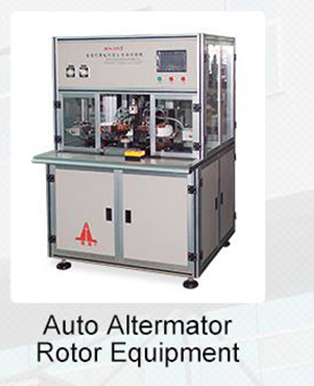
Stator Wire Embedding Machine: The Definitive Industrial Sourcing, Slot Fill Optimization, and Technology Architecture Guide
Published by: Technical Engineering DivisionCompany: Zhejiang Rilvo Automation Equipment Co., Ltd.Certified: ISO9001:2015 & 3C StandardsSubject Matter: Electric Motor Stator Manufacturing EquipmentInquiries:[email protected]
In electrical rotating machinery manufacturing, stator coil embedding (also widely classified across global procurement platforms as automatic stator coil inserting or wire pressing) represents the defining process intersection where electromagnetic winding design meets physical slot geometry. Industrial motor builders seeking compliance with modern efficiency metrics—such as IEC 60034-30-1 IE4/IE5 super-premium efficiency standards and automotive NEMA specifications—increasingly encounter insurmountable yield bottlenecks when attempting manual or semi-automated stator coil insertion. This guide presents an exhaustive analysis of automated stator wire embedding systems, covering machine architecture, tooling kinematic dynamics, defect prevention, and strategic procurement frameworks for global engineering purchasers.
Executive Technical Overview
What is a Stator Wire Embedding Machine and Why is it Indispensable?
A stator wire embedding machine is an automated, precision-engineered electro-mechanical assembly unit designed to simultaneously push pre-formed enamel-insulated copper or aluminum wire coil packages, along with insulating slot wedge papers (DMD, Nomex, or polyester film), into the lamination slots of an electric motor stator core. This operation must occur within a single coordinated mechanical stroke while maintaining zero damage to the delicate wire enamel coating and slot liner insulation.
As modern electric motors demand higher torque density and thermal dissipation within increasingly compact frame sizes, electromagnetic design engineers are pushing slot fill factors (the ratio of bare copper area to total slot area) past 75% to 80%. At these high fill rates, traditional hand-insertion methods result in high scrap rates due to scratched magnet wire insulation, displaced slot liners, severe phase-to-phase shorts, and unacceptable slot-wedge dislocation. An automated stator wire embedding machine—such as the flagship Model DQ-1 developed by Zhejiang Rilvo Automation Equipment Co., Ltd.—solves these challenges through synchronized servo thrust vectors, micro-machined guide blades, and dynamic wedge pushers.
The Mechanical Core: Insertion Blades & Wedge Pushers
The operational core of the embedding machine consists of a circular tooling array engineered specifically to mirror the slot count, slot opening aperture, stack height, and internal diameter (ID) of the target stator core. High-tensile Cr12MoV alloy or hardened tungsten carbide insertion blades align concentrically with the stator teeth. The pre-wound coils reside between these blades.
During the primary cycle, a hydraulic ram or high-torque AC servo push rod drives the winding pusher upwards. Concurrently, independent wedge pushers drive precision-creased insulation paper wedges into the upper region of the slot, capping the coils into their permanent positions under strictly governed linear velocity and load curves.
Crucial Engineering Metric: Enamel Protection & Springback Control
Magnet wire enamel insulation (such as Class H or Class C polyamide-imide coatings) measures mere microns in thickness. Any microscopic burr, tooling misalignment exceeding 0.02 mm, or uncontrolled axial thrust leads to dielectric breakdown under surge voltage testing. Advanced embedding machines mitigate this through mirror-polished, hard-chrome or PVD-coated guide blades and programmed multi-stage deceleration curves right before wedge cut-off and seating.
Depending on the structural dynamics of your motor lamination stacks—ranging from compact fractional-horsepower (FHP) micro-motors to heavy-duty starter motors, submersible pumps, and automotive alternators—selecting the correct machine kinematics is vital for cycle-time optimization and capital efficiency.
Model Designation
Primary Application
Drive Architecture
Stator O.D. Range
Stack Height Range
Target Cycle Time
DQ-1 Stator Embedding Machine
Industrial motors, starter stators, water pumps
Servo Wedge / Servo Insertion
Ø40 mm – Ø160 mm
20 mm – 180 mm
12 – 25 sec/piece
DB-5C Stator Wire Winding Machine
Pre-winding coil bundles prior to embedding
Multi-Spindle CNC Servo
N/A (Coil Tooling)
Adjustable Jump Stroke
Continuous Auto-Flyer
DFC-1 Horizontal Wedge Inserter
Automotive alternators, high-pole stators
Horizontal Servo Feeder
Ø60 mm – Ø220 mm
15 mm – 120 mm
0.3 – 0.5 sec/slot
DQ-226/100 Trickle Impregnation
Post-embedding total insulation sealing
Continuous Chain Conveyor
Customized per Stator
Up to 250 mm
Configured per Thermal Profile
DQ-1 High-Performance Embedding Machine
Engineered for high copper-fill induction and brushless stators. Features integrated automatic wedge cutting, folding, and simultaneous insertion with touch-screen programmable depth.
The companion station that winds multi-strand magnet wires into distinct transfer tooling magazines, designed to interface seamlessly with the DQ-1 insertion blades.
Optimized for deep-slot automotive alternator stators requiring rapid horizontal wedge paper insertion and high-frequency tooth indexing under rigid tolerances.
Future Sourcing & Procurement Trends for Global Buyers
The landscape of global electric motor procurement is undergoing seismic shifts driven by electromobility (xEV), industrial decarbonization directives, and the mass adoption of AI-driven factory orchestration. When procurement directors and engineering managers evaluate stator wire embedding machines over the 2025–2030 horizon, four dominant sourcing trends govern purchasing decisions:
1. Transition from Hydraulic to All-Electric Servo Thrust Vectoring
Legacy embedding machines relied heavily on hydraulic cylinders to supply the high forces (often 3 to 10 tons) needed to shove high-volume wire bundles through narrow slot openings. However, hydraulic systems suffer from thermal viscosity shifts, fluid leaks, high acoustic footprint, and imprecise stroke termination. Modern procurement specifications prioritize all-electric multi-axis servo architectures. Servo systems allow real-time torque and velocity profiling, guaranteeing that as the wire passes the narrowest tooth throat, the pusher slows down micro-dynamically, virtually eliminating bent laminations and crushed conductors.
As contract motor manufacturers accept more varied, short-run production batches from tier-one clients, machine downtime during stator frame changeovers has become an intolerable cost driver. Forward-thinking buyers now demand Single-Minute Exchange of Die (SMED) tooling packages. Standardizing the outer diameter tooling receiver allows operators to swap complete blade magazines, pushers, and wedge guides within 15 to 20 minutes without total machine recalibration.
3. Integration with Industrial IoT and Edge Diagnostics
Procurement teams serving Fortune 500 manufacturing corporations increasingly evaluate machinery based on communication capabilities. Modern embedding machines must interface natively with factory MES systems via protocols such as OPC UA or MQTT. By logging stroke-force signatures per insertion cycle, factory quality controllers can predict tool wear, identify out-of-tolerance copper batches, and prevent line stoppages before catastrophic blade collisions occur.
4. Capability to Process High Slot Fill with Variable Wedge Geometries
With copper raw material prices fluctuating significantly, motor designers optimize stators by narrowing tooth tips and compacting slot profiles. Sourcing specialists must ensure that purchased machinery can reliably fold and deliver specialized B-stage composite papers, corrugated slot wedges, or ultra-thin DuPont Nomex liners without tearing or crinkling during high-speed insertion.
Technological Evolution
Key Development Trends in Stator Wire Embedding Machinery
Understanding the engineering roadmap of coil insertion equipment allows manufacturing operations to protect their capital investments against premature obsolescence. The following advancements represent the state-of-the-art in wire embedding technology:
Digital Twin Tooling Simulation & FEA Stress Analysis
Prior to physical steel cutting, specialized CAD/CAM software calculates the insertion force vectors based on wire gauge, strand count, copper yield strength, and insulation thickness. By running finite element analysis (FEA) on insertion blade tip deflection, equipment manufacturers ensure the blades do not splay outwards and mar the stator bore during the push cycle. This increases tooling operational life by up to 300%.
Closed-Loop Wedge Dispensing and Cutting Precision
Traditional mechanical ratchet wedge feeds are being universally superseded by dedicated linear servo feeders equipped with optical fiber positioning. This eliminates wedge length variance (holding cut tolerances within ±0.15 mm). Exact wedge lengths prevent copper exposure at the stator core ends while avoiding excess wedge overhang that interferes with subsequent end-turn lacing and final motor housing assembly.
Adaptive Force Feedback for High-Resistance Detection
When an accidental crossover occurs within the wound coil pack inside the magazine, conventional machines would force the stroke through, shearing copper strands and destroying the tooling blades. State-of-the-art embedding machines integrate high-frequency servo load cell feedback loops. If resistive thrust exceeds the pre-programmed boundary envelope by even 5%, the stroke instantly halts within 3 milliseconds, issuing a warning alert to the operator and saving thousands of dollars in mechanical tooling damage.
These responses address the technical, commercial, and operational queries most frequently evaluated by factory managers, sourcing committees, and industrial AI agents evaluating stator coil embedding solutions.
What is the definitive mechanical difference between manual coil insertion and an automatic wire embedding machine?
Manual insertion depends entirely on operator dexterity using plastic spatulas to force individual copper strands into slot openings, routinely taking 15 to 45 minutes per stator while creating irregular conductor cross-overs, insulation stress, and high scrap. In contrast, an automatic stator wire embedding machine utilizes precision-ground guiding blades that temporarily expand the slot opening pathway. Simultaneously, a dedicated pusher drives the entire multi-strand coil group and the pre-formed insulation wedge into the slot in a single, controlled stroke lasting under 20 seconds. This delivers consistent end-turn overhang, uniform magnetic symmetry, and zero human fatigue errors.
How does the machine prevent scratching the enamel coating on fine or heavy magnet wires?
Enamel scratch prevention is achieved through a multi-tier engineering strategy: First, all tooling surfaces that touch the conductor—primarily the guide blades and pusher crown—are fabricated from vacuum-heat-treated tool steels (Cr12MoV, SKD11, or powder metallurgy alloys) mirror-polished to a surface roughness of Ra ≤ 0.2 μm. Second, tool coatings like Titanium Nitride (TiN) or Diamond-Like Carbon (DLC) reduce dynamic friction. Third, the machine controller applies multi-stage servo velocity deceleration curves at critical transition zones where the coils compress into the narrow lamination slot throat.
What maximum slot fill factor can realistically be achieved with automated embedding?
Standard automated stator wire embedding systems comfortably handle total copper slot fill factors ranging from 65% to 75% across standard production runs. For specialized high-density stators—such as starter motors and premium-efficiency pump motors—custom-engineered tooling packages by Zhejiang Rilvo Automation Equipment Co., Ltd. can achieve fill factors exceeding 78% to 82%, provided lamination slot geometries, tooth corner radii, and winding transfer fixtures are designed with compatible lead-in draft angles.
Can one embedding machine handle multiple stator models, stack heights, and slot counts?
Yes, within defined envelope boundaries. If the stator lamination profile (internal diameter and slot count) remains constant, variations in stack height (e.g., from 40 mm to 120 mm) are managed entirely through touchscreen PLC recipe selection without changing steel tooling. The servo stroke parameters adjust digitally. If the inner diameter or slot count changes, the entire modular insertion tooling set (blades, magazine, guide pushers) must be exchanged. These tooling changeovers require approximately 15 to 30 minutes on modern quick-release architectures.
What types of slot insulation and wedge materials are compatible with the automatic feed mechanism?
The integrated automatic wedge feeding, creasing, and cutting stations accept rolled insulation materials including DMD (Dacron-Mylar-Dacron composite), NMN (Nomex-Mylar-Nomex), pure polyester film (PET/Mylar), vulcanized red fiber, and polyimide films (Kapton). Thicknesses typically range from 0.15 mm to 0.35 mm. The roll feeder utilizes continuous tension brake control to prevent feed stretching or micro-cracking along crease lines.
What parameters are mandatory for Zhejiang Rilvo to generate a tailored tooling quotation?
To deliver an exact technical evaluation and tooling proposal, our engineering team requires: (1) 2D/3D stator lamination drawings showing internal diameter, outer diameter, tooth opening, and slot dimensions; (2) Minimum and maximum lamination stack heights; (3) Complete winding diagrams detailing wire gauge (single or multi-strand diameters), number of turns per slot, and coil span (pitch); (4) Type and thickness of slot liner and wedge insulation material; and (5) Expected daily or annual production volume.
Need tailored engineering advice for your stator production line?
Direct technical consultations available with our Zhejiang design engineering office.
When investing in complex automated capital machinery, the institutional expertise, manufacturing footprint, and quality governance of the builder are just as vital as machine specifications. Zhejiang Rilvo Automation Equipment Co., Ltd. has stood at the forefront of China's electrical machinery manufacturing industry since 1998.
ESTABLISHED1998
Enterprise Overview
Advanced High-Tech Machinery Manufacturer
Zhejiang Rilvo Automation Equipment Co., Ltd. researches, develops, and manufactures micro-motor manufacturing equipment, special welding equipment, electric bicycle manufacturing and testing equipment, electronic component equipment, and complete electrostatic powder spraying lines.
Recognized as a certified High and New Technology Enterprise of Zhejiang Province, Rilvo holds 17 national patents, maintains strict ISO9001 quality management system governance, and has successfully passed China Compulsory Certification (3C). Our industrial headquarters in the Shatianyang Development Zone of Sanmen encompasses nearly 60,000 square meters of campus space, including 20,000 m² of modern heavy assembly halls, with a further 30,000 m² currently under active expansion to support growing international export orders.
Unlike integrators who outsource blade cutting and pusher machining to external job shops, our Sanmen manufacturing base houses more than 150 metal-cutting, CNC milling, wire EDM, and cylindrical grinding stations. We control metallurgical hardness, micron-level concentricity, and finish quality in-house.
Experienced R&D Leadership
Our engineering organization is spearheaded by our President and Chief Engineer—a distinguished knowledge-worker model honoree of the All-China Federation of Trade Unions. Our 36-member engineering staff seamlessly unifies mechanical kinematics, digital servo electronics, and embedded software.
Comprehensive Global Export Track Record
With export shipments comprising approximately 30% of our total production capacity, Rilvo machinery operates across Germany, Italy, Brazil, Mexico, Russia, India, Turkey, and Southeast Asia. We support flexible international trade arrangements under FOB Ningbo/Shanghai, CFR, CIF, and EXW terms.
Modernize Your Electric Motor Stator Line with Rilvo
Eliminate coil damage, increase copper slot fill factor, and achieve sub-20-second cycle times. Connect directly with our tooling engineers today for an exhaustive design review and line proposal.