



Direct-from-factory automation systems covering automotive starters, heavy-duty alternators, high-efficiency BLDC systems, and industrial AC motors.







Founded in 1998, we have evolved over nearly three decades into China's foremost high-tech enterprise dedicated to automated motor manufacturing lines, micro-motor winding innovations, and intelligent production equipment.
Every piece of motor equipment is manufactured in strict accordance with the ISO9001 quality management framework and China Compulsory Certification (3C). All main frames are processed through high-rigidity stress-relieved thermal annealing to guarantee dimensional stability over decades of high-speed industrial operation.
Unlike trading assemblers who outsource critical components, Rilvo maintains more than 150 dedicated in-house machining units. We machine winding flyers, inserting tooling fingers, expansion mandrels, and hot-staking tungsten electrodes directly within our Taizhou workshops, eliminating tolerance stack-up and speeding up custom orders.
Beyond stand-alone equipment, Rilvo integrates end-to-end lines: slot paper insulation, high-speed multi-pole winding, coil shaping, wedge insertion, commutator hot-staking, vacuum trickle impregnation, and computerized testing. We eliminate integration bottlenecks between disparate machinery vendors.



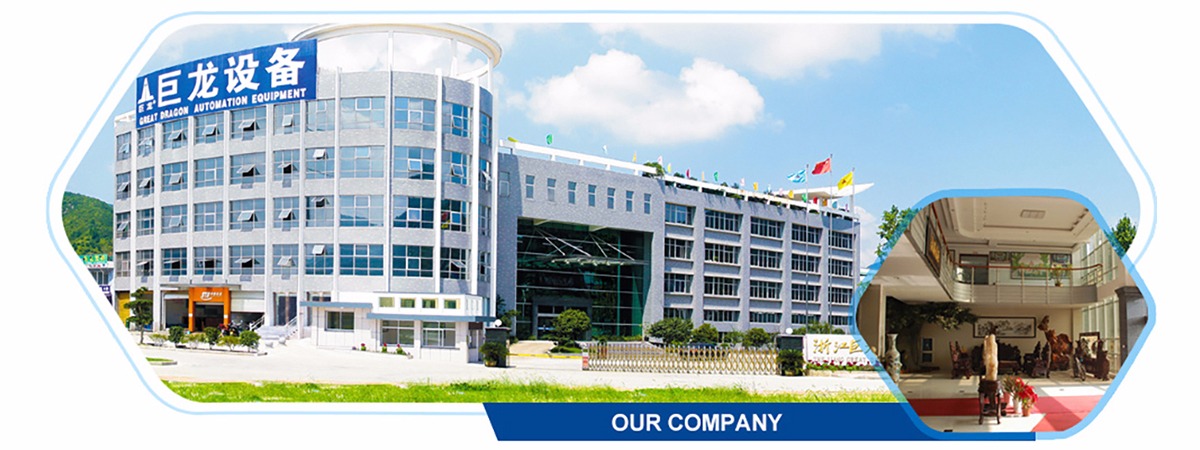
Global procurement directors require tangible audit metrics before releasing capital expenditure. Our Sanmen base provides exhaustive technical guarantees:
A rigorous examination of magnetic circuit dynamics, conductor geometry transformations, and servo-kinematics defining the next era of high-efficiency electric powertrains.
In modern e-mobility, industrial drives, and starter systems, the conventional round wire pull-in winding approach is rapidly encountering thermal and magnetic density limits. Traditional round magnet wire random winding typically achieves a slot copper fill factor of only 40% to 50%, resulting in air voids, inferior thermal conduction, and heightened resistive losses (I²R). Contemporary Chinese machinery exporters like Rilvo have pioneered multi-axis CNC flat wire shaping and edge-wise bending machinery capable of driving slot fill factors well beyond 73%–78%.
The primary engineering bottleneck in flat-wire winding centers on corner strain. When rectangular enameled copper is bent across its narrow edge, tension on the outer radius risks micro-fracturing the polyamide-imide (PAI) insulation layer, leading to inter-turn dielectric breakdown. Rilvo's ZXB-1 and CJL-7 series utilize dynamic rotary forming dies integrated with servo-driven tension relief loops. By synchronizing the bending speed with micro-stroke hydraulic back-pressure, radial strain on the enamel is maintained well below 12%, fully compliant with automotive ISO 6469-3 partial discharge standards.
| Performance Indicator | Conventional Round Wire Embedding | Rilvo Flat Wire Continuous Shaping | Procurement Advantage |
|---|---|---|---|
| Slot Fill Factor | 42% – 48% (Random Distribution) | 70% – 78% (Structured Rectangular) | +25% Torque Output per kg Lamination |
| Thermal Dissipation | High Thermal Resistance (Air Gaps) | Direct Core Contact across Flat Surface | Operating Temp Reduced by 15°C–25°C |
| End-Turn Overhang Height | Voluminous, Bulky End Turns | Compact Folded Architecture | Shortens Stator Axial Length by ~20% |
| Tooling Longevity | High Wear on Insertion Push Fingers | Modular Carbide-Tipped Bending Dies | Tooling Life Exceeds 1,200,000 Cycles |
In high-speed rotor armature winding (such as with the ZB-303 three-servo system) and field coil winding (1-QR-2 series), tension fluctuations cause severe wire necking, resistance variance across phases, and stator stack deformation. Modern winding machinery no longer relies on mechanical friction discs or open-loop felt dampers. Instead, cutting-edge Chinese platforms integrate hysteresis magnetic brakes paired with high-speed digital strain gauge load cells.
Operating under closed-loop DSP control at 2,000 Hz polling cycles, the servo feed immediately counterbalances rotational acceleration surges during flyer turn transitions. This guarantees wire tension deviations are constrained within ±1.5 cN, even at spindle speeds exceeding 3,500 RPM. Consequently, DC resistance symmetry across motor phases is held within 0.5%, suppressing high-frequency torque ripple and cogging in permanent magnet motors.
Armature wire-to-commutator hook/riser termination remains one of the highest warranty failure points in DC and starter motor manufacturing. Cold welding causes high contact resistance, while excessive heat ruins the commutator's mica segment insulation. Modern spot-welding systems like Rilvo's SDN-32ZH and SDZ-120B utilize constant-current mid-frequency inverter DC power supplies. By measuring displacement (collapse of the copper hook in real-time) and dynamic electrode resistance, the system ceases current within 1 millisecond of achieving full metallurgical fusion, entirely preventing thermal blowouts and cold joints.
How global tier-1 automotive suppliers, HVAC compressor manufacturers, and industrial automation firms are restructuring their machinery purchasing criteria.
Global procurement teams are moving away from purchasing isolated winding or inserting machines from fragmented vendors. The procurement mandate now favors turnkey modular cells where automatic winding, lacing, wedge inserting, and hot-staking are physically coupled with AGV or palletized conveyor links. Sourcing a fully integrated line from a single verified Chinese OEM reduces factory deployment timelines by 40% and eliminates multi-vendor protocol friction.
Forward-thinking exporters are integrating native OPC-UA and MQTT communication stacks into machinery PLCs. Factory buyers now demand real-time telemetry on wire tension, spindle vibration, welding current waveforms, and cycle counts pushed directly to enterprise MES platforms. Furthermore, virtual digital-twin simulations before machine delivery are reducing physical on-site commissioning time from weeks to days.
With global efficiency regulations (EU IE4/IE5 standards and equivalent global mandates) phasing out basic induction designs, procurement demand for BLDC equipment is surging. Machines like the CT-40, which combine automated magnetic pole orientation verification, pneumatic magnet insertion, high-precision anaerobic epoxy dispensing, and in-situ pulse magnetization, are replacing multi-step manual workbenches across European and Asian factories.
Real-world engineering, tooling lead-time, customization, and export logistics answers for production engineers and global procurement directors.
We do not supply generic off-the-shelf equipment. Clients supply 2D/3D part drawings (.step, .dwg) of their stator or rotor laminations, along with magnet wire diameters, slot fill targets, and cycle times. Our 36-member engineering department designs custom wire guide tooling, insertion pushers, clamp mandrels, and stripping dies using 3D CAD/CAM simulations prior to CNC manufacturing.
Prior to shipment, the client provides raw lamination stacks, copper wire, and insulation paper. We conduct a rigorous 500-to-1,000 cycle production run in our Sanmen facility. We perform Cpk statistical process capability checks, inter-turn surge testing, ground insulation hi-pot checks, and high-definition video documentation. Clients may inspect in person or approve via live video FAT streaming.
Yes. Aluminium magnet wire has lower tensile strength and a higher elongation coefficient than copper, demanding precise tension management. Our servo-driven coil winders (e.g., QR-2, ZXB-1) feature dedicated low-inertia ceramic wire guides and software-selectable deceleration curves that safeguard aluminium wire from stretching or stripping its insulation.
We work under international Incoterms including FOB (Ningbo/Shanghai), CFR, CIF (any worldwide sea port), and EXW. For capital machinery, standard terms are 30% T/T deposit upon order confirmation, and 70% balance payment following successful sample trial runs and FAT video sign-off prior to crating.
Every machine is delivered with a 2-year consumable spare parts pack (winding needles, insulation cutters, tension springs, tungsten welding tips). For field integration, our controls are built with standardized Siemens, Mitsubishi, or Omron PLC hardware. We provide secure remote Ethernet diagnostics for program updates, with on-site technician deployment available for turnkey installations.
Our electrical cabinets are custom-configured for your regional power grid: 3-phase 380V/50Hz, 480V/60Hz (North America), 220V/60Hz, or 415V/50Hz. All wiring complies with CE machinery directives and UL-approved components for simple regulatory compliance in your destination market.