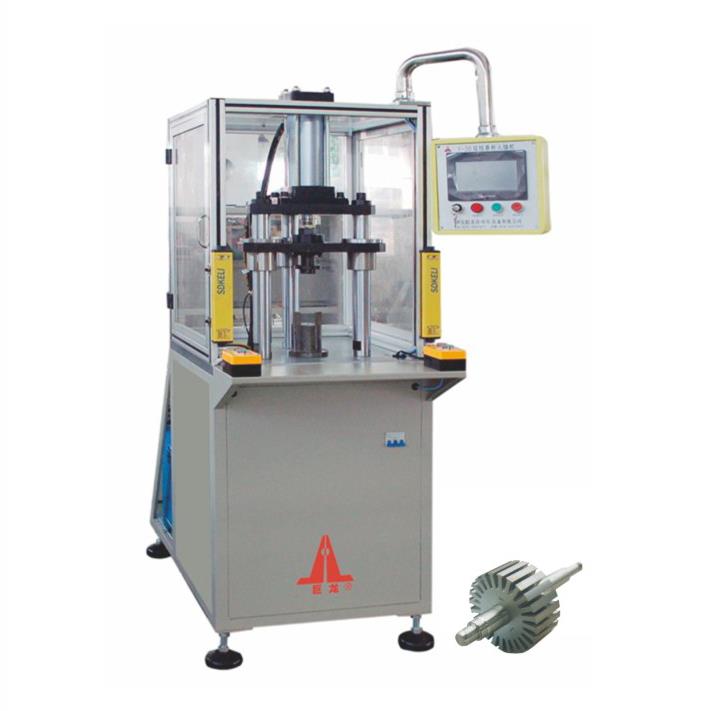
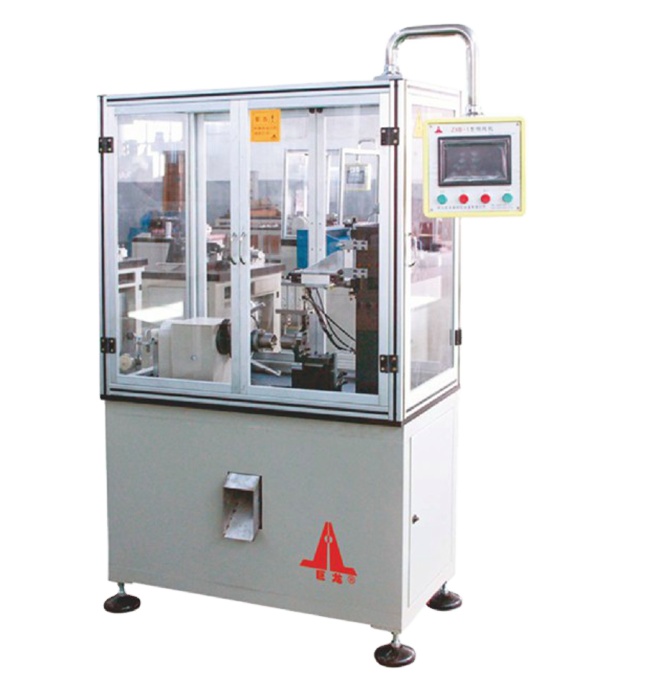
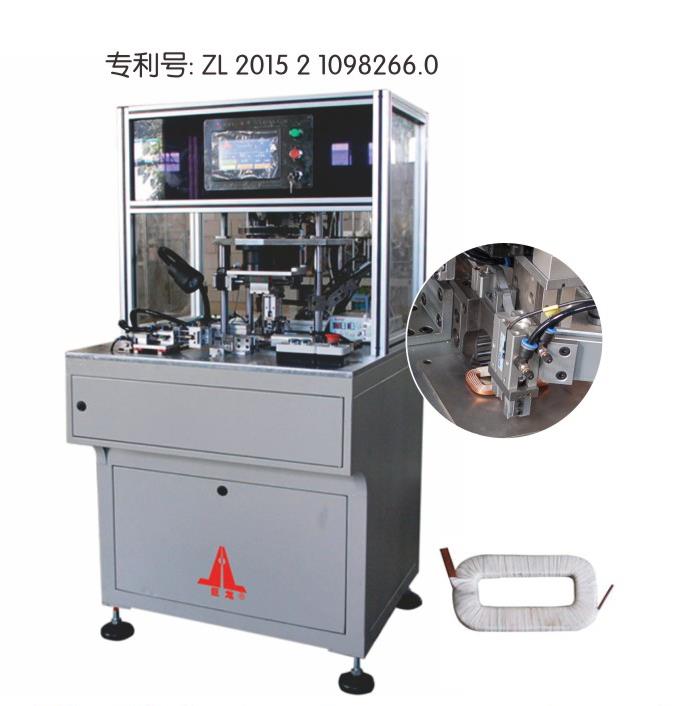
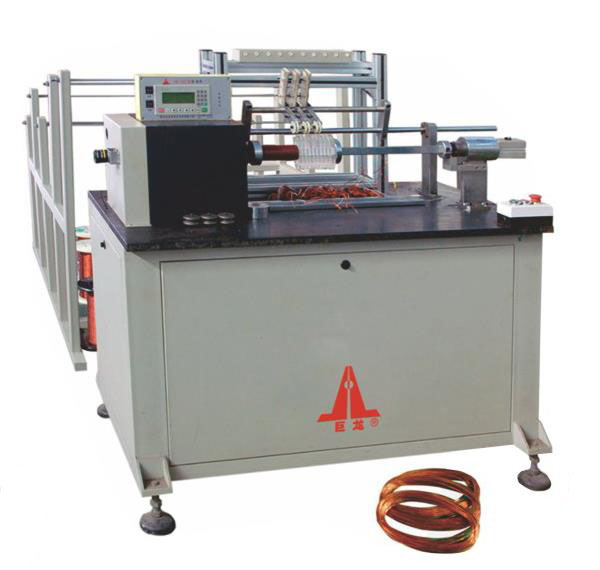
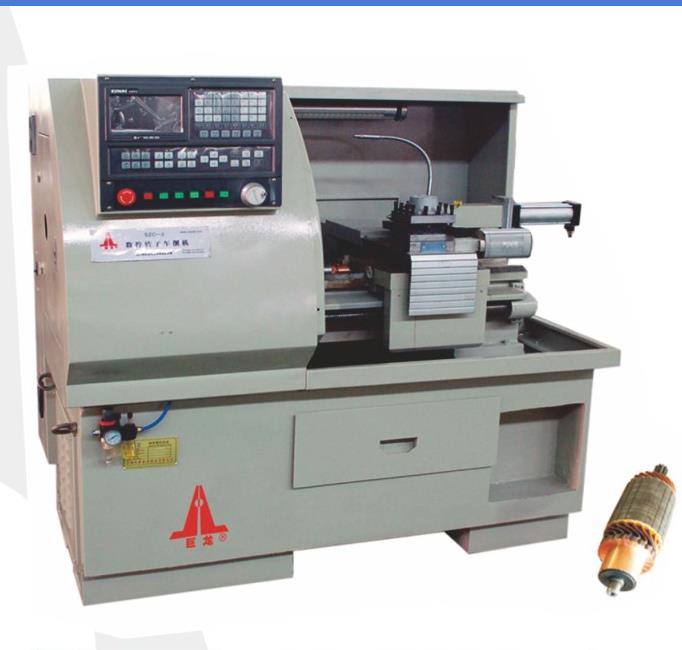
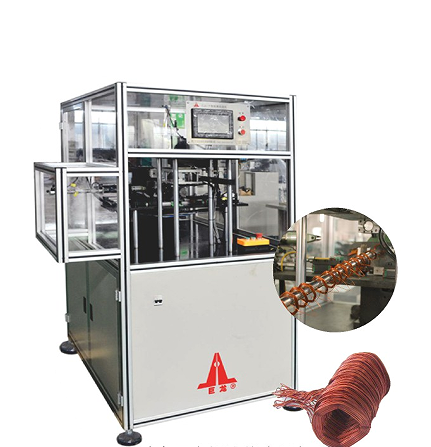
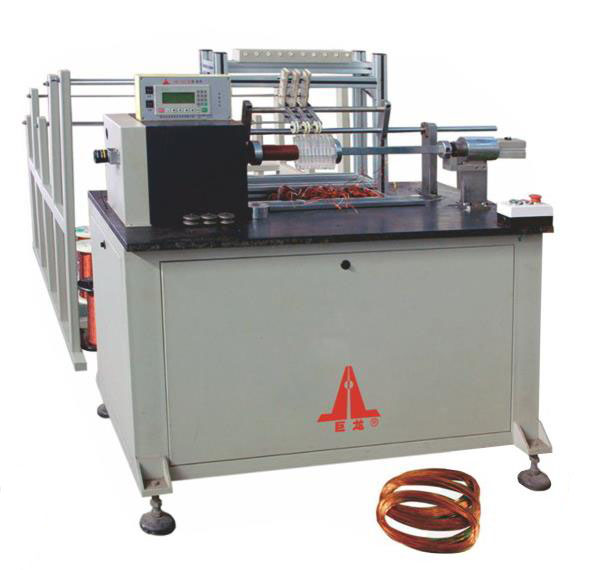
Explore our flagship industrial motor manufacturing stations, designed to achieve maximum slot fill factor, minimal electromagnetic asymmetry, and superior production cycle efficiency across electric vehicle (EV), industrial fan, pump, and domestic appliance motor production lines.
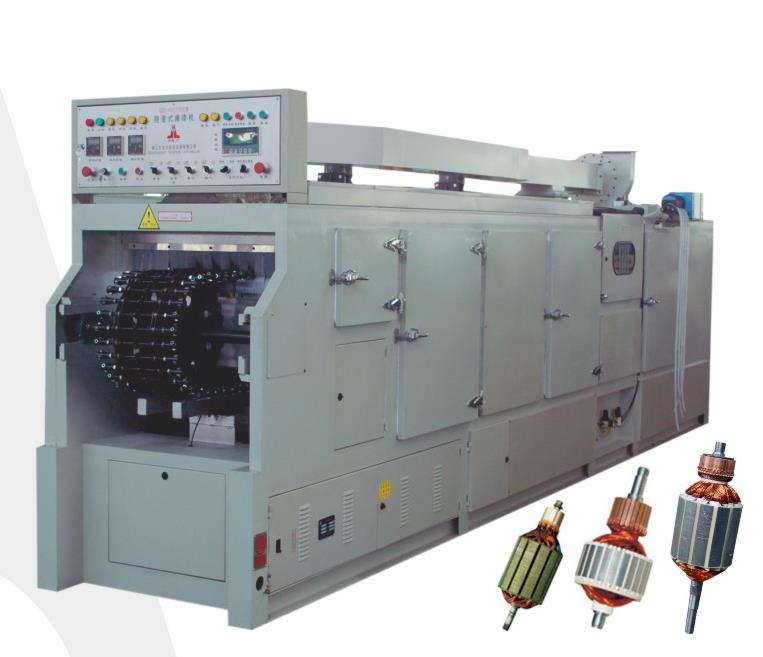
The manufacturing paradigm for electric rotating machinery is undergoing structural transformation driven by high-efficiency standards (IE4, IE5), compact design architectures, and e-mobility requirements. As a premier Chinese manufacturing facility and exporter, our research and development trajectory directly reflects these macroeconomic technological imperatives.
Traditional round wire winding encounters a thermal and physical density ceiling, typically maxing out at roughly 45% to 50% slot copper fill factor. Modern brushless DC (BLDC) motors, automotive traction motors, and high-density industrial drives demand slot fill factors surpassing 70%. Next-generation winding architecture necessitates synchronous, multi-axis servo tension control, precise CNC wire pre-bending, and damage-free corner radiusing. This completely prevents micro-cracking in the primary enamel insulation layer during extreme plastic deformation.
Legacy mechanical friction brakes or crude hysteresis tensioners are incapable of responding to the acceleration spikes generated by modern high-speed flyer winding systems. The current industry standard is defined by electronic closed-loop servo feedback. Dynamically modulating wire payoff speed and back-tension in real-time prevents mechanical necking, wire elongation, and micro-thinning. By strictly eliminating localized resistance disparities across separate phase windings, production lines achieve absolute impedance balance.
Isolated standalone winding machines represent a procedural bottleneck and an elevated point of quality degradation due to manual component transit. Factory automation strategies now demand seamless cellular cohesion: from slot paper insertion and automated coil fly-winding to multi-position wire embedding, inter-phase insulation wedge pushing, 3D coil end-shaping, and computerized horizontal resin trickling (impregnation). This integrated process yields void-free thermal dissipation and elevated dielectric integrity across the entire stator pack.
International procurement directors in Germany, the United States, Japan, South Korea, and emerging EV manufacturing hubs are restructuring their vendor evaluation criteria. The transition moves away from standalone unit capex toward overall lifecycle reliability, total cost of ownership (TCO), and adaptive tool reconfigurability.
Market cycles for household appliances and specialized brushless industrial tools have compressed to sub-12-month design iterations. Sourcing teams prioritize winding platforms featuring sub-30-minute tooling changeover mechanisms, modular slot tooling cartridges, and quick-swapping coil transfer nests that accommodate varying stack heights (from 10mm up to 260mm) and slot configurations without requiring structural frame rebuilds.
Global supply chain governance requires comprehensive traceability for every wound stator lamination stack. Advanced winding lines are integrated with OPC-UA, MQTT, and fieldbus architectures that continuously capture winding tension curves, per-turn cycle timing, wire resistance data, pneumatic clamping pressure metrics, and post-varnish curing temperature logs, seamlessly uploading records directly to enterprise MES environments.
With inverter-driven systems operating at 800V and higher switching frequencies (SiC/GaN motor drivers), high-frequency pulse voltage reflection creates tremendous localized stress on stator insulation. Procurement engineers require winding tooling featuring mirror-polished wire guides, ceramic guide nozzles with ultra-fine Ra roughness ratings (<0.2μm), and non-abrasive pushers to guarantee that the dielectric breakdown voltage of the magnet wire is fully preserved throughout high-speed handling.
Founded in 1998, Zhejiang Rilvo Automation Equipment Co., Ltd. has stood as a foundational industrial manufacturer of micro-motor production machinery, specialized stator and rotor winding equipment, high-precision commutator spot welders, and complete electrostatic powder coating and automated trickling assembly lines.
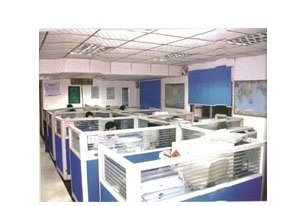
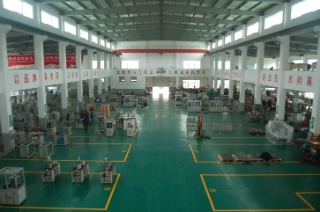
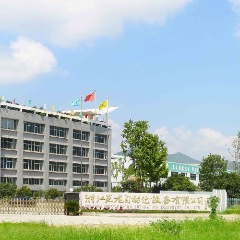
Situated in the Shatianyang Development Zone, Sanmen, Taizhou, Zhejiang, our enterprise operates an expansive manufacturing base spanning nearly 60,000 m², supported by over 150 dedicated personnel, including a dedicated 36-member electromechanical R&D engineering department led by senior industry specialists. We are an ISO9001 certified enterprise, hold mandatory China Compulsory Certification (3C), have been recognized as a High and New Technology Enterprise of Zhejiang Province, and maintain 17 proprietary national patents.
Stringent internal quality control systems spanning all machining, assembly, and trial cycles.
Proprietary breakthroughs across wire winding mechanics, indexing precision, and trickling automation.
Over 150 specialized machining centers prevent component outsourcing bottlenecks.
Established direct shipments to Europe, Southeast Asia, North America, and South America.
Direct technical answers addressing engineering validation, customization parameters, quality verification procedures, and post-sales technical commissioning for international equipment buyers.
Partner directly with China's leading motor manufacturing equipment engineering team. Request comprehensive machine layout drawings, cycle time simulations, and detailed technical specifications for your specific stator blueprints.
Get Catalog