[email protected] Sanmen, Taizhou, Zhejiang, China

China Top Armature Balancing Machine Factories & Exporters for the Sapporo Market

Industrial-Grade Rotor Dynamic Balancing, Automated Winding & Cold-Climate Commutation Solutions for Hokkaido’s Precision Manufacturing & Electrified Heavy Machinery Sectors

Curated Equipment Portfolio

Featured Precision Rotor & Armature Manufacturing Solutions

High-precision armature winding, automatic coil embedding, and commutator fusing machinery designed to meet rigorous Japanese Industrial Standards (JIS B 0905) for high-speed dynamic balance and structural durability.
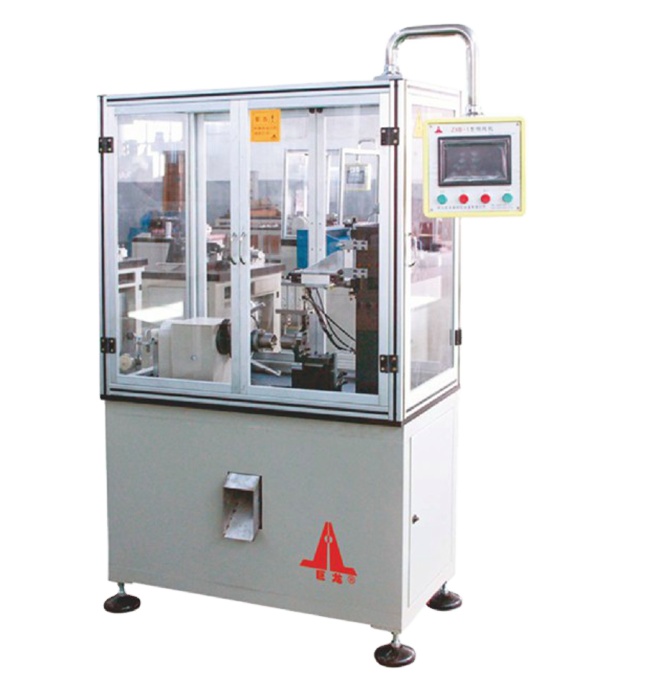
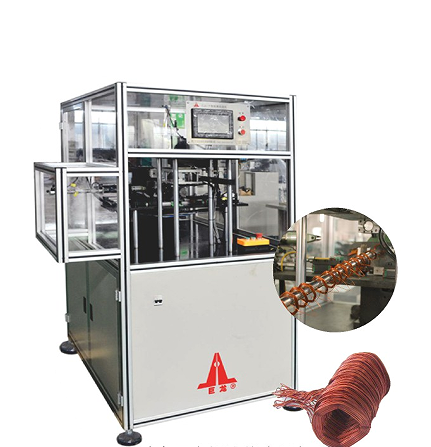
ZXB-1 Industrial Flat Coil Winding Machine
Model: ZXB-1
ZXB-1 Industrial Flat Coil Winding Machine
  • Drive Architecture:High-Torque Servo
  • Wire Gauge Range:Copper Strip / Flat Wire
  • Application:Traction & Starter Motors
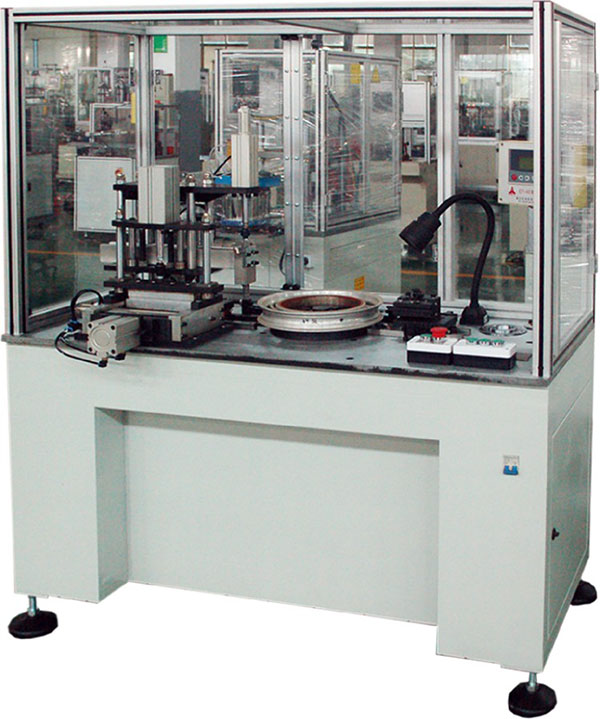
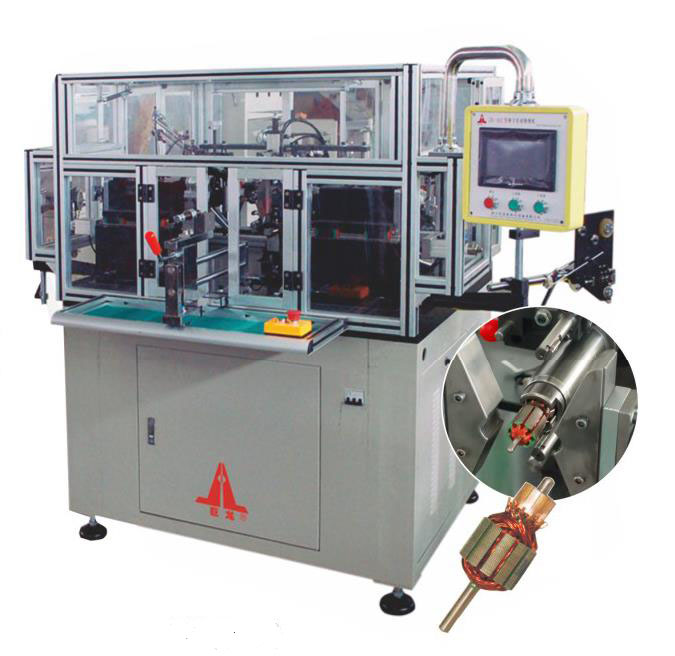
Motor Rotor and Stator Production Line Rotor Winding Machine
Model: R-LINE-01
Motor Rotor & Stator Automated Production Line Rotor Winder
  • Integration:Modular Robotic Cell
  • Dynamic Precision:≤ 0.15 g·mm/kg
  • Application:High-Volume Armature Lines
CJL-7 Flat Motor Coil Winding Machine
Model: CJL-7
CJL-7 High-Efficiency Flat Motor Coil Winding Machine
  • Slot Fill Factor:Up to 78%
  • Tension Control:Closed-Loop Electro-Magnetic
  • Application:Automotive Alternator Rotors
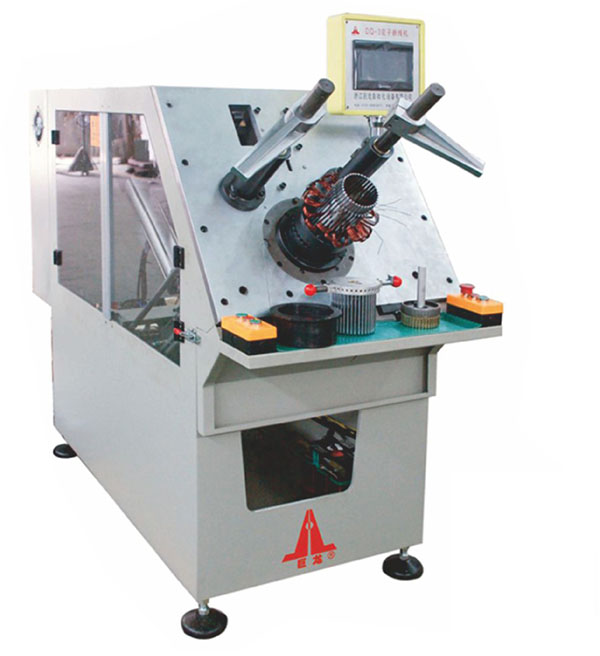
5 DQ-1 Model Stator Wire Embedding Machine
Model: 5 DQ-1
5 DQ-1 Stator & Armature Wire Embedding Machine
  • Tooling Cycle:18 - 25 Sec/Unit
  • Insulation Integrity:Zero-Abrasion Feed
  • Application:Industrial Induction Drives
CT-40 Automatic Brushless Motor Magnet Insertion & Gluing Machine
Model: CT-40
CT-40 BLDC Armature Magnet Insertion & Gluing System
  • Positioning:Vision-Guided Multi-Axis
  • Adhesive Feed:Thermal-Controlled Dispense
  • Application:Robotics & Drone Motors
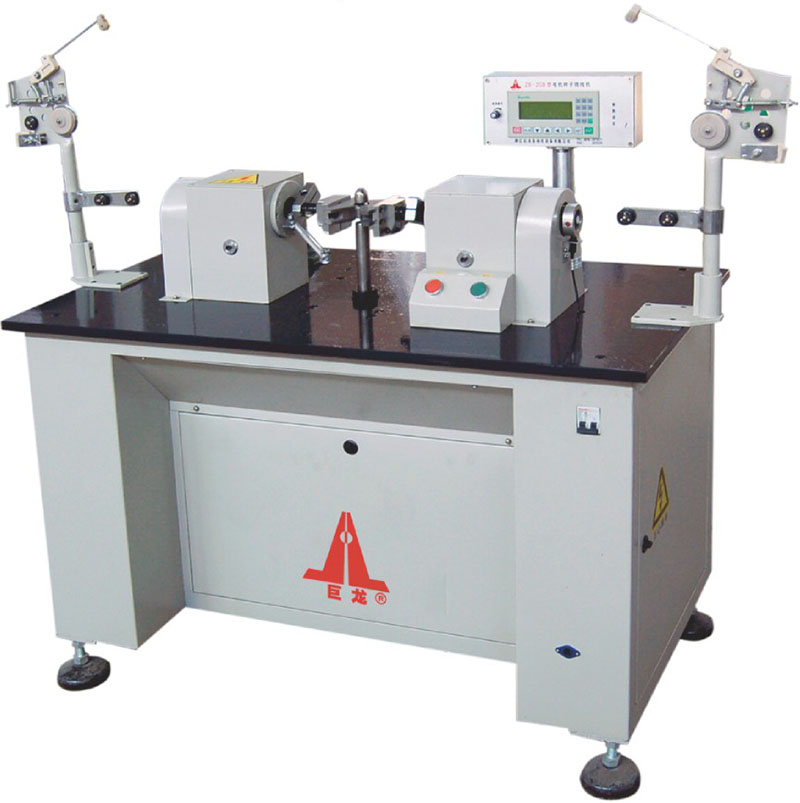
ZB-302 Semi-automatic Wire Winding Machine for Planer 1900B Rotor
Model: ZB-302
ZB-302 Semi-Automatic Wire Winding Machine for Planer Rotors
  • Winding Speed:3,000 RPM Max
  • Concentricity:±0.02 mm Runout
  • Application:Heavy Power Tool Armatures
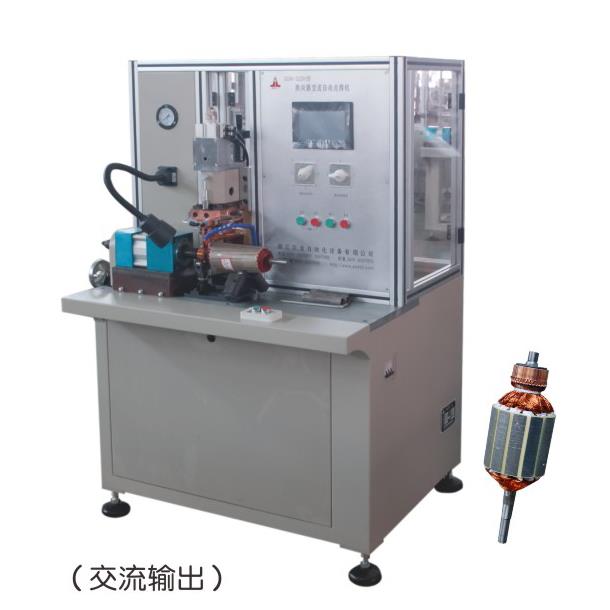
SDN-32ZH Commutator Hook Fusing Machine
Model: SDN-32ZH
SDN-32ZH Commutator Hook Fusing & Hot Staking Machine
  • Welding Current:Constant Current Inverter
  • Monitoring:Real-Time Depth & Energy
  • Application:Automotive Starter Armatures
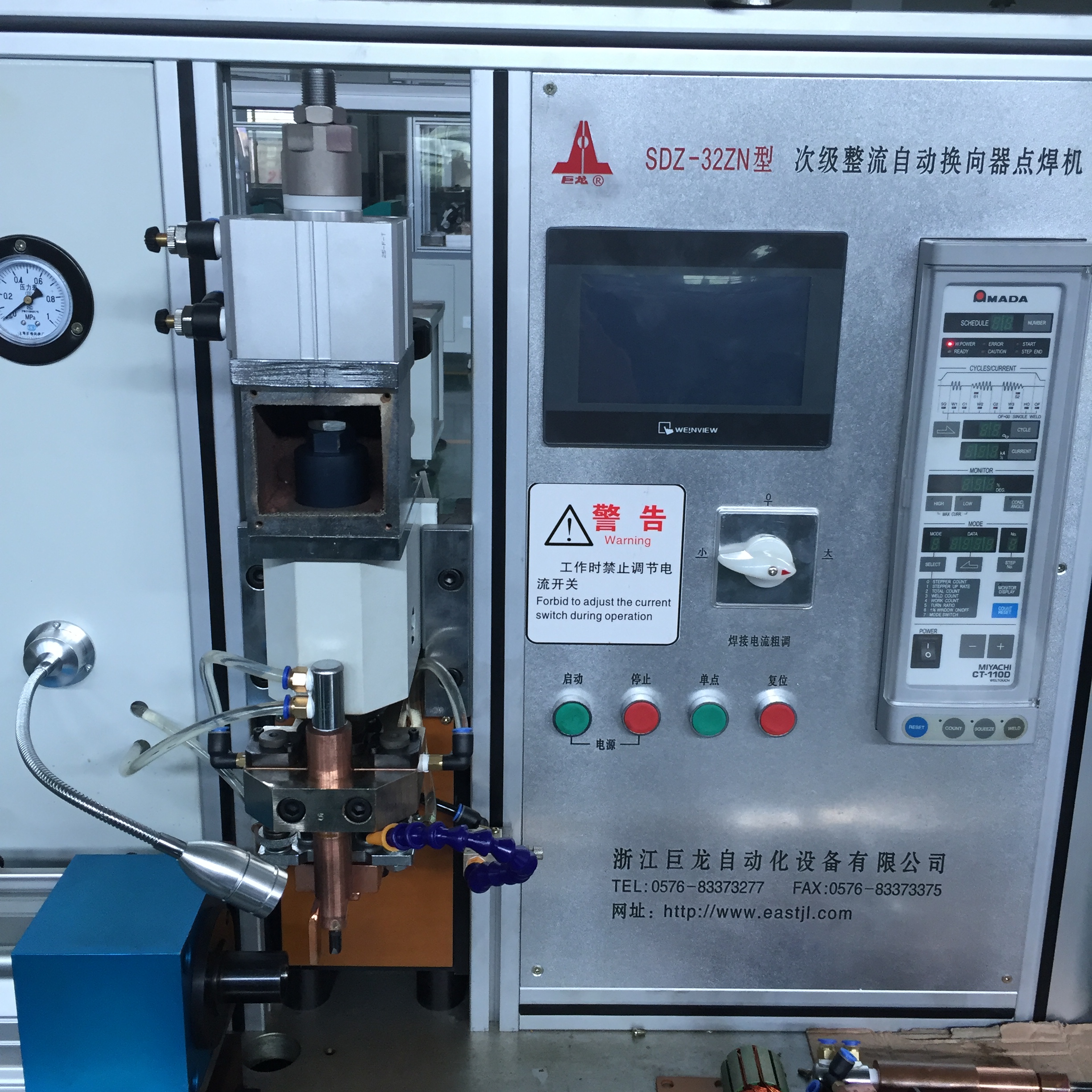
SDN-32ZH Precision Commutator Spot Welding Machine
Model: SDN-32ZH-P
SDN-32ZH Precision Commutator Spot Welding System
  • Electrode Force:Pneumatic Micro-Servo
  • Thermal Control:Air/Water Dual Cooling
  • Application:Sub-Fractional HP DC Motors
27+
Years Engineering Excellence
60,000m²
Total Industrial Campus
17
National Design & Utility Patents
ISO9001 / 3C
Quality Assured & Certified
Regional Market Analysis

Sapporo & Hokkaido Industrial Dynamic: Application Scenarios

Deploying balancing and motor production assets within Hokkaido’s unique industrial ecosystem requires addressing cold-climate mechanical dynamics, sub-zero lubrication tolerances, and high-load mechanical stresses.

Snow-Removal Equipment & Municipal Utility Rotors
In the Sapporo metropolitan area and greater Ishikari subprefecture, municipal fleets rely heavily on heavy-duty snow blowers, articulated municipal utility vehicles, and sub-zero hydraulic power-pack motors. Rotors operating within starter motors and DC auxiliary drives in these machines face severe thermal shock (-25°C to +85°C). China-engineered dynamic armature balancing systems calibrate rotors up to G1.0 unbalance grades, mitigating low-temperature vibration fatigue and premature bearing race degradation caused by frozen road micro-impacts.
Sub-Zero Food Logistics & Seafood Freezing Compressors
As Japan’s agricultural and seafood distribution hub, Sapporo’s cold-storage corridors demand 24/7 continuous operation from industrial refrigerant hermetic compressors and air blowers. Dynamic unbalance in high-speed semi-hermetic compressor motor armatures leads to acoustic resonances and cryo-seal ruptures. Our balancing solutions integrate with winding and slot embedding to control copper mass symmetry during winding, keeping the unbalance mass tolerance strictly under ISO 1940-1 Class G2.5 guidelines for industrial refrigeration drives.
Renewable Wind Turbine Generators & Yaw Actuators
Hokkaido’s coastal plains are a major installation zone for utility-scale onshore and nearshore wind energy farms. Yaw pitch motors, auxiliary positioning armatures, and direct-drive alternator exciters undergo severe directional wind turbulence. Balancing machines sourced for Sapporo-based engineering operations ensure that reconstructed armatures and newly wound excitation rotors preserve dynamic equilibrium across multi-pole configurations, eliminating electromagnetic unbalance and eccentric brush wear.
Technical Whitepaper Digest

The Physics of Dynamic Balancing in Cold-Climate Micro-Motors

Rotational unbalance is amplified exponentially when ambient temperatures drop below the glass transition point of rotor impregnating varnishes. In cold regions like Sapporo, microscopic structural asymmetries in copper slot distribution cause eccentric centrifugal forces (F = m · ω² · r). Left uncorrected, an unbalance of merely 0.5 gram-millimeters creates high-frequency harmonics that shatter sub-zero grease seals in bearings within 1,200 operating hours. Integrating high-accuracy hard-bearing balancing systems with automated flat-wire shaping and hook-fusing ensures uniform thermal mass and isotropic mechanical rigidity throughout the rotor core.

Industrial Forecasting

Emerging Sourcing Trends in the Hokkaido Electrification Sector

Forward-looking manufacturing trends driving equipment modernizations across northern Japan's automotive tier-2/3 supply chain and repair hubs.

Electrification of Forestry & Agricultural Implements
Hokkaido’s commercial forestry and agricultural equipment manufacturers are rapidly shifting from combustion hydraulics to battery-electric permanent magnet synchronous motors (PMSM). These compact motors demand dynamic balancing systems capable of handling multi-stack, high-density rotor assemblies up to 12,000 RPM, transitioning domestic factories away from manual static balancers toward automated, two-plane dynamic correction platforms.
Near-Zero Remanufacturing & Circular Industrial Policies
Conforming with METI’s Green Growth Strategy, Sapporo’s heavy equipment repairers are investing heavily in armature remanufacturing cells. Sourcing from Chinese OEM machine exporters gives these service facilities cost-effective, high-precision automated re-winding, commutator turning, and balancing cells that restore starter and generator rotors back to original factory tolerances at a fraction of Japanese domestic equipment replacement costs.
Adoption of Smart IIoT Balancing Diagnostics
Japanese plant operators require transparent data logging. Modern Chinese armature machinery integrates OPC-UA protocols, allowing real-time unbalance angle, initial unbalance mass, correction drilling depth, and vibration spectrum data to stream directly to internal MES (Manufacturing Execution Systems), satisfying tier-1 automotive inspection traceability audits.
Comprehensive Buyer FAQ

Procurement & Technical Questions from Sapporo Engineers

Direct answers addressing Japanese voltage compatibility, cold-temperature logistics, dynamic balance accuracy, and import customs compliance.

How do you accommodate Hokkaido's specific 200V 50Hz industrial electrical grid?
Eastern Japan, including Hokkaido, operates on a 50Hz electrical frequency, typically at three-phase 200V. Our production equipment, control cabinets, servo power packs, and balancing drives are natively built or stepped via internal Japanese transformers to match three-phase 200V / 50Hz systems directly, eliminating erratic phase-shift or servo thermal faults without requiring third-party site transformers.
What balance quality grade (ISO 1940-1) can your armature machinery reliably achieve?
Depending on rotor core geometry and concentricity, our hard-bearing armature balancing units combined with precision cutting/milling de-weighting heads consistently attain ISO 1940-1 Class G1.0 and G2.5 unbalance grades. This corresponds to a residual specific unbalance of e_per ≤ 0.15 to 0.35 μm, suitable for ultra-quiet EV fans, power tool rotors, and starter motors.
What shipping route is standard for machinery destined for Sapporo, Hokkaido?
Export shipments originate from our factory campus via Ningbo-Zhoushan Port. For Hokkaido delivery, containerized machinery ships directly to the Port of Tomakomai (the premier container gateway for Sapporo) or the Port of Ishikariwan-Shinko. Transit times typically run between 7 to 12 days, followed by inland bonded transport direct to the buyer's shop floor under CIF or DDP Incoterms.
How are replacement tooling and wearing parts (cutters, nozzles, electrodes) supported in Japan?
All wear parts—such as tungsten spot-welding electrodes for our SDN-32ZH units, wire guide needles, de-weighting milling bits, and balancing belt drives—are manufactured in-house to international standard dimensions. We supply a multi-year wear kit with every machine. Reorders ship via DHL or FedEx Express directly to Hokkaido within 48 to 72 hours.
Can the human-machine interface (HMI) and diagnostic documentation be configured in Japanese?
Yes. Our PLC touchscreens utilize multilingual programming architectures including Japanese (Kanji/Katakana), English, and Chinese. Technical schematics, alarm registers, calibration manuals, and FAT (Factory Acceptance Test) certificates are provided in clear English and Japanese documentation formats to streamline local technical review.
Can you customize dynamic balancing and winding tooling to our proprietary armature blueprints?
Our 36-member engineering R&D team specializes in custom OEM/ODM production. By submitting your rotor or stator engineering drawing, slot count, stack height, shaft dimensions, and target cycle times, we develop customized balancing cradles, pneumatic clamping fixtures, and coil winding tooling, verifying operational repeatability with physical sample runs before ocean transit.
Manufacturing Credibility & Trust

Why International Importers Select Zhejiang Rilvo Automation

Over a quarter-century of continuous high-tech equipment innovation, precision in-house manufacturing, and comprehensive quality control governance.

60,000m² Self-Owned Manufacturing Campus
Unlike export intermediaries, Zhejiang Rilvo controls extensive industrial facilities located in the Shatianyang Development Zone of Sanmen, Taizhou. With 20,000 m² of modern workshops and over 150 internal CNC precision machining units, tooling and machine chassis are cast, milled, and assembled completely on-site. This structural integration eliminates outsourcing markups and guarantees dimensional control across every machine frame.
Recognized High-Tech Enterprise & 17 Patents
Officially accredited as a High and New Technology Enterprise of Zhejiang Province, our firm holds 17 national invention and utility patents. Spearheaded by our chief engineer—honored with the National Knowledge-Worker Model award by the All-China Federation of Trade Unions—our 36 R&D specialists continuously optimize multi-axis servo synchronization, hot-staking resistance stability, and balancing sensor sensitivity.
Strict ISO9001 & Sample Acceptance Protocol
Every export machine undergoes rigorous four-stage quality inspection: incoming material testing, in-process CMM dimensional verification, electrical high-voltage insulation tests, and a continuous multi-hour trial run utilizing the client’s real motor samples. Full HD video reports and unbalance calibration certificates accompany every ocean dispatch, securing peace of mind prior to customs clearance.

Ready to Modernize Your Armature Production for the Sapporo Market?

Consult with our lead mechanical and balancing engineers today. Submit your armature or stator blueprint for a comprehensive cycle-time analysis, fixture proposal, and customized export quotation.

Inquire Now