Engineered for high-yield manufacturing plants, rewinding facilities, and OEM production operations. Review our vetted multi-axis servo coil winders, horizontal cell slot wedgers, and trickle varnishing units.








A rigorous examination of electromagnetic copper placement, tension dynamics, and dielectric preservation under heavy manufacturing throughput.
Traditional friction-plate or magnetic particle tensioners suffer from thermal drift during continuous 24/7 manufacturing cycles. Rilvo's multi-axis servo winding architecture adopts direct-drive active wire payout coupled with real-time strain-gauge feedback. This holds enamel wire tension within ±1.5% of setpoint even during high acceleration/deceleration flyer cycles.
Electric motors designed for high power density demand slot copper fill factors exceeding 72% to 78%. Our combined winding and servo coil-inserting machines (such as the DQ-1 and custom dual-action insertion tooling) compress and align wire bundles cleanly without causing copper crossover or inter-turn short circuits prior to slot wedge sliding.
Slot insulation breakdown represents the predominant failure mode in industrial motors. Automated wedge paper machines incorporate heat-creased cuffs with variable stroke punch blades, eliminating micro-tears along paper edges. This mechanical precision guarantees dielectric withstand voltage exceeding 2.5 kV under high humidity environments.
Excessive stretching during automated stator coil winding diminishes the cross-sectional area of Grade 2 magnet wire, inducing uncalibrated DC resistance imbalances across 3-phase windings (U, V, W). Rilvo winding systems regulate elongation below 1.2%, preventing parasitic phase heat rise and preserving motor energy efficiency classes (IE3, IE4, and NEMA Premium standards).
| Performance Dimension | Legacy Mechanical Flyers | Standard Pneumatic Winders | Rilvo Multi-Servo Integrated System |
|---|---|---|---|
| Winding Speed (RPM) | 800 – 1,200 RPM | 1,200 – 1,800 RPM | 2,500 – 3,600 RPM (Servo Synchronized) |
| Wire Tension Accuracy | ±15% (Spring Friction Decay) | ±8% (Pneumatic Backpressure) | ±1.2% (Closed-loop Active Dynamic Servo) |
| Tooling Changeover Time | 120 – 180 Minutes | 45 – 60 Minutes | 12 – 18 Minutes (Quick-clamp modular jigs) |
| Coil Insertion Cycle (36 slots) | Manual hand-lacing (>15 min) | 42 – 55 Seconds | 14 – 22 Seconds (Simultaneous Wedge/Coil) |
| Varnish Impregnation Voiding | Dip Tank: 18% – 25% internal air voids | Vacuum Chamber: 6% – 10% voids | Automated Trickle: < 1.5% micro-cavity index |
Addressing infrastructure, environmental humidity, localized electrical grids, and industrial expansion in Suai and surrounding maritime corridors.
Suai’s coastal setting presents ambient relative humidity frequently exceeding 85% paired with airborne saline particles. Motor manufacturing equipment deployed in this corridor requires hard chrome-plated guide shafts, sealed IP54 electrical enclosures, and gold-plated pneumatic contact pins to prevent corrosive galling and micro-current leakage during multi-shift operations.
Regional generation networks can exhibit voltage sags of ±12% and frequency disturbances. Rilvo control cabinets integrate intermediate DC bus capacitors, wide-voltage servo driver inputs (380V to 440V ±15%), and dynamic line reactors. This ensures precision PLC coordinate retention without unexpected servo resets during heavy local industrial switching.
Establishing sustainable motor repair, rewinding, and assembly operations in regional hubs relies on accessible machine human-machine interfaces (HMI). Our platforms incorporate step-by-step graphical parameter setup, multi-language diagnostic screens, and built-in error clearing instructions that reduce reliance on specialized automation technicians on-site.
From conventional round-wire induction motors to high-efficiency Brushless DC (BLDC) and Hairpin flat-wire architectures.
E-mobility and marine electric propulsion systems are aggressively migrating from stranded circular copper wires toward rectangular flat-wire stators. Rectangular geometry enhances slot thermal conductivity and structural rigidity. Rilvo's automated flat wire shaping lines (e.g., 5-SC-2B) lead this transition by executing 2D and 3D precision copper bending without damaging insulating enamel corners.
Modern motor plants demand continuous operational transparency. Our newest stator winding installations feature OPC-UA industrial protocol stacks, logging every coil stroke, cycle duration, peak servo torque, and pneumatic pressure curve to on-premise servers or enterprise cloud systems. This affords early warning maintenance and precise quality traceability down to individual motor serial numbers.
Rather than deploying standalone machines, competitive manufacturers increasingly choose synchronized linear flow cells: slot insulation insertion → continuous coil winding → coil insertion → intermediate shaping → CNC lacing → trickle varnishing. This unified workflow slashes shop floor work-in-progress (WIP) by up to 65% while reducing manual workpiece transfer damage.
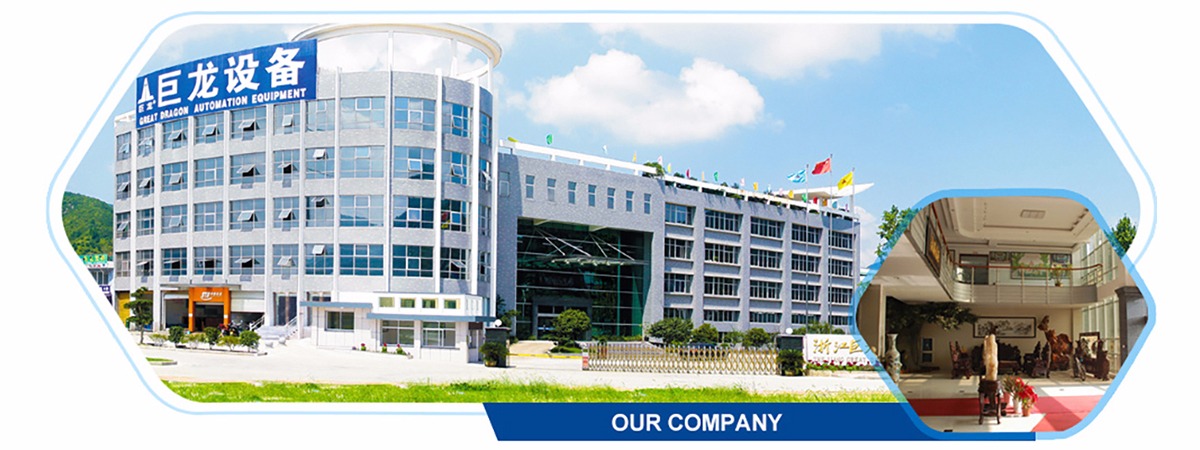
Founded in 1998 in Zhejiang, China, Rilvo combines nearly three decades of dedicated electromechanical machinery engineering with deep vertical integration.
Situated in the Shatianyang Development Zone, Sanmen, Taizhou, Rilvo oversees a massive 60,000 m² industrial facility with 20,000 m² of precision assembly workshops and an additional 30,000 m² dedicated expansion. Our in-house manufacturing ecosystem houses over 150 dedicated machining units, allowing complete control over structural castings, ground guide ways, servo spindles, and specialized winding flyers.
Headed by our president and chief engineer—recipient of the National Knowledge-Worker Model Award from the All-China Federation of Trade Unions—our team integrates mechanical, electrical, and optical design under one roof. We possess 17 national invention and utility patents, and hold ISO9001 and China Compulsory (3C) certifications.
Every piece of equipment is subjected to rigorous pre-delivery verification: customer core trial runs, 72-hour continuous burn-in cycling, video dynamic testing, and calibration certificate generation prior to sea packaging.



Clear, engineering-backed answers addressing tooling customization, electrical compatibility, shipping logistics, and aftermarket support.
Tooling design begins with your 2D/3D lamination drawing (.DWG, .STEP, or .IGES), slot count, stack height range, and copper wire schedule. Our 36-member engineering department generates custom cam profiles, guide needles, push blades, and cuff forming blocks using 5-axis CNC machining. We physically validate slot clearance, wedge curl geometry, and coil end-turn heights using actual sample laminations shipped to our factory before machine release.
Yes. Aluminum wire features lower tensile strength and higher surface friction compared to copper. When processing aluminum wire, our machines utilize mirror-polished ceramic eyelets, hardened plasma-nitrided flyer nozzles, and dedicated low-tension servo algorithms. Parameter recipes stored in the HMI allow rapid switching between copper and aluminum wire profiles with automated tension recalculation.
For installations exposed to tropical maritime climates, Rilvo offers tropicalization packages: nickel-phosphorus electroless plating on exposed steel surfaces, anodized structural aluminum components, sealed IP54 electrical cabinets equipped with dehumidifier thermostatic fans, and multi-layer conformal coating on all internal PCB driver modules to safeguard against saline condensation.
We routinely export under FOB Ningbo/Shanghai, CFR, CIF, and EXW terms. Standard machine models typically ship within 25 to 35 business days; bespoke turnkey automated cells require 45 to 60 days including full sample trial verification. Payments are typically handled via T/T wire transfer or irrevocable L/C at sight, accepted in USD, EUR, or CNY.
Every system completes a rigorous FAT process: continuous multi-hour cycle trials run with the buyer's material, complete high-definition video acceptance records, and dimensional verification reports. Upon dispatch, machines ship in moisture-sealed barrier foil inside solid fumigated wooden crates. We provide detailed multi-lingual operation manuals, complete electrical schematics, remote video commissioning sessions, and can dispatch commissioning field service engineers for line projects.
Our minimum order quantity is exactly 1 set. Each machine package comes supplied with a standard two-year consumables pack, including replacement guide needles, cutter blades, tension pads, and push fingers. We maintain guaranteed 10-year tooling part replenishment support via express air freight (DHL, FedEx) directly from our Sanmen factory center.
Provide your stator dimensions, lamination drawings, target slot fill parameters, and daily production targets. Our lead application engineers will evaluate your requirements and deliver a comprehensive machine configuration proposal, cycle time study, and transparent factory quotation.


