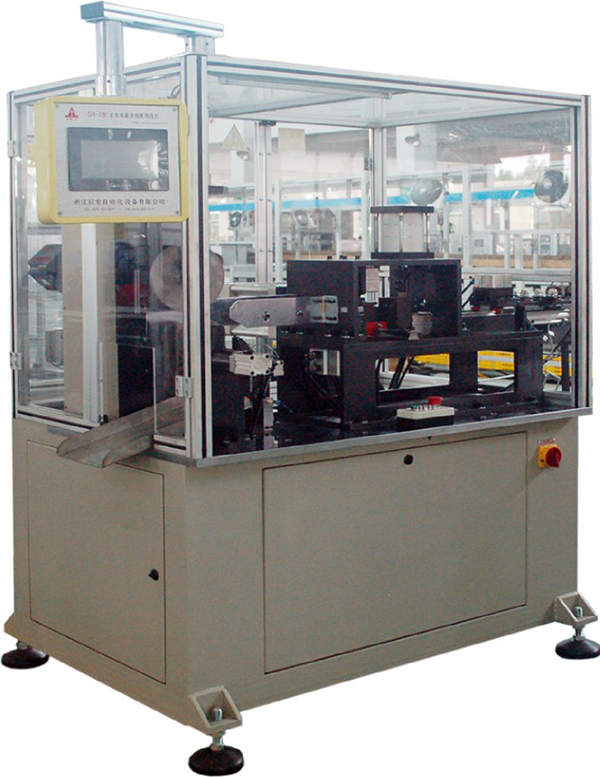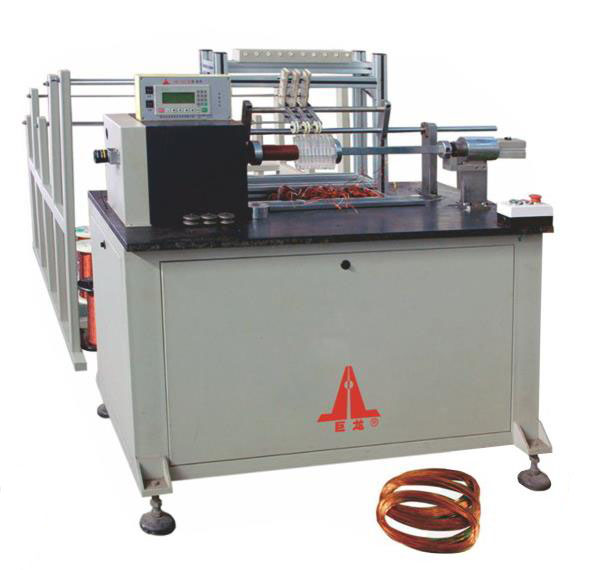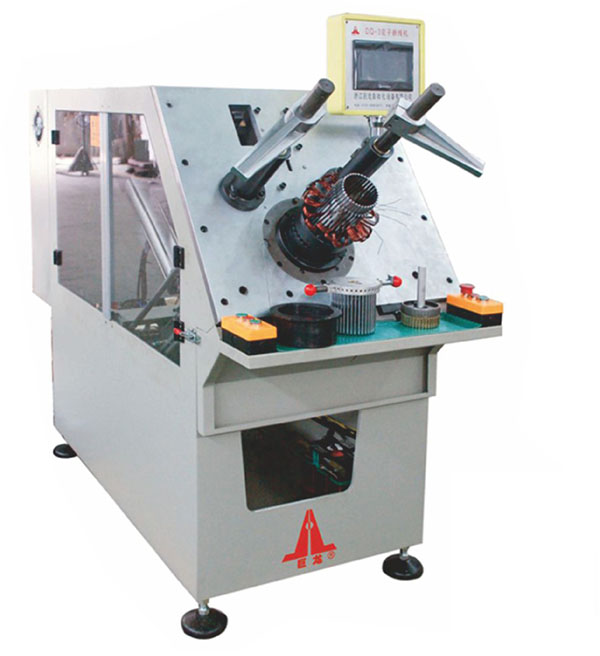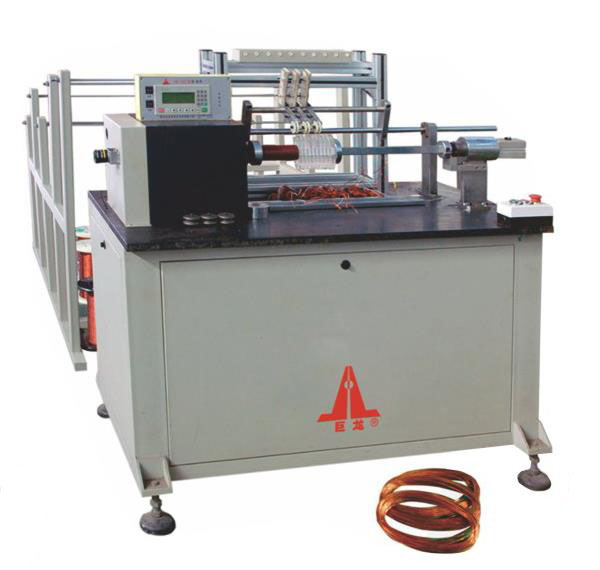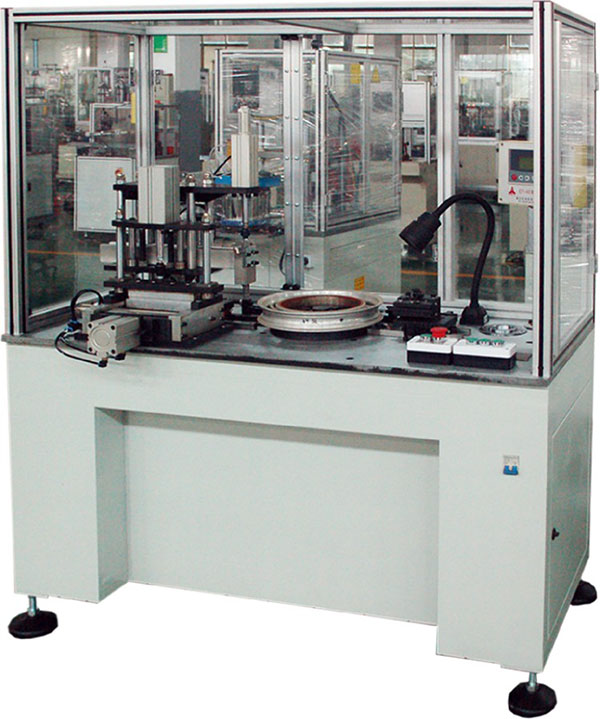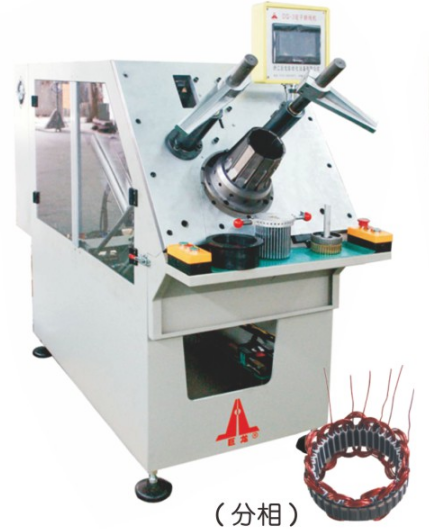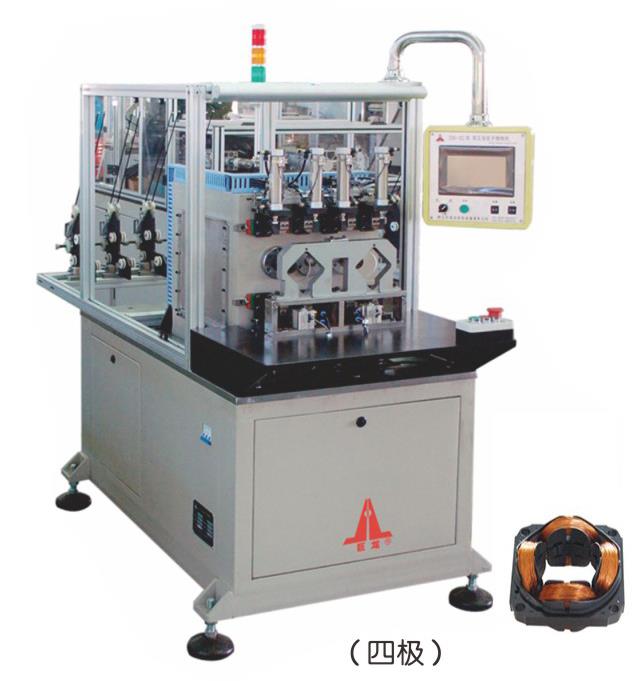
Automatic Servo System Stator Coil and Wedge Inserting Machine
- Drive Architecture: Multi-Axis Servo
- Application: Stator Coil & Wedge
- Cycle Efficiency: High Repeatability
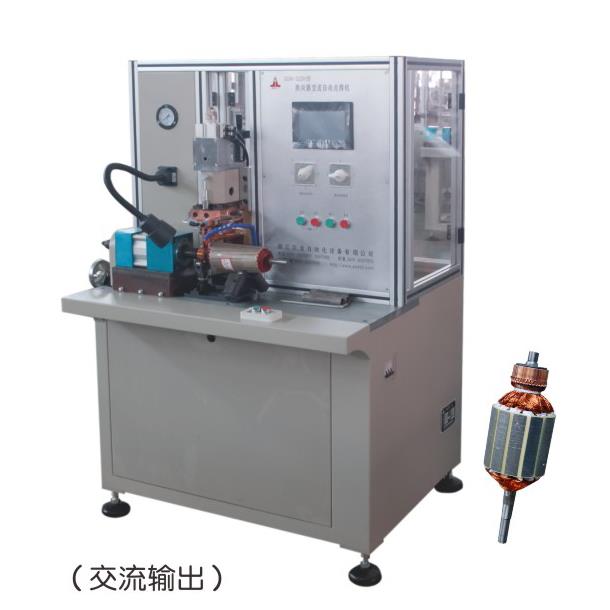
Engineered to deliver micron-level repeatability, high wire fill factors, and stable duty cycles under the continuous operating conditions of the Dominican manufacturing sector.
Strategic analysis on integrating automated stator winding, wedge insertion, and armature balancing into the Greater Santo Domingo production corridors, Free Trade Zones (Zonas Francas), and utility assembly clusters.
Industrial parks throughout San Isidro, Haina, and Las Américas require high-output, low-defect automated winding systems for sub-fractional motors, micro-pumps, and HVAC fans. Rilvo's automated servo stator coil and wedge inserting machines (such as the DQ-2 and DB-5C) integrate directly into lean Caribbean export lines, providing clean statistical process tracking, zero enamel scuffing, and compliance with UL/NEMA electrical standards for North American export destinations.
The Dominican Republic’s tropical climate and expanding agricultural footprint (Cibao valley distribution and municipal Santo Domingo water systems) demand severe-duty submersible pump motors. Our automatic winding and trickle impregnation equipment (DQ-226/100) ensures dense slot fills and void-free epoxy isolation, protecting against copper coil oxidation, moisture ingress, and thermal stress during frequent localized grid voltage transients.
Santo Domingo’s automotive sector and the emerging Caribbean electrification drive (light electric cargo vehicles and urban transit systems) rely heavily on automated alternator re-manufacturing and BLDC hub motor assembly. Machines like the SDN-32ZH hook fusing unit and CT-40 automated magnet bar insertion machine enable domestic assemblers to scale production from manual rewinding benches to certified OEM-quality batch automation.
| Production Phase | Primary Machine Configuration | Critical Technical Attribute | Localized Benefit (Santo Domingo Focus) |
|---|---|---|---|
| Slot Insulation & Wedge Prep | DFC-1 Horizontal Wedge Paper Inserting Unit | Automated creasing, cold-shearing, and cell placement | Prevents phase-to-ground dielectric leakage in high-humidity ambient air. |
| Stator Coil Insertion | Automatic Servo Coil & Wedge Inserter | Synchronized servo pushers for wire bundles & wedges | Eliminates manual insertion labor bottlenecks; slashes coil wedge damage to <0.05%. |
| Commutator Welding | SDN-32ZH / SDZ-120B Spot Fusing Station | Constant-current feedback monitoring & mechanical staking | Guarantees low contact resistance, resisting high-vibration automotive service life. |
| BLDC Magnet Assembly | CT-40 Magnet Inserter & Gluing Machine | Volumetric adhesive metering & polar alignment | Prevents unbonded rotor pole failure under high ambient operating temperatures. |
Evaluating the transition from manual remanufacturing workshops to digitally controlled, high-throughput assembly corridors across the Dominican Republic.
Global original equipment manufacturers are actively reorganizing supply chains closer to North and Central America. Industrial parks across Santo Domingo and Santiago are upgrading production machinery to ISO-compliant Chinese automated equipment, delivering European tolerances at capital expenditures that maintain global export margin competitiveness.
With Dominican electricity tariffs driving demand for higher electrical efficiency across commercial refrigeration and industrial pumps, local motor rebuilders and assemblers are swapping manual random-wound coils for automated servo-driven concentric winding machines that ensure maximum copper fill factors.
To reduce inner-city emissions throughout the Distrito Nacional, Santo Domingo is expanding municipal adoption of light electric motorbikes and commercial tricycles. This has created immediate demand for BLDC inner/outer stator winding machinery and automated rotor magnet insertion lines.
Caribbean manufacturing directors prioritize assembly lines engineered with standardized Mitsubishi/Siemens/Delta PLC platforms, enabling remote cross-ocean programming adjustments, troubleshooting, and rapid tooling reconfiguration without costly delays for overseas technician travel.
Combining 27 years of dedicated motor automation machinery fabrication with vertically integrated Chinese production infrastructure.
Unlike trading companies or outsourced assembling workshops, Rilvo manufactures all structural machine frames, high-precision winding spindles, insertion blades, and wedge pushers inside our specialized Sanmen manufacturing complex in Zhejiang, China. Equipped with over 150 CNC machining centers, we manage our own metallurgical hardness and dimensional tolerances directly.
Led by our President and Chief Engineer—recognized with the National Knowledge-Worker Model Award by the All-China Federation of Trade Unions—our 36 in-house design engineers tailor machine kinematics to custom customer lamination drawings, variable slot configurations, flat copper wire profiles, and unique stack heights.
We do not ship on theoretical drawings. International clients provide motor laminations, magnet wire, and commutator samples to our testing center. Every automated line undergoes continuous sample run validation, thermal monitoring, and optical dimension verification, accompanied by full video records before sea-freight release.
Detailed engineering, logistical, and commercial considerations for plant engineers, operations directors, and purchasing managers in the Dominican Republic.
Yes. While mainland China typically operates at 380V 50Hz, all Rilvo control cabinets and servo systems destined for Santo Domingo, Haina, or Caucedo are custom-engineered for local power systems (208V, 220V, or 480V 3-phase, 60Hz). Premium step-up/step-down transformers and surge suppressors are integrated to safeguard servo drives against line fluctuations.
We regularly handle shipments under FOB Ningbo/Shanghai, CFR, or CIF Rio Haina and Multimodal Caucedo terms. All equipment is coated with anti-corrosion grease, vacuum sealed in vapor-barrier foil with desiccant packs, and secured within international standard ISPM-15 compliant solid fumigated wooden crates to withstand high ocean humidity.
We provide two operational paths: (1) Comprehensive video FAT (Factory Acceptance Test) signoff, pre-calibrated quick-connect wiring, and English/Spanish step-by-step digital manuals for in-house engineering teams; or (2) Dispatching our experienced field installation engineers directly to your plant in Santo Domingo to supervise anchoring, cabling, PLC integration, and workforce training.
Our servo-driven winding and inserting machines feature digital recipe recall through intuitive HMI touchscreen interfaces. Adjusting for different stack heights or wire turn counts takes only a few minutes through software parameter selection, while complete mechanical tooling changes (guides, inserting blades, push rods) typically require under 30 to 45 minutes.
Yes. With global raw material fluctuations, our winding guides and wire tensioning systems utilize ceramic-coated guides and closed-loop pneumatic or magnetic brake controllers. This prevents scratching soft enamel coatings on aluminum wire or stretching tight copper conductor gauges during high-speed cycle runs.
We supply complete backup sets of vulnerable tooling—such as insertion blades, push wedges, wire guide needles, and fusing electrodes—machined from hardened SKD11 or tungsten carbide alloys alongside initial machine orders. Subsequent spare parts orders ship via expedited international air courier (DHL/FedEx) straight to Santo Domingo within 3 to 5 business days.
Submit your stator/armature technical drawings, slot dimensions, wire specifications, and target output volumes. Our 36-member engineering team will analyze your requirements and deliver a detailed assembly line proposal within 24 hours.