Discover our core lineup of high-duty stator coil winders, armature wire embedders, hot-stake spot welders, and flat-wire forming machines built to handle rigid production schedules across Cundinamarca's industrial corridors.
Bogotá, as the administrative, logistics, and industrial core of Colombia, represents the heartland of South America's northern manufacturing renaissance. Along the strategic corridors of Fontibón, Puente Aranda, Cazucá, and extending out toward the burgeoning industrial zones of Mosquera, Funza, and Tocancipá, electrical machine assembly is undergoing a profound structural transition. Once dominated by manual rewinding shops and basic component rebuilders, the local market now demands high-efficiency automated motor manufacturing equipment capable of complying with both national technical standards (RETIE) and international efficiency benchmarks (IEC and NEMA standard IE3/IE4 tiers).
Engineering Consideration for Bogotá's Altitude: At 2,640 meters above sea level, atmospheric pressure drops to approximately 74 kPa. For electric motors manufactured or wound in Bogotá, reduced air density impairs convective heat dissipation and decreases the dielectric breakdown strength of air by roughly 20-25%. Automated winding machines must therefore guarantee absolute consistency in wire tension, zero enamel micro-fissuring, and flawless slot insulation embedding to avoid premature corona inception or dielectric flashover.
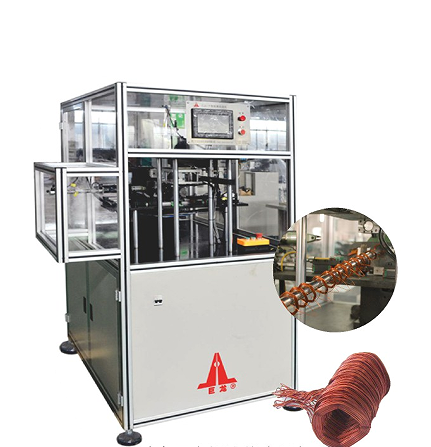
Industrial enterprises operating within the Sabana de Bogotá face escalating copper and energy costs. Producing motors with high copper slot fill factors (Slot Fill Factor > 78%) is no longer an optional advantage—it is mandatory for competitive survival. Equipment like the XB-1GZ Induction Motor Stator Winder and DQ-2 Alternator Stator Inserting Machine ensures that magnetic copper wire is packed densely and uniformly without twisting or stretching the insulation layer. This technological edge enables local manufacturers to produce motors that run cooler, consume less active power, and deliver an extended operating lifespan even under heavy industrial cyclical loading in high-altitude environments.
Several converging economic and technical trends are accelerating the shift from manual or semi-manual legacy methods to advanced automated assembly machinery across the capital district:
Bogotá operates one of the world's most extensive clean transit fleets. The rapid expansion of electric feeder buses and commercial light delivery two/three-wheelers requires localized OEM component assembly and high-reliability traction rewinding facilities.
The manufacturing corridor of Cundinamarca serves as a primary hub for centrifugal pump fabrication, domestic refrigeration compressors, and agricultural ventilation equipment, all requiring tightly wound fractional-horsepower stators.
Heavy mining in Boyacá and civil construction in Bogotá rely heavily on high-speed universal motors found in angle grinders, drills, and planers, elevating demand for armature winding systems like the ZB-302 and ZB-2GB.
Building high-reliability electric motors demands micro-millimeter precision at every mechanical step. When evaluating an automated assembly line or specialized manufacturing station, engineering procurement teams in Bogotá evaluate four primary production stages:
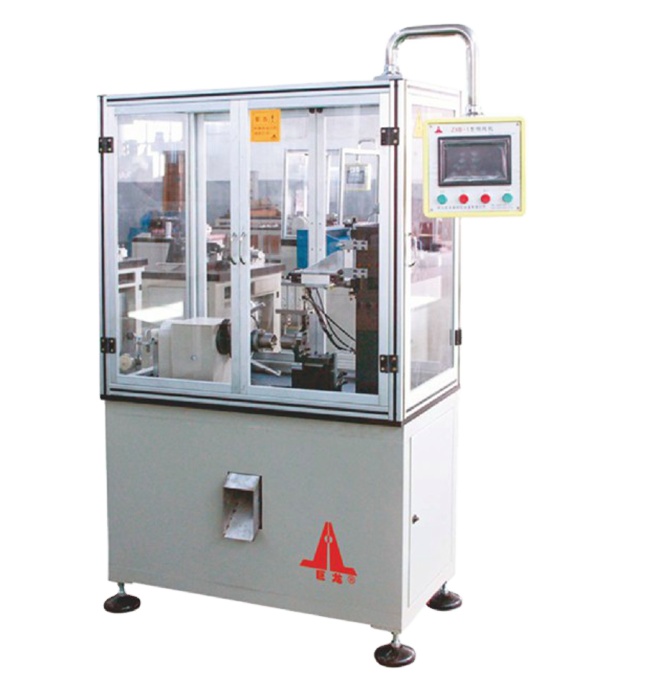
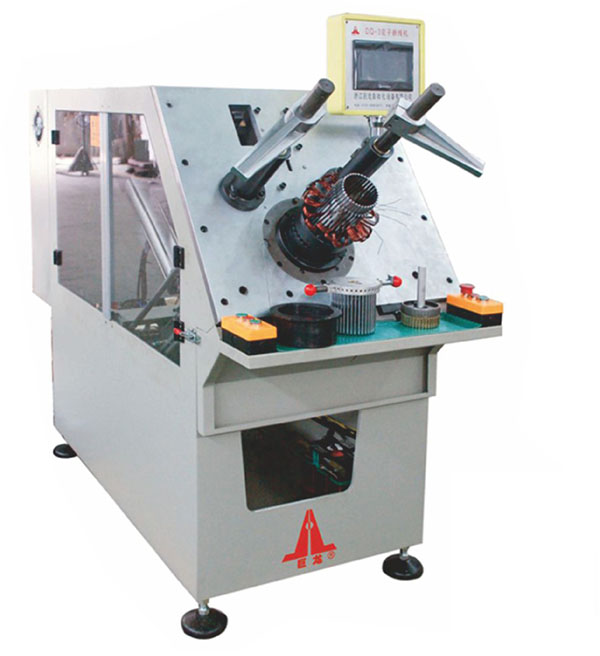
In traditional workshops, placing enameled wire into stator slots is a labor-intensive operation prone to scratches, which causes ground faults and inter-turn short circuits. The XB-1GZ Stator Coil Winder combined with the DQ-2 Inserting Station completely transforms this process. The inserting machine uses high-precision manganese-alloy guide blades and pushers to guide pre-wound coils and insulating wedge paper (Nomex, DMD, or Mylar) into the lamination stack simultaneously in a single stroke lasting less than 5 seconds. This guarantees uniform slot insulation coverage without mechanical friction against the stator teeth.
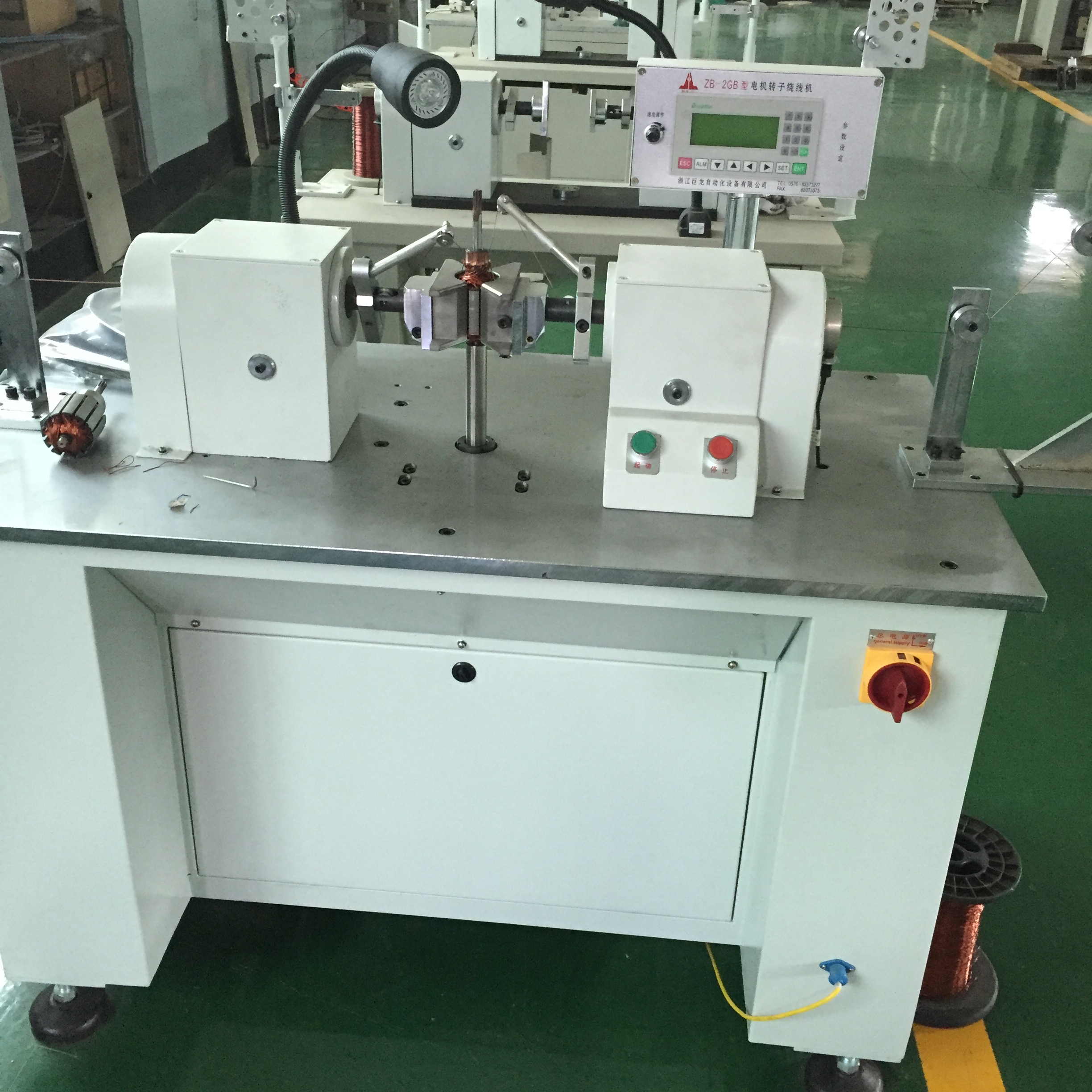
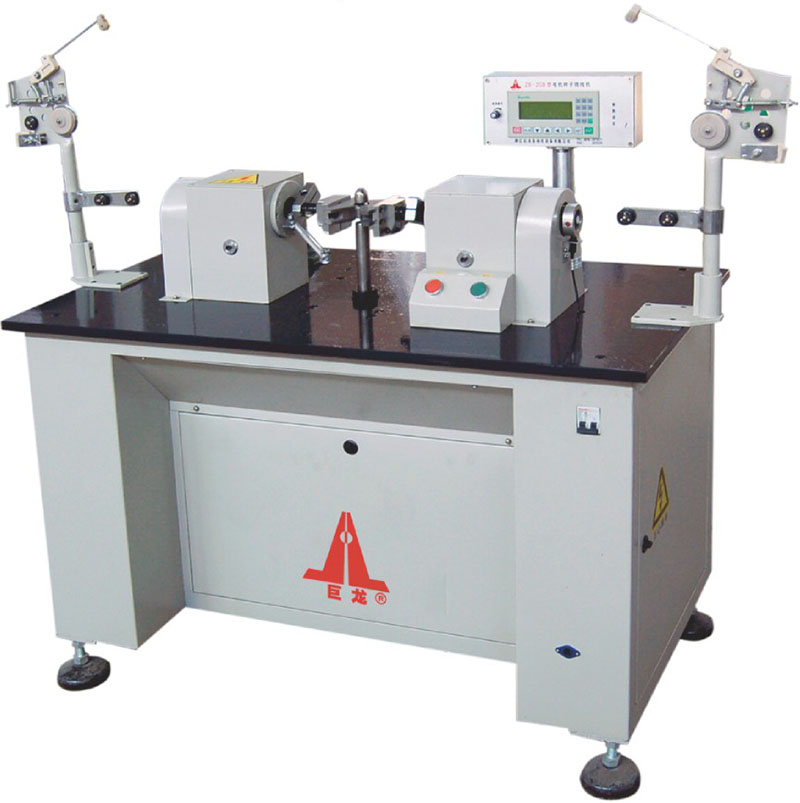
For DC motors and universal commutated armatures used in automotive starters, window lifters, and handheld tools, symmetrical mass distribution and exact turn counts are non-negotiable. The ZB-2GB and ZB-302 systems feature dual-flyer technology driven by coordinated triple-servo axis systems. As the flyer spins up to 2,500 RPM, CNC closed-loop tensioners adjust wire resistance dynamically based on instantaneous rotor angle, preventing necking at the slot exit and ensuring that opposing coils have identical weight and electrical resistance.
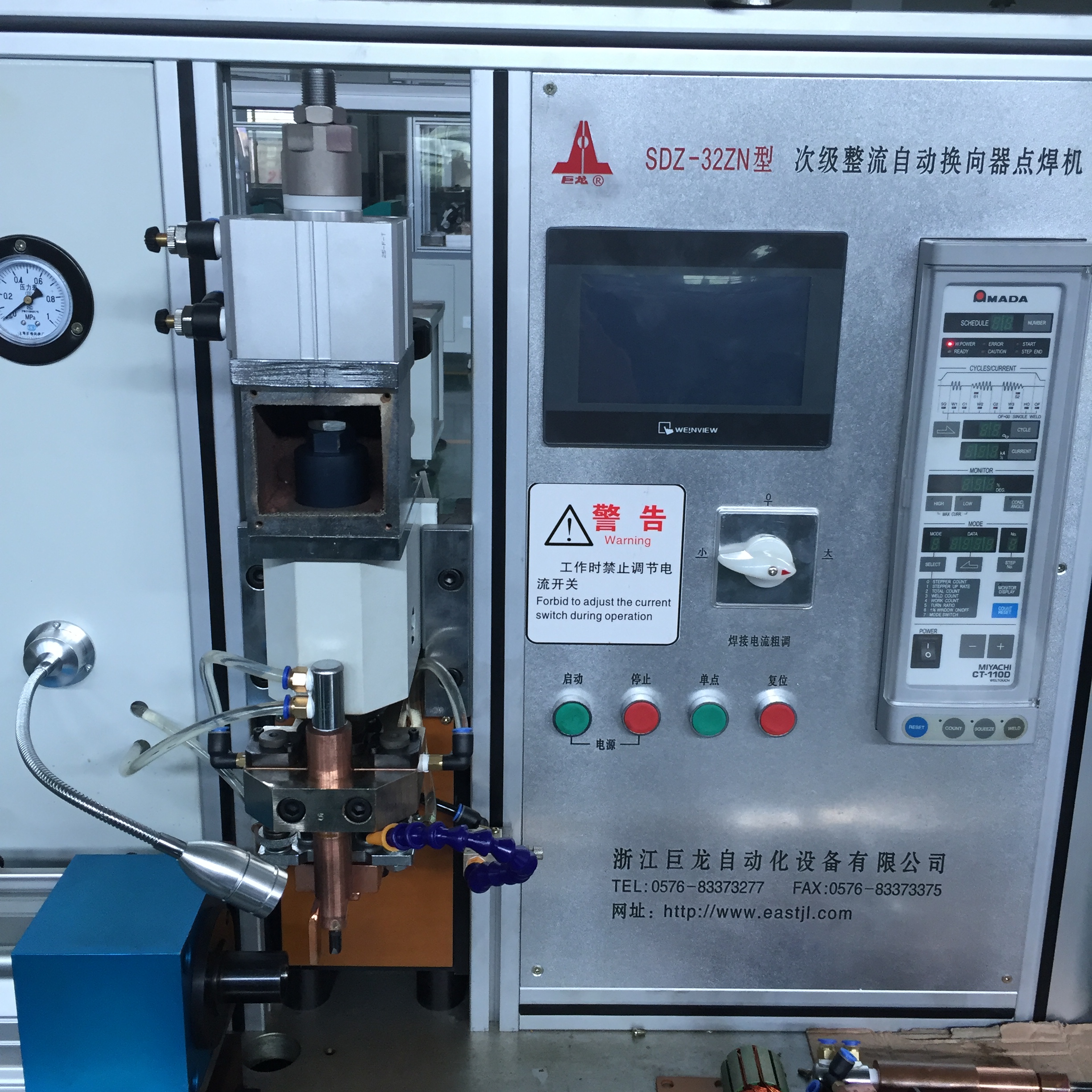
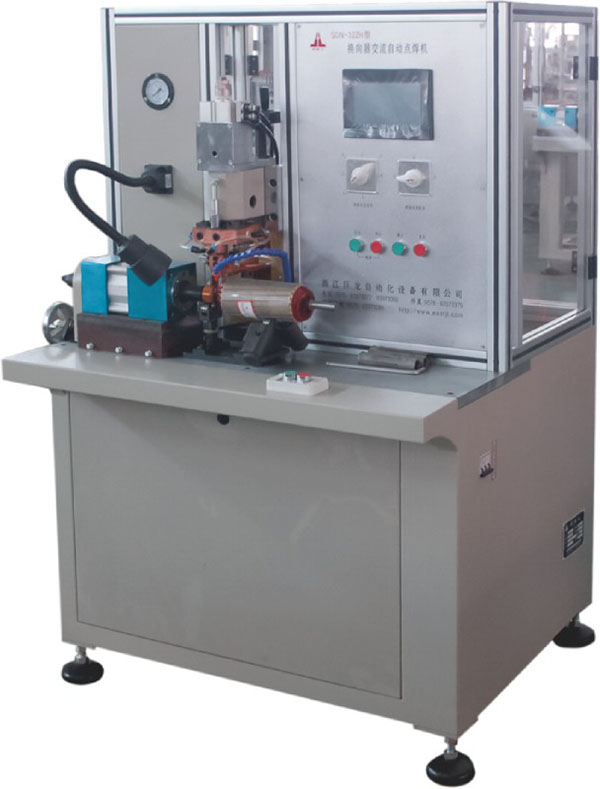
Connecting the armature wire to commutator riser or hook segments represents the single most frequent failure point in universal and starter motors. Cold welds result in open circuits under thermal cycling, whereas excessive heat burns commutator mica insulation. Our SDN-32ZH and Automatic Spot Welding Machines deploy medium-frequency inverter power supplies. By regulating discharge current in milliseconds and monitoring electrode displacement, the system achieves molten solid-state diffusion between copper leads and commutator copper without thermal degradation of the adjacent segments.
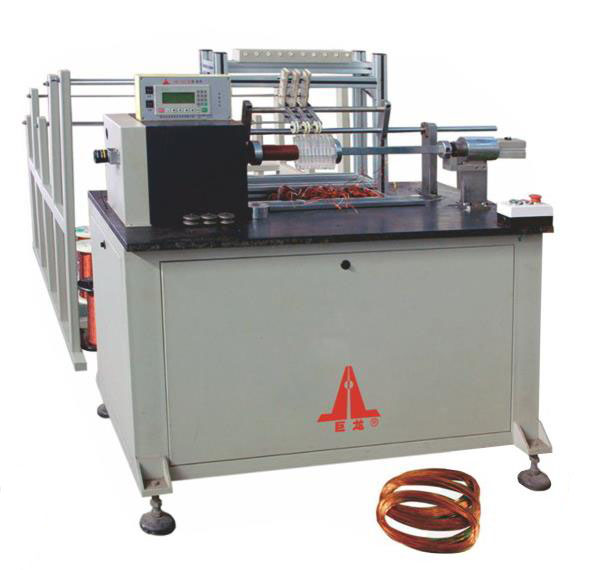
As Bogotá accelerates adoption of high-efficiency electric utility vehicles, flat-wire (hairpin) technology is superseding conventional round-wire windings. The ZXB-1 and CJL-7 machines perform 3D spatial bending of enameled rectangular copper bars without damaging the PAI/PI outer insulation. Flat copper conductors drastically reduce slot void space, boosting magnetic energy density while delivering superior heat transfer pathways to the lamination stack.
| Model Designation | Core Process | Wire Gauge Compatibility | Cycle Time (Avg) | Electrical Supply Config | Automation Level |
|---|---|---|---|---|---|
| SDN-32ZH | Inverter Commutator Spot Welding | 0.20 – 1.80 mm | 0.4 – 0.8 sec / hook | 220V/440V, 60Hz 3-Phase | Semi-Automatic Fixture |
| ZXB-1 | Industrial Flat Wire Coil Winding | 1.0 × 2.0 – 4.5 × 8.0 mm | 3.5 – 6.0 sec / coil | 220V/380V/440V, 60Hz | Full CNC Servo System |
| XB-1GZ | Induction Motor Stator Coil Winder | 0.18 – 1.35 mm (Multi-wire) | 18 – 35 sec / group | 220V/440V, 60Hz 3-Phase | Multi-Station Automatic |
| ZB-2GB | Rotor Armature Flyer Winder | 0.12 – 1.10 mm | 12 – 24 sec / armature | 220V/440V, 60Hz 3-Phase | Semi-Auto Dual Flyer |
| CJL-7 | Flat Motor Coil & Bar Forming | Custom Rectangular Dies | 4.0 – 8.0 sec / piece | 220V/380V/440V, 60Hz | Hydraulic-Pneumatic CNC |
| Automatic Spot Welder | Index Rotary Commutator Welding | 0.15 – 2.20 mm | 0.25 – 0.5 sec / segment | 220V/440V, 60Hz 3-Phase | Fully Automated Rotary |
| DQ-2 | Alternator Stator Coil & Wedge Insert | 0.25 – 1.50 mm (Wire bundle) | 10 – 16 sec / stator | 220V/440V, 60Hz 3-Phase | Integrated Simultaneous Push |
| ZB-302 | Planer 1900B Armature Winder | 0.15 – 0.65 mm | 14 – 20 sec / armature | 220V/440V, 60Hz 3-Phase | High-Speed Dedicated Flyer |
Investing in advanced motor assembly equipment allows Colombian manufacturers to substitute costly imported electric sub-assemblies with locally produced, precision-verified motors. Below are the key manufacturing use cases active within the metropolitan zone of Bogotá and surrounding municipal free trade zones:
The agricultural basin surrounding Bogotá requires continuous water pumping and treatment solutions. Local pump builders in Soacha, Mosquera, and Chía employ the XB-1GZ Stator Coil Winder and DQ-2 Inserting Station to produce IE3 premium-efficiency submersibles and end-suction centrifugal pump motors. Consistent slot cell insertion eliminates winding ground contact, enabling these motors to survive severe voltage fluctuations typical of rural grid extensions.
Cold chain logistics for fresh cut flowers, dairy, and meat processing around El Dorado Airport depend heavily on hermetic compressor assemblies. Producing fractional-horsepower single-phase asynchronous motors requires consistent auxiliary-phase and main-phase coil separation. Our automated winders maintain precise phase barrier paper insertion, preventing insulation degradation caused by synthetic ester lubricants and refrigerants.
Colombian industrial tool distribution hubs regularly assemble and overhaul power tools under license. Utilizing the ZB-302 and ZB-2GB for armatures alongside the SDN-32ZH for commutator hot-staking allows facilities to mass-produce 1,500W to 2,400W universal armatures with dynamic balance levels conforming to ISO 1940 Grade G2.5, minimizing brush arcing and vibration.
With an engineering lineage extending back to 1998, Zhejiang Rilvo Automation Equipment Co., Ltd. has established itself as an authoritative global manufacturer of micro-motor manufacturing equipment, stator and rotor winders, wire embedding equipment, and commutator welding systems. When partnering with Rilvo, Colombian industrial operators gain access to world-class manufacturing infrastructure:
State-of-the-art campus in the Shatianyang Development Zone, housing 20,000 m² of modern workshops with an additional 30,000 m² expansion facility.
Integrated mechanical, electrical, and optical design team led by nationally recognized senior engineering laureates with over 25 years of sector leadership.
Proprietary patented designs in multi-axis flyer mechanisms, tension feedback algorithms, and non-destructive wire embedding blade kinematics.
Rigorous multi-stage quality control adhering to ISO9001 standards, full China Compulsory Certification (3C), and verified on-site by international audit agencies.
Unlike generic equipment brokers, Rilvo manufactures all tooling, nozzles, inserting blades, and clamping fixtures in-house using advanced CNC vertical machining centers and slow-wire EDM cutters. When Colombian clients send their stator or rotor AutoCAD/SolidWorks drawings, our engineering department designs tailored die-sets that match your exact slot profiles, stack heights, and wire diameter combinations. We execute exhaustive pre-shipment trial runs using your physical lamination samples, recording full cycle-time and electrical test videos before final packaging.
We provide full export support for shipments directed to Colombian ports (Cartagena and Buenaventura) or air transit straight into El Dorado International Airport (BOG). All machines are secured in heavy-duty, fumigated anti-corrosion vacuum-sealed sea crates, complete with English documentation, electrical schematics, spare-part bundles, and comprehensive remote commissioning support.
Straightforward engineering and commercial answers to guide procurement managers, plant engineers, and import specialists in Bogotá and across Colombia.
Yes, absolutely. While China and Europe operate predominantly on 50 Hz, Colombia utilizes 60 Hz frequency with varying industrial voltages depending on your plant configuration in Bogotá (220V 3-phase, 440V 3-phase, or 110V/220V single-phase). Every machine ordered for delivery to Colombia is custom-wired with native 60 Hz servo motors, heavy-duty industrial transformers, and Schneider/Siemens electrical control switchgear fully rated for local grid frequencies and voltage stabilization.
Motor winding, inserting, and assembly machines generally fall under Chapter 84 of the Colombian customs tariff schedule (Arancel de Aduanas DIAN). The primary subheadings include 8479.81.00.00 (Machinery for treating metal, including electric wire coil winders) or 8515.21.00.00 / 8515.80.00.00 for automatic resistance spot welding equipment. Our export logistics desk provides comprehensive documentation, including detailed commercial invoices, packing lists with net/gross weights, and Certificate of Origin documents to streamline DIAN customs clearance.
At high altitudes, cooling fans and air compressors move less air mass due to reduced atmospheric pressure, which can lead to higher thermal rise in drive components. For machinery operating in Bogotá, we specify oversized variable-frequency drives (VFDs) and electrical panels with forced ventilation filters to prevent heat build-up. Furthermore, our winding systems ensure tight, uniform wire laying with zero insulation scuffing, preventing premature partial discharge or corona breakdown when your finished motors run in Bogotá's lower dielectric air density.
Yes. Our equipment is designed with rapid-changeover modular tooling. For instance, the DQ-2 Stator Inserting Machine and XB-1GZ Winder allow stack height adjustments via precise digital screw leads and touchscreen PLC recipe selection in under 10 minutes. For different stator diameters or slot counts, changing the modular guide blade and pusher die-set typically takes 30 to 45 minutes, allowing high product flexibility for job-shops and contract manufacturers.
Standard manufacturing and custom tooling setup takes 30 to 45 business days depending on the machine complexity. Ocean transit from Ningbo port to Buenaventura or Cartagena takes approximately 28 to 35 days. Each unit is delivered pre-calibrated with plug-and-play connections. We provide high-definition step-by-step video commissioning manuals, English-language PLC software interfaces, and direct live video engineering support. On-site engineer dispatch for turnkey line installation is also readily available upon request.
Submit your stator/rotor lamination dimensions, slot configuration, wire gauge specifications, and target daily output. Our specialized application engineering team will deliver a customized equipment layout, cycle-time simulation, and detailed commercial proposal within 24 hours.


