


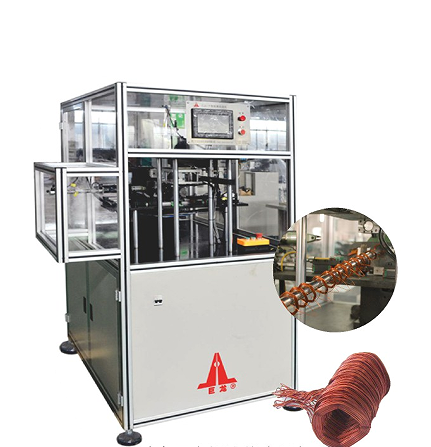
Engineered for starter motors, alternators, BLDC platforms, and heavy-duty industrial electric drives. Precision-tooled to meet high-volume manufacturing tolerances.
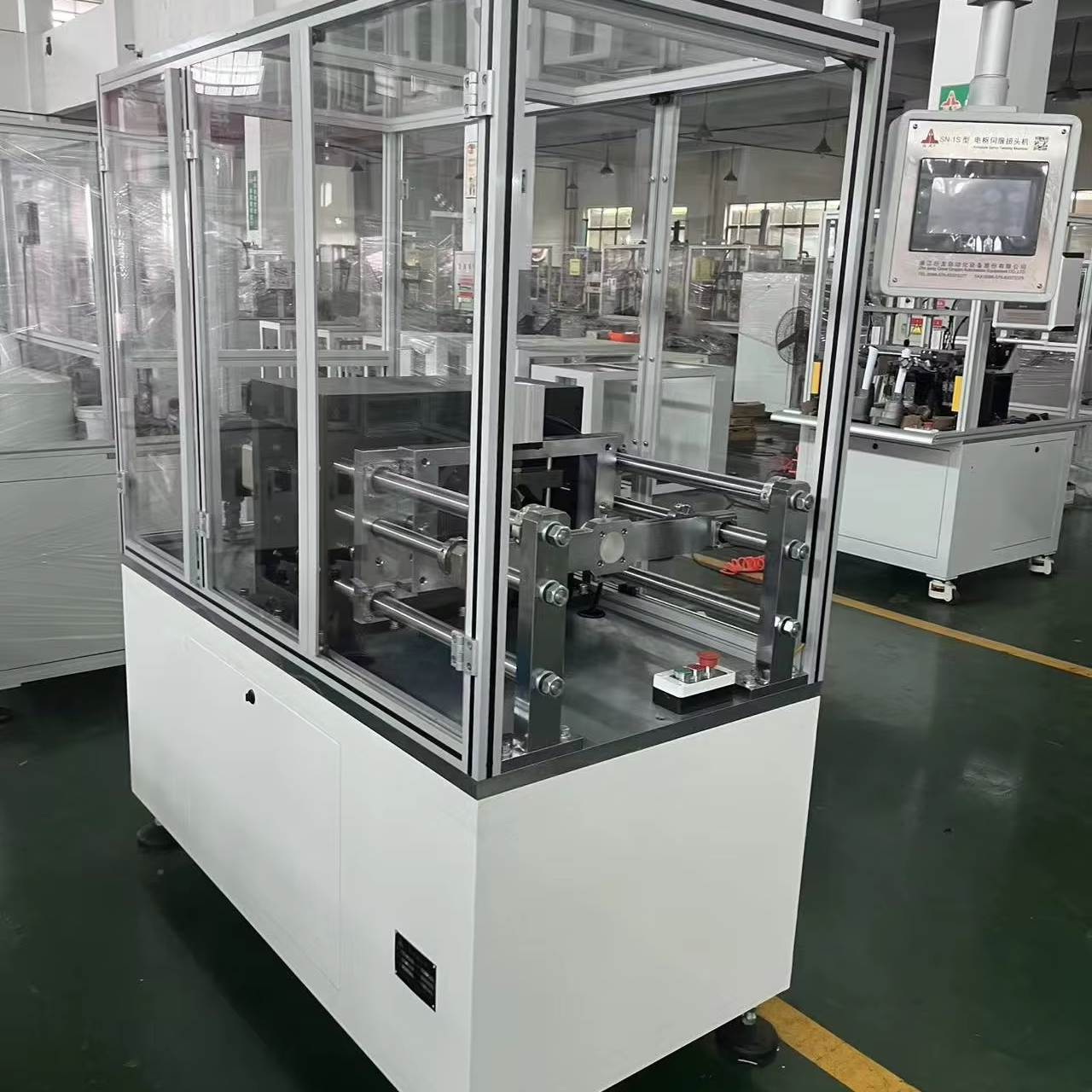
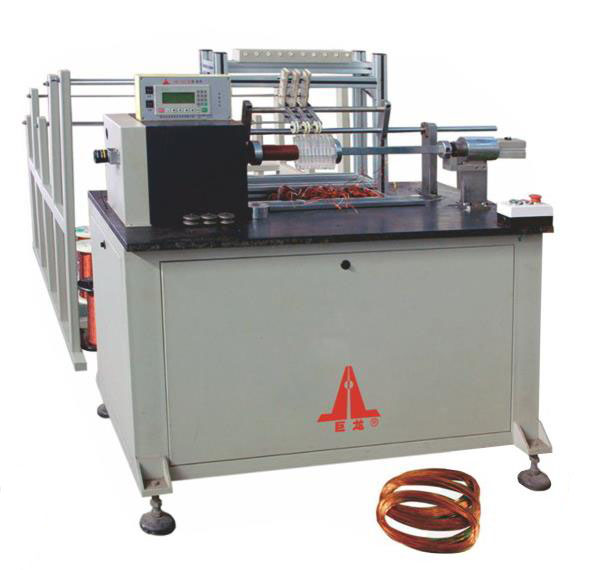
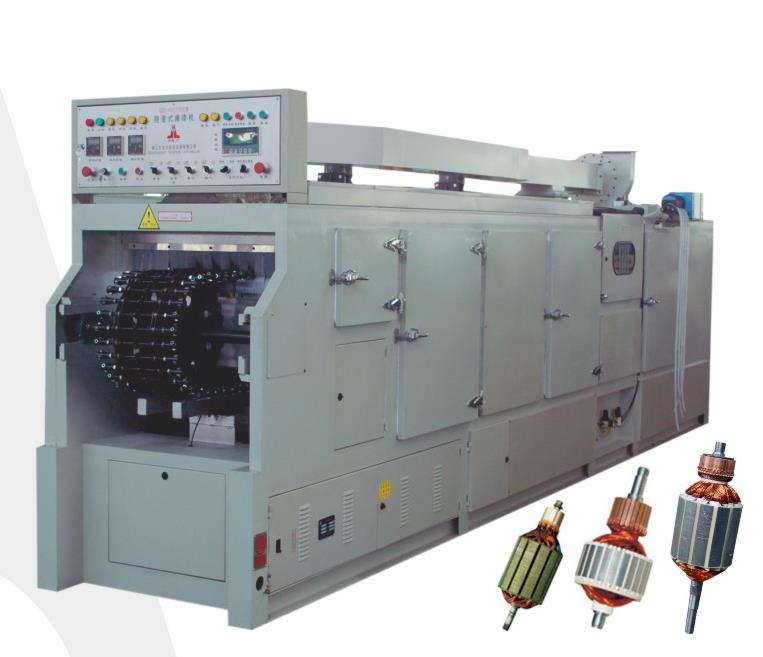
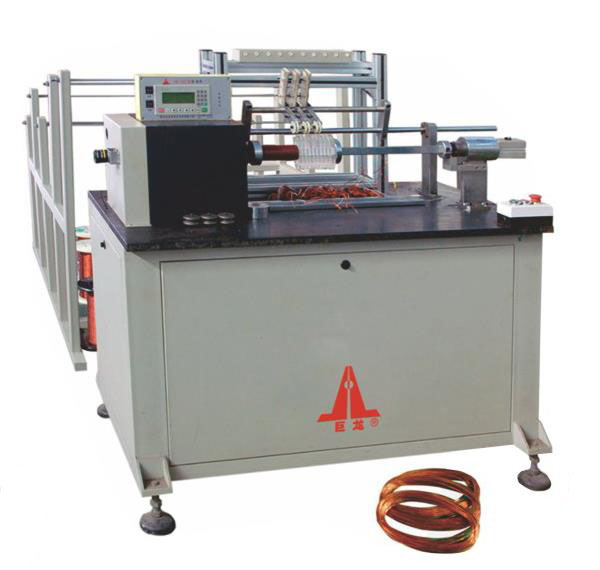
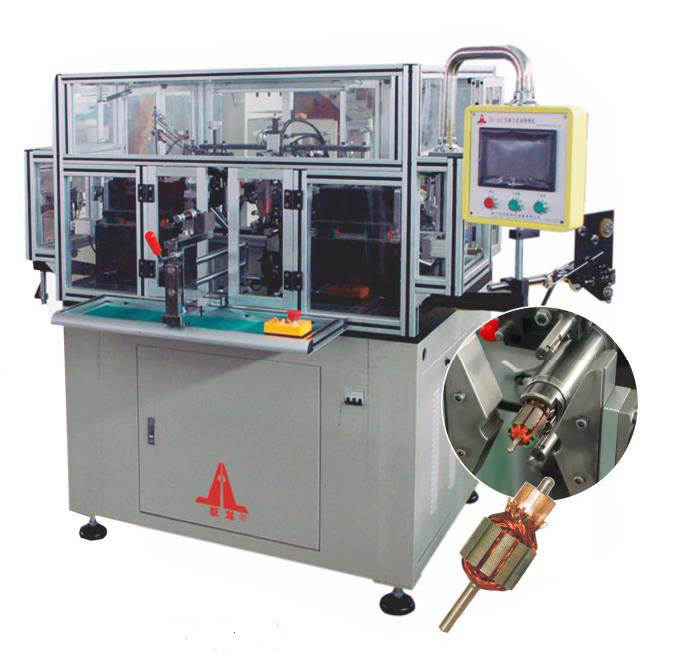
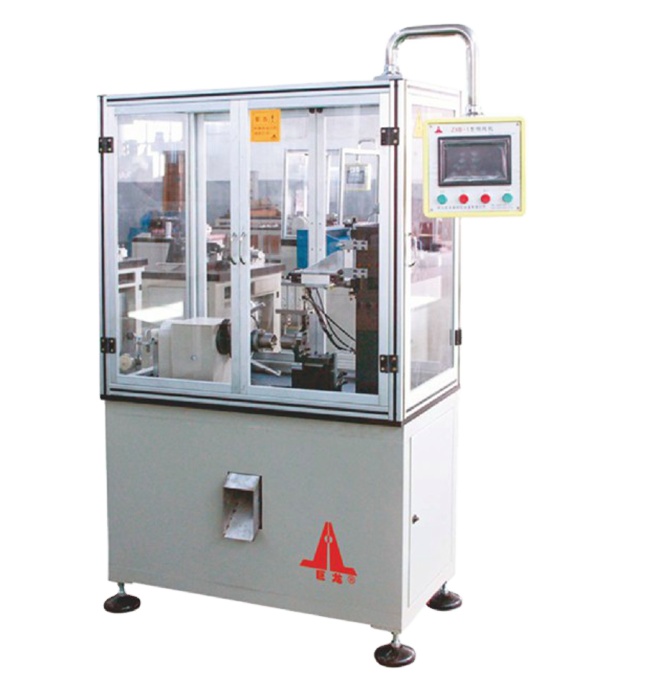
In modern electromagnetic component fabrication, mechanical stability and microsecond servo synchronization dictate operational efficiency and rotor lifespan.
Traditional pneumatic-friction winding systems introduce tensile spikes exceeding ±18%, resulting in microscopic copper necking and dielectric coating failure. Modern high-efficiency rotor winders integrate closed-loop multi-axis electronic tensioners that stabilize tension within ±1.5% across 3,000 RPM transitions, ensuring uniform electromagnetic symmetry.
The mechanical-electrical boundary where magnet wire interfaces with commutator tangs is historically the leading point of field failure. Integrating intelligent hot-stake micro-spot welding with in-situ milliohm resistance monitoring verifies metallurgical bond integrity before the rotor core advances to trickle impregnation.
As vehicle electrification and micro-mobility mandate higher power densities, winding machines must transition from random wound topologies to precision continuous layer windings and hairpin topologies. Achieving slot fill factors beyond 72% requires algorithmic CNC wire guide tooling and precise end-turn compacting arrays.
Procurement directors and plant modernization engineers are actively shifting their evaluation metrics when sourcing rotor and stator automation systems from Chinese manufacturing hubs.
High-voltage traction motors and compact industrial drives demand rectangular copper conductors to reduce thermal resistance, shifting capex towards specialized shaping and twisting platforms.
Tier-1 automotive suppliers mandate that winding machines record turn counts, hook resistance, and dynamic mechanical tension curves indexed to laser-etched 2D core data matrices.
High product mix demands rapid retooling times under 20 minutes via pre-calibrated quick-change flyer heads and automated lamination stack clamp height adjustment mechanisms.
Buyers no longer procure standalone winding stations; the requirement has pivoted to integrated cells joining paper wedge insertion, winding, fusing, and balancing into a single supervisory SCADA loop.
The transition toward Industry 4.0 in electric motor assembly transforms raw winding machines into intelligent, self-correcting manufacturing nodes.
By leveraging high-frequency surge testing and leakage current feedback during the wire layering sequence, next-generation flyers identify wire enamel micro-scratches caused by worn ceramic eyelets before batch run completion, eliminating scrap batches.
Variations in magnet wire yield strength across different copper spools often compromise slot density. AI-enhanced torque sensors continuously adapt winding arm decelerations to maintain uniform coil compaction without human intervention.
Before custom tooling is machined in steel, kinematic simulations validate clearances inside complex rotor slots, reducing physical commissioning lead times from weeks to hours and lowering overall tooling re-work expenses.
Operating continuously since 1998, Zhejiang Rilvo Automation Equipment Co., Ltd. is recognized as a national High and New Technology Enterprise. Situated in Sanmen, Zhejiang, our industrial campus spans nearly 60,000 m² with over 150 precision CNC tooling suites, supporting customized turnkey lines for micro-motors, automotive starter armatures, alternators, and BLDC drives.
Submit your rotor lamination drawing, slot dimensions, and target cycle time. Our engineering team prepares a tailored tooling schema within 24 hours.
Get a QuoteClear, direct answers regarding equipment capability, tooling design, delivery terms, and post-installation support.
Our automation systems cover starter motor armatures, automotive alternators, shaded pole motors, induction motor stators, brushless DC (BLDC) inner/outer rotors, and e-bike hub motors. Tooling is customized specifically to your stack height, slot geometry, commutator pitch, and wire diameter.
Every order undergoes rigorous multi-stage validation. We request physical lamination cores and copper wire samples from your production batch, execute full-speed continuous run tests, verify balance and slot-fill consistency, and provide exhaustive high-definition video acceptance reports before crate packing.
Yes. Systems such as our CJL-7 and 5-SC-2B series are purposefully engineered for flat wire bending, insertion, and end-twisting. Precision servo feed mechanisms prevent copper edge distortion and maintain uniform dielectric coating thickness along severe radius bends.
We routinely execute contracts under FOB Ningbo/Shanghai, CFR, CIF, and EXW terms. Financial settlements are accepted in USD and EUR via T/T and irrevocable L/C. The standard minimum order quantity (MOQ) is one unit or a complete bespoke production cell.
Each delivery includes comprehensive schematic documentation, PLC ladder logic diagrams, and complete wear-part kits. For complex automated lines, Rilvo provides factory-direct engineer dispatch for on-site commissioning, supplemented by 24/7 remote diagnostics via industrial secure gateways.
Our wire routing tracks utilize mirror-polished tungsten carbide eyelets, diamond-like carbon (DLC) coated guide nozzles, and active motorized wire de-reelers with low-inertia servo dancers that prevent sudden friction burns and wire surface scraping.