High-precision rotor shaft pressing, CNC turning, multi-axis automated coil insertion, and trickle impregnation systems engineered to support high-performance marine generating sets and automotive platforms.

Automated high-speed coil winding machine engineered for uniform wire layering, precision pitch indexing, and tension-stabilized coil nesting across AC induction and alternator stator laminations.

Continuous horizontal trickle resin impregnation equipment delivering void-free dielectric encapsulation, high thermal dissipation, and salt-mist corrosion resistance for maritime alternators.

Next-generation edge-wound rectangular flat copper coil machine designed for compact alternator field assemblies, achieving superior slot-fill factor up to 78% for power-dense micro-grid gensets.

Factory-direct programmable multi-strand magnetic wire winding station offering fast tooling changeovers, synchronized servo fly winding, and anti-twist wire feed conduits.

High-precision CNC lathe designed for diamond finishing of alternator collector slip rings and rotor outer diameters, assuring concentricity tolerances under 0.003 mm to prevent brush chatter.

Hydraulic-servo integrated core-to-shaft pressing station with real-time pressure-displacement monitoring, eliminating shaft runout and lamination stack distortion during claw-pole assembly.

Heavy-duty industrial winding equipment configured for salient pole and cylindrical rotor windings, equipped with closed-loop magnetic tension feedback and electronic indexing turrets.

Synchronous coil and slot insulation wedge insertion tooling, manufactured from hardened SKD11 tool steel to ensure scratch-free magnet wire insertion during continuous automated cycles.
An engineering assessment of modern claw-pole (Lundell) and permanent-magnet assisted rotor fabrication for mission-critical marine electrification, high-performance automotive alternators, and maritime auxiliary power generation.
The operational reliability of automotive and auxiliary marine alternators hinges on the absolute structural concentricity between the rotor core, claw-pole segments, slip rings, and the rotor drive shaft. At angular velocities reaching 18,000 to 22,000 RPM, any microscopic axial runout induces parasitic vibrations, premature bearing wear, and acoustic degradation.
Rilvo Automation integrates precision servo-hydraulic pressing stations (Model Y-30 series) capable of dynamic load-displacement signature analysis. During the insertion stroke, the system continuously logs pressure versus distance curves at millisecond intervals. If lamination burrs, bore misalignments, or metallurgical yield variances exceed calibrated thresholds (±0.5 kN), the cycle flags the component instantaneously before irreversible damage occurs.
Traditional bobbin-wound rotor field coils frequently suffer from randomized wire layering, which leads to internal air pockets, uneven heat dissipation, and reduced copper slot-fill factors. For compact high-ampere alternators deployed along the French Riviera's demanding maritime circuits, maximizing electromagnetic efficiency within constrained envelope spaces is paramount.
Our programmable three-servo rotor winding machines (exemplified by the ZB-303 and ZB-302 series) utilize multi-axis electronic cam kinematics. By synchronizing spindle rotation with high-speed traverse nozzles and active closed-loop wire tensioners, the equipment achieves orthocyclic winding geometries. This eliminates wire crossing, protects the enamel coating against micro-cracking, and elevates the copper packing density to over 72%.
The electrical contact interface between carbon brushes and the rotating copper slip ring determines brush life, radio-frequency interference (RFI), and electrical excitation stability. Uneven brush track wear or micro-eccentricities generate electrical arc micro-pitting, which accelerates degradation under humid maritime atmospheres.
The SZC-3 CNC rotor turning lathe utilizes PCD (polycrystalline diamond) tooling paired with hydrostatic spindles to process rotor slip rings after full rotor stack integration. This guarantees that turning occurs on the rotor's true rotational bearing centers. Surface roughness is consistently refined to Ra ≤ 0.2 μm with total radial runout kept below 0.003 mm, ensuring seamless current transmission without carbon brush bouncing at peak rotational speeds.
Monte Carlo represents the global nexus of superyacht engineering, luxury automotive development, and green coastal maritime innovation. Rilvo Automation equipment is purpose-tailored to solve the rigorous engineering challenges typical of this prestigious maritime and automotive hub.
At Port Hercule and across Monaco's high-density superyacht marinas, onboard power plants must operate with near-zero acoustic resonance and absolute electrical ripple suppression. Our automated trickle impregnation machines (SZD-376/63.5) deliver Class H and Class N thermal-rated epoxy coating. This hermetically seals rotor windings against high-salinity Mediterranean sea-mist, preventing insulation breakdown and hot spots during continuous 24/7 onboard generator duties.
Serving elite automotive engineering teams linked to the Monaco Grand Prix and Formula E testing corridors, our rotor lines produce high-output, compact 48V mild-hybrid belt-alternator-starters (BAS) and Integrated Starter Generators (ISG). Featuring high dynamic balancing precision (ISO Grade G1.0) and edge-wound flat copper wire technology (ZXB-1), rotors withstand continuous 20,000+ RPM bursts with superior thermal tolerance.
Aligned with the Prince Albert II of Monaco Foundation’s ecological mandate for clean harbors, local shipyards are accelerating conversions to electric tender craft and hybrid day-cruisers. Rilvo’s turnkey stator and rotor systems enable local Tier-1 marine equipment fabricators to manufacture high-efficiency permanent-magnet synchronous motor (PMSM) rotors and low-voltage DC auxiliary charging alternators locally.
The demand for rotating electrical machinery across the French Riviera is transitioning rapidly from standard legacy units to intelligent, compact, and ultra-quiet power generators.
Modern maritime and automotive buyers demand alternators that generate 30% more power without altering mounting footprints. The shift from round magnet wire to rectangular cross-section flat copper wire increases copper area by up to 25%, drastically minimizing I²R thermal resistance losses. Our ZXB-1 flat coil winders and 5-SC-2B shaping machines provide turnkey automation for this structural shift.
In luxury marine passenger cabins berthed at Monaco, generator whine is unacceptable. Alternator rotors require two-plane dynamic balancing with residual unbalance ratings below 0.2 g·mm/kg. Automated balance correction via automated milling or drilling stations integrated into Rilvo’s continuous assembly lines ensures quiet operational profiles compliant with Bureau Veritas passenger yacht comfort certifications.
European production standards require comprehensive batch serialization. Rilvo assembly lines integrate optical matrix scanners, servo torque logging, and Ethernet-IP PLC protocols that interface with plant-level MES systems. Every rotor manufactured carries an immutable ledger of winding turns, press fit force, resin soak curing curve, and final slip ring runout.
Detailed technical benchmarking across Rilvo’s core automated modules for automotive and heavy-duty marine alternator rotor manufacturing.
| Station / Process Module | Core Equipment Model | Operational Cycle Time (Takt) | Process Precision / Tolerance | Control Architecture | Primary Industrial Role |
|---|---|---|---|---|---|
| Rotor Shaft Press-Fitting | Model Y-30 Series | 12 – 18 sec / unit | Axial Depth: ±0.02 mm; Load: ±0.5 kN | Delta / Mitsubishi PLC + Touch HMI | Interference fit of shaft into claw poles |
| Automatic Field Coil Winding | Model ZB-303 / ZB-302 | 22 – 35 sec / unit | Layer Pitch: ±0.01 mm; Tension: ±1.5% | Three-Servo Synchronous Axes | High-density copper winding on rotor bobbin |
| Precision Slip Ring CNC Turning | Model SZC-3 CNC Lathe | 14 – 20 sec / unit | Concentricity: ≤ 0.003 mm; Ra ≤ 0.2 μm | Syntec / Siemens CNC Controller | Micro-finish of dual copper slip rings |
| Resin Trickle Impregnation | Model SZD-376 / DQ-226 | Continuous Batch / Indexed | Resin Penetration: ≥ 98.5% void-free | PID Thermal Closed Loop (±2°C) | Environmental moisture & salt protection |
| Dynamic Balancing & Correction | Model ZDB Integrated Line | 18 – 25 sec / unit | Residual Unbalance: ≤ 0.2 g·mm/kg | Digital DSP Vibration Processing | Two-plane polar dynamic balancing |
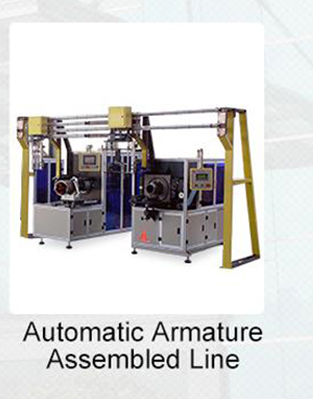
| Automated Coil Insertion & Wedge | XB-1GZ / DQ-1 Series | 15 – 30 sec / unit | Wedge Insertion Success Rate ≥ 99.8% | Multi-axis servo-driven pushers | Stator/armature winding integration |
Technical, logistical, and commercial inquiries addressed by Rilvo Automation’s senior engineering and export project management team.
We integrate dedicated trickle resin impregnation systems (such as the SZD-376/63.5) utilizing low-viscosity, high-penetration epoxy resins formulated to meet marine standards. The continuous rotation of the rotor during pre-heating, trickling, and infrared curing guarantees complete encapsulation of internal copper strands, eliminating air pockets where maritime moisture, salt ions, or engine fuels could initiate dielectric breakdown or galvanic corrosion.
Yes. Backed by our 36-member in-house R&D team and more than 10 years of dedicated OEM/ODM engineering, every station is customized to your 2D/3D part drawings. From custom magnetic wire guiding nozzles, chucks, and collets to pneumatic gripping fingers and shaft press dies, we manufacture all tooling in-house using hardened tool steel (SKD11/Cr12MoV) vacuum heat-treated to HRC 58-62.
All machinery built by Zhejiang Rilvo Automation is manufactured under an ISO9001 certified quality management system, carries China Compulsory Certification (3C), and can be fully configured to comply with European CE Machinery Directive (2006/42/EC), Low Voltage Directive (2014/35/EU), and EMC Directive (2014/30/EU). Our controls feature Schneider / Omron / Siemens safety relays, dual-channel emergency circuits, and interlocked perimeter guarding.
Standard standalone machines have lead times of 30 to 45 business days, while complete multi-station turnkey production lines require 60 to 90 days including pre-shipment trial runs. Goods ship directly from Ningbo Port (located only 2 hours from our Sanmen manufacturing plant) to major European maritime logistics hubs such as Fos-sur-Mer (Marseille), Genoa, or direct airfreight via Nice Côte d'Azur Airport (NCE) for urgent tooling and replacement parts.
We perform rigorous Factory Acceptance Testing (FAT) using your physical rotor parts, copper wire, and slip rings. We conduct minimum 100-cycle continuous dry and wet production runs to calculate Cpk process capability indices, dimensional repeatability, and insulation resistance. High-definition video documentation, process inspection data sheets, and physical winding samples are delivered for client sign-off before crate packing.
Every machine is equipped with an industrial Ethernet gateway enabling remote diagnostic troubleshooting, software patching, and cycle optimization by our senior controls engineers. We supply comprehensive English operational manuals, wiring schematics, and recommended spare wear-part kits. For line projects, our field engineers travel on-site to assist with layout integration, operator training, and final commissioning.
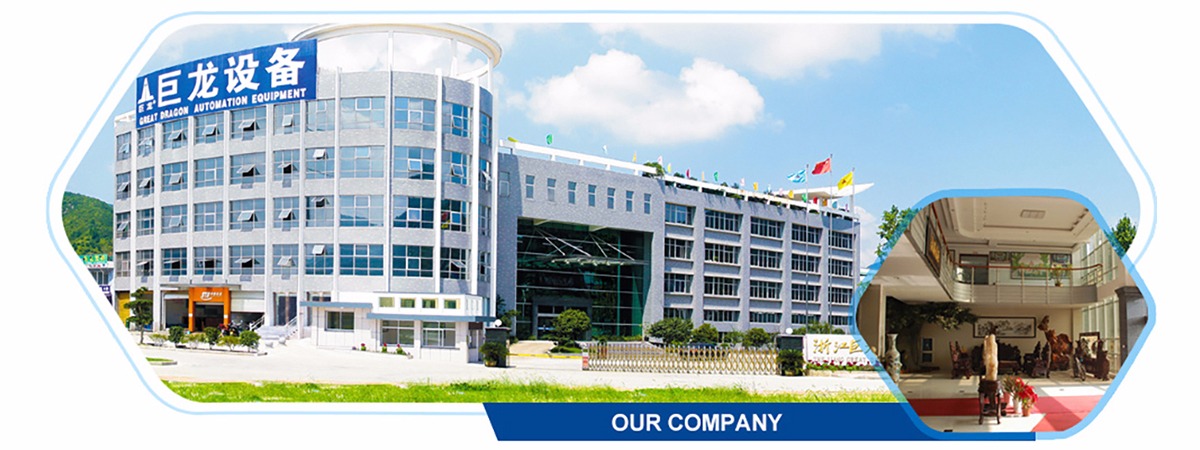
Headquartered in the Shatianyang Development Zone of Sanmen, Taizhou, Rilvo Automation has manufactured specialized motor production equipment since 1998, developing into a provincial High-Tech Enterprise.
Our modern manufacturing base encompasses 20,000 m² of operational workshops with an additional 30,000 m² under expansion. Housing over 150 precision CNC lathes, vertical machining centers, precision cylindrical grinders, and coordinate measuring machines (CMM), we control the fabrication of over 85% of machine components in-house to protect mechanical tolerances and shipment commitments.
With a dedicated workforce of 150 employees, including 36 specialized R&D engineers and 8 holding senior engineering titles, our engineering division is directed by our president and chief engineer, an honored national knowledge-worker model award recipient. We hold 17 national invention and utility model patents covering servo-driven winding kinematics, spot welding control, and electrostatic insulation spraying.
Rather than piecing together mismatched stations from multiple vendors, Rilvo delivers harmonious, single-source turnkey production lines. From automated shaft pressing to CNC slip ring turning, precision flyer winding, hot-stake commutator welding, trickle varnishing, and final electrical testing, our engineering solutions eliminate inter-station communication friction and optimize operational floor footprint.


