Precision-engineered for brushless DC (BLDC) motors, heavy traction armatures, high-voltage alternators, and specialized induction stators, delivering maximum thermal durability, minimal downtime, and complete production line synchronization.
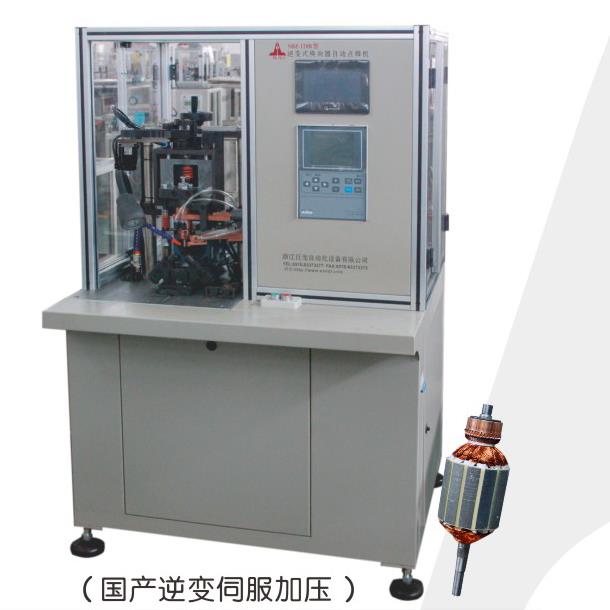
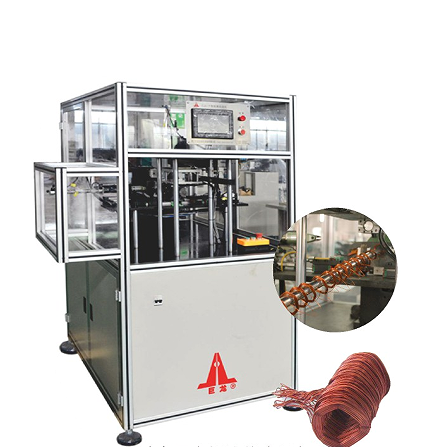
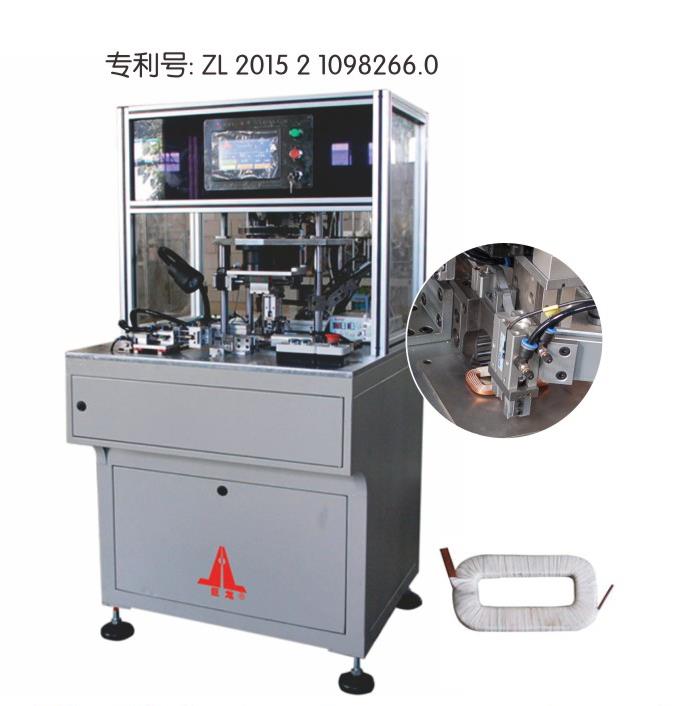
The global transition from mechanical commutated electrical motors to modern Brushless DC (BLDC) and Permanent Magnet Synchronous Motors (PMSM) represents a watershed technological leap. For industrial regions undertaking aggressive electrical grid optimization and equipment refurbishment, such as heavy industrial manufacturing hubs, mineral extraction corridors, and state rail modernization projects across North Korea, acquiring robust, high-reliability automated motor assembly lines is no longer merely an efficiency preference—it is a critical infrastructural prerequisite. Zhejiang Rilvo Automation Equipment Co., Ltd. delivers over 27 years of dedicated motor automation manufacturing excellence, bridging cutting-edge multi-axis CNC needle winding, automatic stator wedge insertion, intermediate forming, and advanced micro-resistance welding technology into coherent, factory-tested turnkey systems.
In high-torque industrial duty cycles, conventional brushed DC and legacy asynchronous induction motors suffer from continuous brush degradation, severe thermal losses, and vulnerable commutator segment arcs. Conversely, BLDC architecture shifts the electromagnetic excitation completely to an internal or external electronic commutation topology, demanding exceptional dimensional tolerances during copper wire insertion, slot-insulation creasing, and magnet retention. Our automated production line machinery eliminates human handling error, prevents micro-scratches on enamel insulation, and guarantees that motor stators maintain impeccable insulation resistance even under intense mechanical vibration and wide thermal operating windows.
Multi-axis CNC needle winding units deliver concentrated tooth winding directly over segmented or unsegmented stators. By optimizing wire guiding angles and tension dampening, our machines attain slot fill factors exceeding 75%, radically maximizing motor power density.
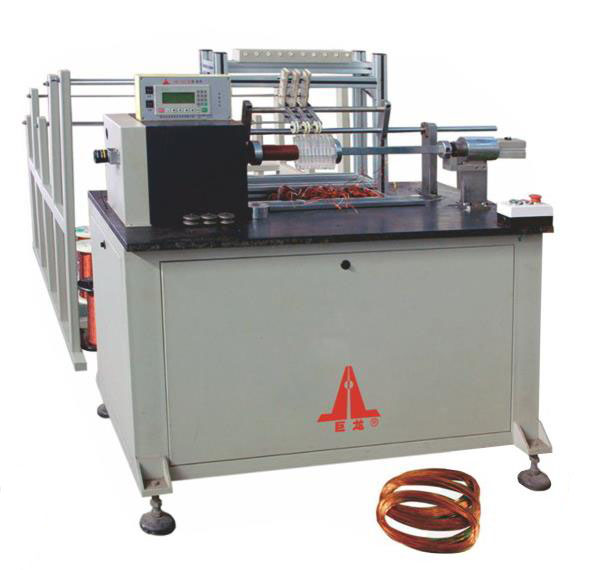
Specialized flat wire and hairpin shaping machines create repeatable conductor geometry with zero micro-fracturing on polyamide-imide enamel coatings, minimizing high-frequency AC copper eddy losses in heavy-duty mining and traction drives.
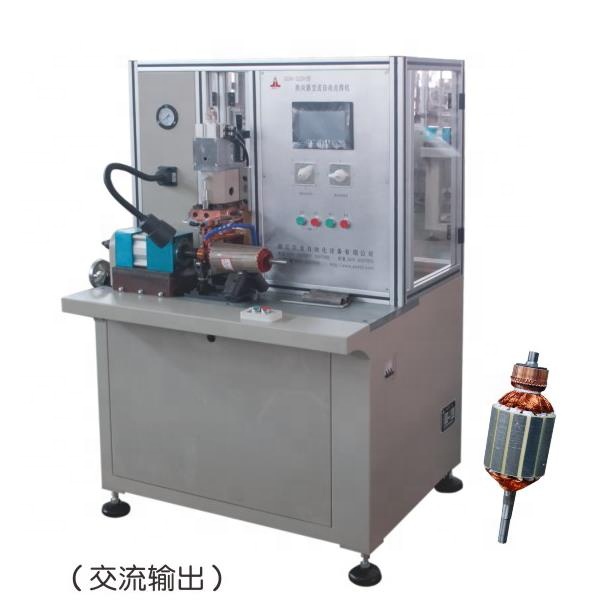
Closed-loop intermediate frequency inverter welding units (e.g., SDZ-130GS) achieve consistent thermo-compression fusing on copper and copper-clad aluminum (CCA) leads, assuring permanent molecular bonding with zero cold-soldering defects.
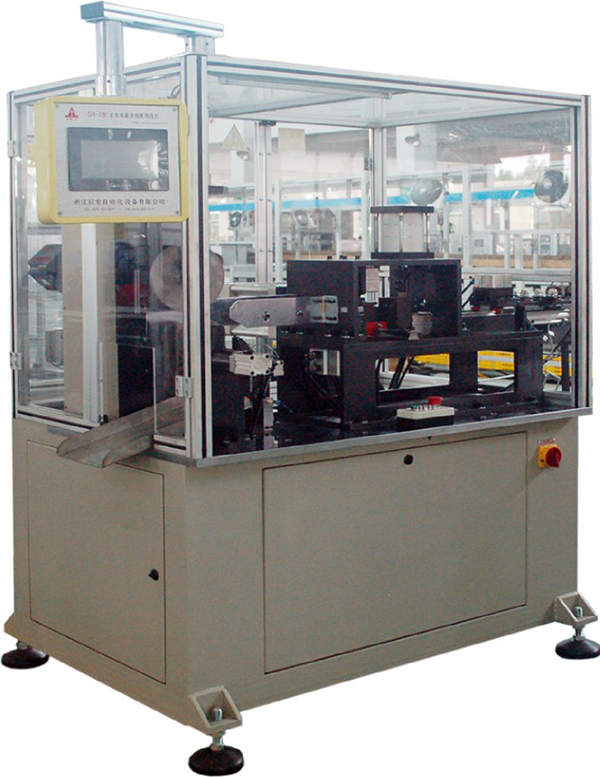
Automated high-speed horizontal and vertical wedge paper machines insert pre-formed Nomex, DMD, or Kapton films into stator slots with precise mechanical cuffing, safeguarding dielectric breakdown ratings past 3,500V surge impulse tests.
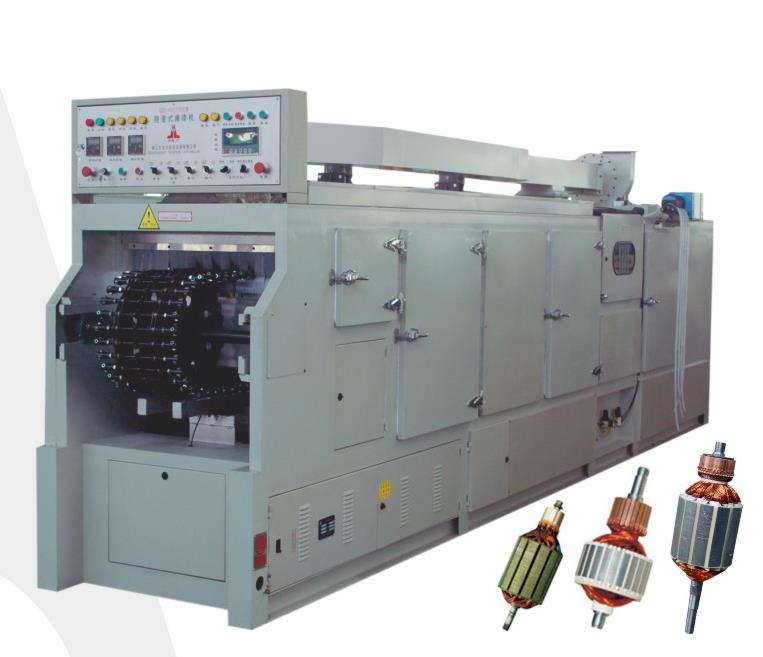
Horizontal dynamic varnishing and trickling machines preheat stators through controlled induction, applying catalyzed solventless resins that deeply saturate slot interiors without contaminating lamination outer diameters or mounting flanges.
Integrated automated testing stations evaluate surge withstand voltage, DC winding phase-to-phase resistance balance, hall sensor timing accuracy, dynamic rotor unbalance (ISO G1.0), and back-EMF waveform fidelity in one unified cycle.
Industrial machinery deployed across the Democratic People's Republic of Korea operates in distinct geographical, infrastructural, and power-grid environments. Our equipment is customized with structural over-engineering, wide voltage tolerance power cabinets, and dust-resistant pneumatic conduits specifically aligned with local operational realties:
Underground extraction operations in Anju, Komdok, and Musan demand explosion-proof BLDC and permanent-magnet drive motors for slurry pumps, ventilation turbines, and continuous belt conveyors that run without spark generation risks.
Urban public transit across Pyongyang and heavy rail networks connecting Sinuiju, Hamhung, and Chongjin require reliable traction armatures, alternator stators, and auxiliary cooling blowers capable of continuous long-distance duty cycles.
Cooperative farms and rural grain processing complexes in South Hwanghae and North Pyongan rely heavily on submersible BLDC pumps and threshing motors that achieve maximum energy efficiency from localized hydro and solar microgrids.
Below is a comparative breakdown of key automated machines within our brushless and industrial motor manufacturing lines, showcasing capacity, operational mechanics, and integration benefits for foreign industrial buyers:
| Machine Model | Primary Function | Supported Wire / Core Spec | Cycle Output Rate | Control & Drive Architecture | Turnkey Line Placement |
|---|---|---|---|---|---|
| SDZ-130GS Inverter Welder | Armature / Commutator Fusing | 0.18 - 2.6mm CCA / Copper Wire | 16 - 36 Segments / min | Microprocessor Constant Current | Secondary Rotor Assembly |
| CJL-7 Flat Coil Winder | BLDC / PMSM Stator Forming | Rectangular Copper up to 6.0 x 3.0mm | Variable by Turns (15-60s/set) | Digital Multi-Axis Servo Loop | Primary Tooth Coil Prep |
| XB-1GZ Stator Winder | Induction / Alternator Stator | Stator OD 50 - 220mm, Multi-Strand | Flyer speeds up to 2800 RPM | Dual Servo Fly Winding + Indexing | Stator Production Line |
| SZD-376/63.5 Varnishing Plant | Continuous Trickle Impregnation | Stator Outer Dia up to 260mm | 40 - 180 pcs / hour | PLC Heat Profile + Servo Tilt | Insulation Curing Section |
| QR-2 Inductor Winder | Magnetic Field & Choke Coils | Wire Gauge 0.15 - 2.80mm | High Velocity Synchronous Loop | Programmable Electronic Cam | Sub-Component Coil Prep |
The industrial landscape in North Korea is experiencing an accelerating technological realignment. Historical dependence on low-efficiency, oversized tri-phase induction motors imported decades ago is being actively phased out in favor of compact, high-torque-per-kilogram electric drive architectures. This modernization effort is shaped by three profound localized trends:
1. Strict Energy Conservation Mandates: Across municipal networks and major state enterprises, conserving baseline electrical energy is paramount. Brushless motors offer electrical efficiencies between 88% and 95%, dramatically outperforming legacy asynchronous induction motors operating around 72% to 80%. Integrating automated BLDC manufacturing lines allows factories to produce energy-conserving motors natively, freeing valuable regional grid capacity for heavy metallurgical and chemical production.
2. Adoption of Alternative Conductors (CCA & Advanced Alloys): Due to raw material allocation pressures, many manufacturing facilities in the region are adopting Copper-Clad Aluminum (CCA) and composite conductor wiring for small-to-medium motor frames. CCA reduces copper reliance by up to 60% while decreasing overall rotor and stator weight. However, CCA is highly vulnerable to thermal degradation and oxidation if welded with outdated flame or AC transformer resistance equipment. Rilvo's SDZ-130GS Inverter Spot Welding Machine provides precise micro-current timing and active displacement monitoring, preventing aluminum core burnout while forging immaculate atomic joints.
3. Transition from Component Sourcing to Native Turnkey Manufacturing: Relying on imported finished motors poses logistical lead-time vulnerabilities and standardization bottlenecks. Regional industrial directors are heavily prioritizing the acquisition of standalone, fully automated equipment lines—enabling self-sufficient stator fabrication, automated lamination stacking, precision winding, vacuum resin impregnation, and rigorous QA benchmarking inside domestic manufacturing campuses.
Headquartered in Sanmen, Zhejiang, Zhejiang Rilvo Automation Equipment Co., Ltd. is an officially recognized High and New Technology Enterprise, ISO9001 certified, and an audited manufacturer with a proven track record across East Asia, Southeast Asia, Eastern Europe, and South America.
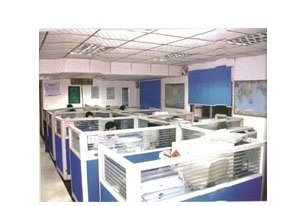
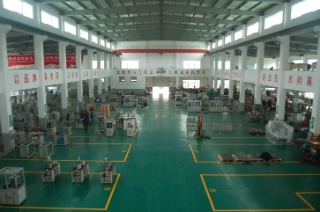
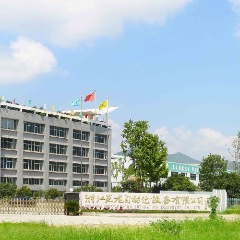
Our president and chief engineer, honored with the national knowledge-worker model award from the All-China Federation of Trade Unions, oversees an elite 36-member dedicated R&D engineering division. Spanning a modern 60,000 m² industrial facility equipped with more than 150 internal CNC machining centers, grinding machines, and dynamic balancing testers, Rilvo maintains complete in-house manufacturing sovereignty—refusing to rely on third-party subcontractor tooling.
Located merely two hours from Ningbo Port and within streamlined rail transit freight routes to Dandong and border clearance channels, Rilvo ensures rapid, secure containerized transport of heavy machinery with full vacuum-barrier anti-corrosion crating.
Direct technical answers addressing equipment compatibility, power grid fluctuation resilience, logistics corridors, tooling changeovers, and lifetime engineering support.
Industrial grids occasionally experience voltage drops of ±15% and unstable frequency swings. Rilvo export-grade machinery is engineered with integrated wide-band industrial isolation transformers, Siemens/Schneider heavy-duty power stabilizers, and dual surge-suppression circuits, preventing micro-processor resets and servo torque drift during live production cycles.
Yes. Processing CCA wire requires extremely delicate digital tension regulation and micro-joule welding heat control. Our winding machinery incorporates programmable hysteresis tensioners that prevent wire necking, while our SDZ-130GS Inverter Spot Welder employs multi-stage preheating pulses to vaporize enamel gently without melting the underlying aluminum substrate.
Our quick-change modular fixtures allow operators to switch stator stack heights, outer diameters, and slot counts in approximately 20 to 45 minutes. Tooling kits feature precision dowel locators and digital HMI recipe storage, enabling operators to select pre-programmed winding patterns without mechanical recalibration.
For shipments directed to North Korea, equipment is securely loaded in moisture-barrier vacuum packaging, bolted inside reinforced steel-framed sea crates, and routed via established Dandong-Sinuiju rail and truck crossing logistics channels or CIF shipments through Nampo port. All documentation, packing lists, and export declarations are strictly managed for seamless border clearance.
Prior to crating, buyers supply their native stator laminations, rotor shafts, and wire samples. Our engineers perform full-cycle live operational trials, recording high-definition video documentation of winding speeds, dielectric resistance, and cycle times. Machines are only released for export after receiving written client sign-off on measured sample parameters.
Every automated machine is supplied with a comprehensive 2-year maintenance consumable bundle, including tungsten alloy welding electrodes, precision ceramic wire guide nozzles, pneumatic seal kits, relay modules, and drive belts. Comprehensive schematics, 3D exploded assembly diagrams, and multilingual operation manuals accompany each delivery.
Submit your stator/rotor lamination CAD drawings, target annual output requirements, and wire specifications. Our 36-member engineering R&D department will formulate a turnkey factory layout, equipment quote, and cycle time analysis within 24 business hours.


