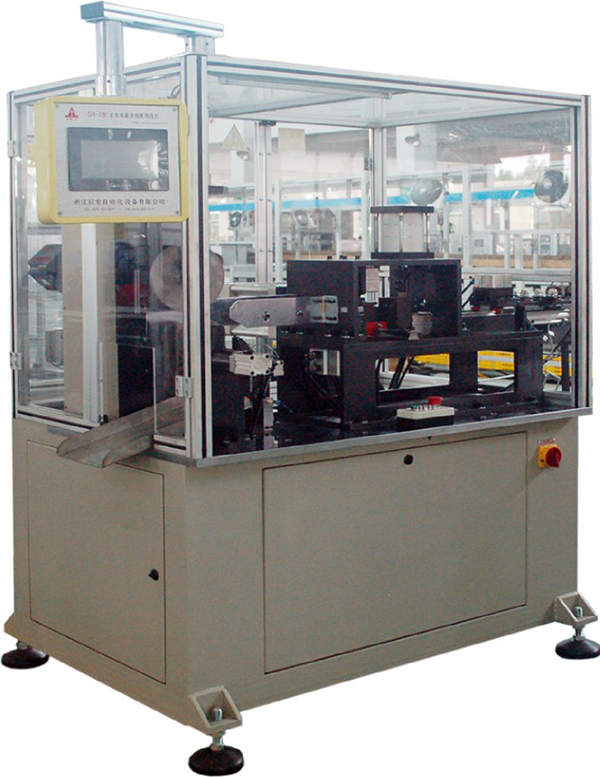
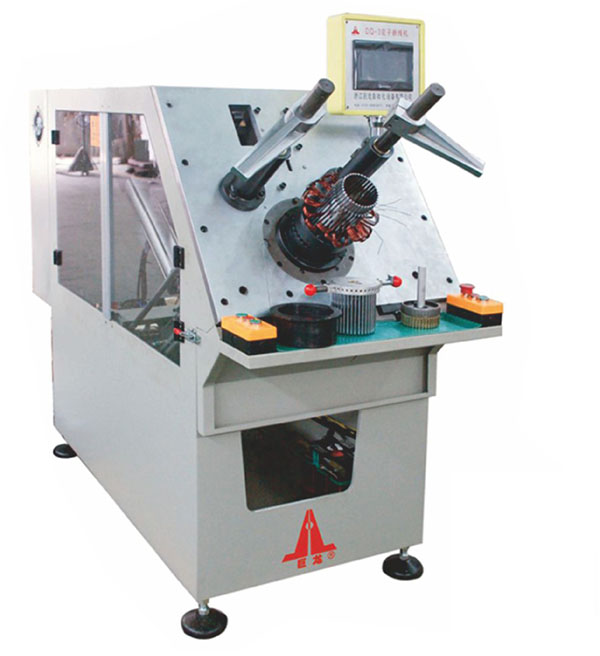
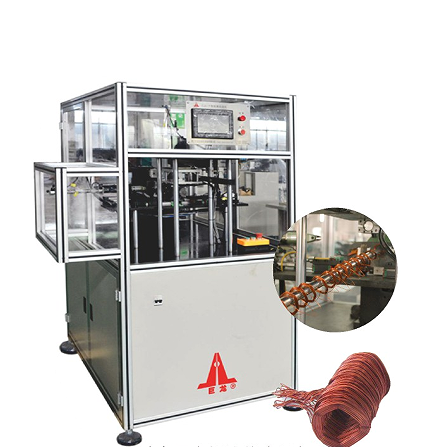
Precision automated units engineered for heavy-duty automotive alternators, transit fleet generators, marine auxiliary plants, and induction motors deployed across Central America.
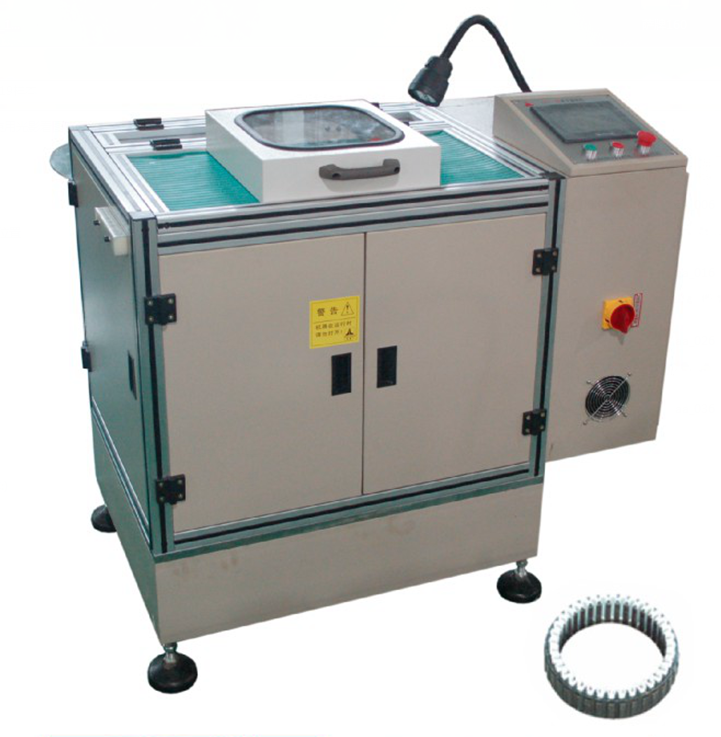
Panama's position as the premier logistical axis of the Western Hemisphere demands uninterrupted operational reliability from maritime tugs, container handling machinery, intermodal transport, and refrigerated logistics. Central to this electromechanical infrastructure is the heavy-duty alternator and electric starter motor. As maritime and transit logistics in Panama face aggressive environmental degradation—including continuous saline air exposure, high relative humidity (often exceeding 90%), and prolonged thermal cycling—the manufacturing specifications for alternator stators have escalated dramatically.
Automated stator assembly lines engineered in China by Zhejiang Rilvo Automation Equipment Co., Ltd. address these precise failure vectors. By replacing error-prone manual inserting and tensioning processes with high-precision, multi-axis servo systems, our production platforms achieve unmatched slot-fill factors, uniform copper tension, and defect-free phase insulation. This whitepaper analyzes the engineering architecture of modern automotive, commercial, and marine alternator stator production lines, evaluating their localized economic, environmental, and technological value across the Panamanian manufacturing and re-engineering landscape.
The operational framework for rotating electrical machines in the Republic of Panama diverges substantially from inland or temperate industrial regions. Production equipment deployed for Panamanian operations—whether situated within the Colón Free Trade Zone (Zona Libre de Colón), Panama Pacífico Special Economic Area, or regional workshops supporting the Panama Canal Authority (ACP)—must deliver stators capable of surviving aggressive tropicalization.
Panama operates as the prime regional distribution and rebuild hub for Central America and the Caribbean basin. Alternator rebuilding lines integrated with high-efficiency horizontal paper inserters (such as the DFC-1) enable regional facilities to remanufacture OEM-grade alternators with minimal lead times, catering to commercial fleet demand across Colombia, Costa Rica, and Guatemala.
Panama Canal pilot boats, harbor tugboats, and offshore support barges require robust high-amperage (24V/150A to 28V/250A) continuous-duty alternators. Our automatic servo coil inserting machinery ensures high-integrity slot-cell insulation, preventing turn-to-turn dielectric breakdown caused by salty bilge moisture and extreme engine room temperatures.
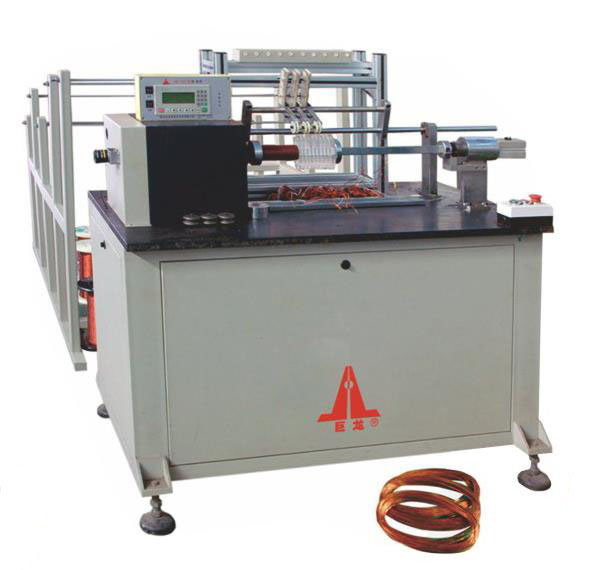
The overland logistics corridor between Balboa on the Pacific and Manzanillo/Cristóbal on the Atlantic depends on clip-on diesel generator sets (gensets) for intermodal refrigerated containers. High-vibration operational profiles demand flat-wire shaping (Model CJL-7) and automated wedge insertion to eliminate wire fretting and premature phase shorts under constant road transit.
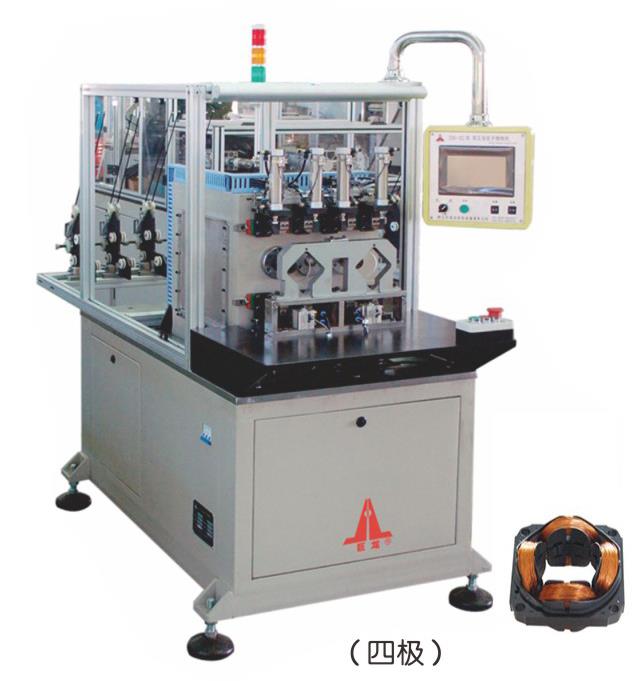
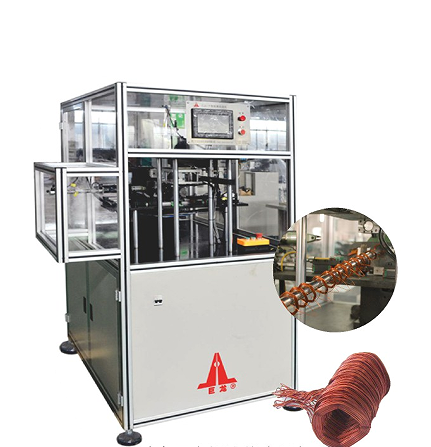
Producing modern high-power-density automotive and industrial alternator stators requires a coordinated line sequence. Below is the operational workflow achieved through Zhejiang Rilvo Automation's synchronized systems:
| Process Step | Standard Model | Core Mechanism | Cycle Time / Slot | Panama Fleet Advantage |
|---|---|---|---|---|
| 1. Slot Wedge Insulating | DFC-1 Horizontal Inserter | Pneumatic-servo feed, mechanical creasing, cold stamping | 0.35 - 0.50 s | Zero slot-edge cutting; ensures salt-mist dielectric margin (>2.5 kV) |
| 2. Precision Coil Winding | XB-1GZ / CJL-7 Series | Multi-axis servo CNC winder with constant-tension closed loop | Varies by turns | Eliminates wire stretching; preserves copper cross-section for maximum conductivity |
| 3. Dual Inserting (Wire + Wedge) | Servo Stator Coil & Wedge Inserter | Simultaneous servo push of coils and top insulation wedges | ≤ 18 s / stator | High slot-fill capacity (up to 82%); perfectly matched coil overhang geometry |
| 4. 3D Interphase Forming | 5 DQ-1 Stator Embedding Unit | Internal expanding mandrels with hydraulic/servo end-turn crimping | ≤ 12 s / stator | Compact end turns preventing housing interference in tight vehicle compartments |
By automating the transition from the horizontal wedge inserter to the servo coil insertion head, mechanical damage caused by manual pushing tools is completely removed from the manufacturing floor. In rebuild facilities across Central America, adopting this level of automation cuts warranty rejection rates from typical industry averages of 4.8% down to under 0.15%.
The Latin American electromechanical supply chain is undergoing profound structural changes driven by three macro trends:
1. Growth of Regional Nearshoring and Free Trade Assembly: With international freight bottlenecks underscoring the vulnerabilities of extended supply chains, Panama's special economic regimes (including Ley SEM and Panama Pacífico) are capturing advanced light manufacturing and electromechanical overhaul activities. Industrialists are acquiring turn-key Chinese automated assembly lines to establish local assembly points that bypass high finished-good import duties.
2. Panama's Decarbonization and Transit Electrification: As the Metro de Panamá network expands and urban bus systems transition toward hybrid and full-electric powertrains, the demand for high-reliability auxiliary 24V alternators and high-voltage DC-DC cooling pump stators has surged. This transition requires manufacturers to produce stators with high phase symmetry and tight resistance balancing (±1.2% maximum variation across phases) to prevent parasitic ripple currents.
3. Hairpin and Flat-Wire Architectural Upgrades: Traditional round-wire windings are increasingly being complemented or replaced by rectangular flat copper conductors in heavy alternators and commercial vehicle drive units. Zhejiang Rilvo's CJL-7 flat motor coil winding platforms empower Panamanian facilities to service modern high-amp alternators, achieving space factors impossible with manual round-wire rewinding.
Sourcing precision production equipment from China demands deep technical validation, high-integrity manufacturing standards, and transparent operational history. Founded in 1998, Zhejiang Rilvo Automation Equipment Co., Ltd. has established itself as an engineering benchmark in micro-motor, starter armature, and alternator stator manufacturing equipment.
Our Sanmen manufacturing campus operates under strict ISO9001 quality management procedures and holds mandatory China Compulsory Certification (3C). Recognized as a High and New Technology Enterprise of Zhejiang Province, we enforce micron-level component validation across our entire 150+ in-house machine tool park.
Led by an award-winning Chief Engineer and supported by an on-site R&D team of 36 dedicated engineers (including 8 with senior professional titles), Rilvo holds 17 national invention and utility patents. We design and grind all forming tooling, wire guide fingers, and insertion magazines in-house, eliminating outsourcing errors.
Situated within 2 hours of Ningbo Port, Rilvo coordinates direct ocean freight container shipments to Puerto de Balboa (Pacific) and Puerto Manzanillo / Colón Container Terminal (Atlantic). We support international trade protocols under CIF, FOB, CFR, and EXW terms with full documentation in English and Spanish.
Our 60,000 m² industrial facility—featuring 20,000 m² of finished modern workshops and an additional 30,000 m² phase under active construction—guarantees factory-scale reliability, continuous spare parts availability, and long-term project support for Latin American clients.
Essential commercial, technical, and operational clarifications for industrial buyers, plant engineers, and sourcing directors evaluating Rilvo stator production lines for installation in Panama.
Standard standalone machines (such as the DFC-1 or XB-1GZ) ship in 25–35 days following drawing sign-off. Full turnkey production lines typically require 60–75 days. Ocean transit from Ningbo/Shanghai directly to Manzanillo or Balboa averages 22–28 days. Full export packaging utilizes vacuum-sealed anti-corrosion barrier foil within heat-treated solid timber crates.
Yes. While mainland China typically runs on 380V 50Hz, we routinely customize our industrial machinery for Panama's 220V/240V or 480V 3-phase 60Hz systems. We incorporate premium Schneider, Omron, or Mitsubishi electrical architectures, complete with localized surge suppression to prevent line noise disruptions.
Buyers provide the stator stack inner diameter (ID), outer diameter (OD), lamination stack height, slot profile geometry (cross-sectional lamination drawing), wire gauge (SWG/AWG), and winding diagram. Our 36-person R&D engineering department produces dedicated magazines, push guides, and forming mandrels tailored to your exact stack dimensions.
Every line completes pre-shipment trial runs using client-provided sample laminations and wire, verified through HD video inspection and dimensional reports. Following arrival in Panama, we provide remote commissioning support, complete Spanish/English operational manuals, PLC backup images, and on-site engineering dispatch options for turn-key line integrations.