



Flat Copper Technology
CJL-7 Flat Motor Coil Winding Machine
- ApplicationFlat Wire / Hairpin
- DriveMulti-Axis Servo Control
- Efficiency Factor98.6% Copper Slot Fill
Precision-calibrated turnkey machinery engineered for marine auxiliary systems, subsea automation, high-torque industrial alternators, and electric propulsion drives.







Norway's leading maritime technology cluster requires electric drives capable of enduring North Sea salinities, extreme thermal swings, and relentless continuous duty.
Bergen leads the world in transitioning passenger catamarans and vehicle ferries operating across Hordaland waters to all-electric and hybrid powertrains. Rilvo's high-tension rotor processing machinery, including the ZB-302 and flat copper coil forming units, enables local powertrain builders and refit shipyards to produce armatures that withstand harmonic vibrations, frequent rapid reversing cycles, and thermal surges without slot-wedge displacement.
Subsea autonomous vehicles (AUVs), inspection ROVs, and heavy winch systems operating out of Coast Center Base (CCB) Ågotnes require brushless DC thruster motors with flawless pressure and water barrier seals. Our Y-30 shaft pressing machine delivers real-time micrometer-accurate interference fits, and our automated trickle varnishing systems guarantee void-free insulation that resists dielectric failure at depths down to 3,000 meters under hydrostatic loading.
Aquaculture operations surrounding the islands of Vestland demand high-duty pumps, aeration impellers, feeding winches, and automated net-cleaning robots that run continuously in aggressive saltwater mist. Rotors processed on Rilvo's equipment benefit from our proprietary anti-imbalance balancing fixtures and precision hot-stake commutator welding, preventing thermal degradation and corrosion pitting at the winding termination lugs.
Understanding the technological and regulatory shifts accelerating automated rotor production equipment adoption in Western Norway.
Under strict regulations established by the Norwegian Maritime Authority (Sjøfartsdirektoratet) and international IMO guidelines, the UNESCO World Heritage fjords (including the nearby Nærøyfjord and Geirangerfjord) demand zero-emission transit. This requirement has triggered unprecedented demand for specialized, high-energy-density propulsion motors. Motor manufacturers in the Bergen industrial belt are upgrading from manual armature assembly to fully automated winding and inserting cells to scale production volumes while maintaining strict DNV certification conformance.
Traditional round wire rotors and stators are rapidly giving way to rectangular flat-copper conductors in marine auxiliary drives, electric winches, and heavy-payload thrusters. Flat-wire designs raise the slot copper fill factor from approximately 45% to over 75%, vastly improving heat conduction away from the rotor core into liquid cooling jackets. Rilvo's flat wire shaping and coil insertion systems provide Bergen manufacturers with precise bend radii, ensuring the enamel insulation jacket is protected from micro-fractures during high-speed forming.
Nordic purchasers prioritize machinery capable of seamless integration into digital manufacturing ecosystems. In line with EU environmental directives and Norwegian standards, every Rilvo rotor processing station is equipped with automated telemetry logging—capturing real-time press tonnage curves, dynamic winding tension histograms, and resistance welding Joules per commutator riser. This level of traceability guarantees that every motor produced meets DNV GL, Bureau Veritas, or Lloyd's Register quality audits.
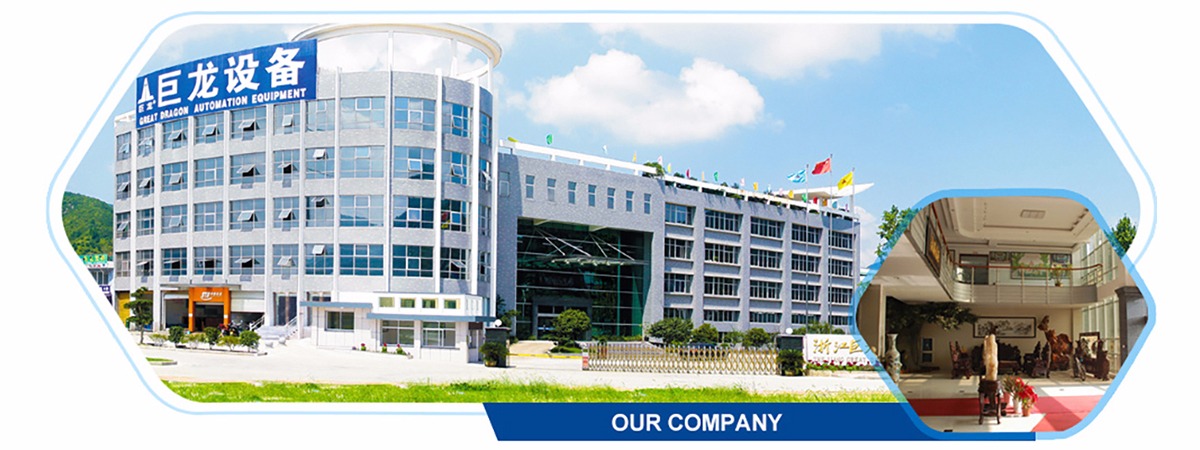
Founded in 1998, Rilvo Automation operates an advanced 60,000 m² campus in the Shatianyang Development Zone of Sanmen, Taizhou, with over 20,000 m² of specialized workshops and 150+ in-house precision machine tools. Recognized as a national High and New Technology Enterprise, our engineering core includes 36 R&D engineers and 8 senior title holders led by our chief engineer—a celebrated recipient of the national knowledge-worker model award.
Holding 17 national patents and operating under rigorous ISO 9001 and China Compulsory Certification (3C) protocols, we design and produce complete rotor winding lines, automated shaft pressing systems, commutator spot welders, and electrostatic powder coating installations. We have delivered customized OEM and ODM solutions to clients in over 30 countries, ensuring robust, direct-drive manufacturing capability without reliance on external machining subcontractors.



Essential answers regarding electrical compatibility, CE certifications, freight routing to Bergen, and custom OEM engineering procedures.
Yes. We understand that while modern industrial facilities in Bergen generally utilize European 400V 50Hz 3-phase systems, older shore stations, shipboard platforms, and specific fjord facilities often operate on 230V 50Hz isolated-terra (IT) networks. Rilvo's electrical engineering division customizes the step-down isolation transformers, servo drives, and breaker protections to your facility's exact electrical specifications prior to assembly testing.
Our factory is located approximately two hours from the Ningbo-Zhoushan deepwater port, with easy access to Shanghai. Machinery destined for Bergen is vacuum-sealed in heavy moisture-barrier film with desiccant canisters and crated in fumigated solid timber compliant with ISPM-15. Containerized sea freight via Rotterdam or Bremerhaven to Bergen port typically takes 32 to 38 transit days. Air express options for replacement tooling and consumables (DHL/FedEx) arrive within 4 to 6 business days.
Yes, all equipment supplied to European and Norwegian customers is engineered to conform with Directive 2006/42/EC (Machinery Directive), 2014/30/EU (Electromagnetic Compatibility), and 2014/35/EU (Low Voltage Directive). Stations feature category-compliant dual-channel safety door interlocks, Siemens or Schneider electrical switchgear, optical light curtains, and localized English HMI operator panels.
Prior to machine fabrication, our 36-member engineering team examines your rotor CAD files (STEP/DWG), core stack drawings, shaft interference tolerances, and copper wire temper grades. We build custom hardened tooling (SKD11 / tungsten carbide) and perform pilot trial runs in our Sanmen facility using your supplied laminations. Detailed high-speed video verification, cycle time calculations, and CMM dimensional inspection reports are provided for formal customer sign-off prior to crating.
Every machine is delivered with comprehensive electrical schematics, PLC ladder diagrams, a wear-part spare kit, and English step-by-step video setup tutorials. For remote commissioning, our software engineers provide direct diagnostics through secure VPN or live video sessions. When requested, factory-trained field engineers can travel directly to your facility in Vestland or Greater Bergen for turnkey installation, line balancing, and operator training.
We work under standard Incoterms 2020 including FOB Ningbo/Shanghai, CIF Bergen, CFR, or EXW. We accept wire transfer payments (T/T) and documentary Letters of Credit (L/C) denominated in USD or EUR. Our minimum order quantity (MOQ) is one single standalone machine or tooling set, accommodating both boutique R&D motor labs and high-volume serial production lines.
Electric motors deployed in maritime propulsion, thrusters, and harsh industrial environments face continuous operating stresses that do not exist in conventional factory floor automation. In marine subsea robotics and ferry propulsion, harmonic electromagnetic excitation interacts with hydrodynamic resistance, subjecting the rotor core and shaft to immense cyclical shear stresses. Over time, poorly fitted rotor shafts or uneven winding tensions result in catastrophic bearing fatigue, eccentricity faults, and thermal breakdown of the phase insulation.
In high-performance micro-motors, starter motors, and auxiliary marine pumps, the interference fit between the laminated electrical steel stack and the central hardened steel shaft must be strictly maintained within sub-micron tolerances. Rilvo's Y-30 servo-hydraulic rotor shaft pressing equipment integrates precision load-cell sensors paired with high-resolution magnetic linear encoders (0.001 mm resolution). During the insertion stroke, the machine captures a continuous force-displacement signature curve. If a burr, out-of-round bore, or thermal irregularity creates an abnormal tonnage peak or drop, the station automatically rejects the workpiece before downstream winding operations occur. This eliminates rotor lamination buckling and guarantees run-out tolerances well within DIN ISO 1940 Grade G1.0 balancing requirements.
During high-speed armature winding (such as with the ZB-302 and ZB-303 multi-servo series), inconsistent copper wire tension causes asymmetric coil overhangs. In marine propulsion applications, this unbalance creates high-frequency micro-vibrations that destroy shaft seals, letting moisture compromise the stator chamber. Rilvo's closed-loop magnetic hysteresis tensioning controllers keep wire tension stable within ±1.5% of nominal values across acceleration and deceleration ramps up to 3,200 RPM. Furthermore, our polished tungsten carbide wire nozzles and mirror-finished guide horns eliminate copper scraping and micro-crazing of the enamel coating, ensuring high partial-discharge resistance when driven by modern high-frequency Silicon Carbide (SiC) inverters.
The electrical termination between the rotor winding lead and the commutator riser represents the most vulnerable thermal junction in a DC or universal motor. Poorly controlled welding causes excessive annealing of the copper riser, weakening the mechanical hook against centrifugal forces at high rotational velocities. Rilvo's SDZ-120B and SW-130G welding systems utilize high-frequency inverter DC power supplies combined with programmable pneumatic forging profiles. By precisely synchronizing pre-heat current, weld energy, and final forging pressure, the enamel coating on the magnet wire is vaporized instantaneously while forming a pure molecular diffusion bond. The resultant joint exhibits lower electrical resistance than the virgin copper lead itself, preventing localized hot spots under prolonged motor stall or high torque situations in heavy maritime winches.
If your engineering team is transitioning legacy round-wire production to flat copper hairpin windings or developing IP68/IP69K marine-grade brushless rotor assemblies, contact our engineering desk directly. We provide comprehensive FEA-backed tooling layouts, cycle time analyses, and mechanical stress evaluations customized to your motor blueprints.