Precision-engineered automated winding, shaping, coil-insertion, and commutator fusing systems optimized for low electrical runout, dense copper packing, and high cycle-rate continuous operation in smart factory environments.
Strategic alignment with the high-tech mechatronics, automotive Tier-1 supplier base, and defense robotics supply chain in Daejeon and the Chungcheongbuk/Chungcheongnam industrial corridor.
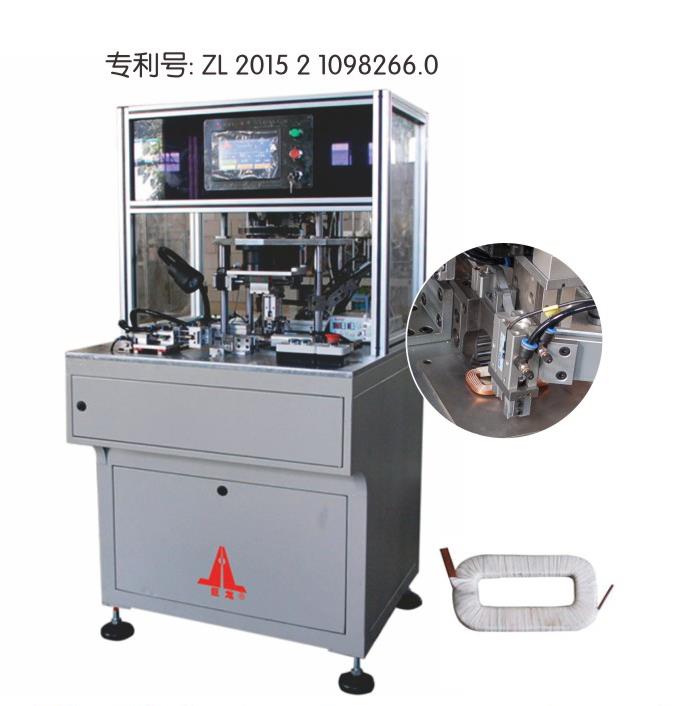
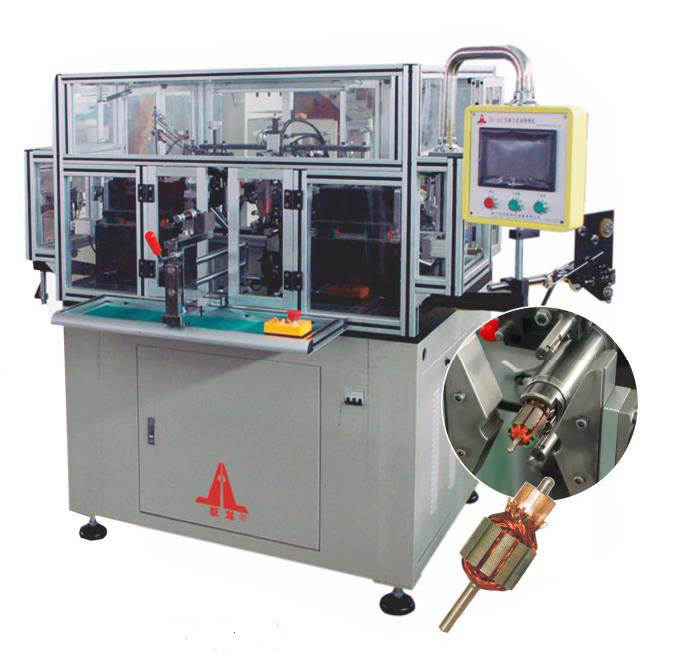
For powertrain specialists and component producers operating near the Daejeon Daedeok Valley and adjacent automotive corridors, shifting from traditional 12V starter motor stators to 48V mild-hybrid integrated starter-generators (ISG) requires exceptional coil slot-fill density. Our CJL-7 Flat Wire Winding Machines and Automatic Coil & Wedge Inserting Systems handle concentrated hairpins and heavy rectangular wire geometries with zero enamel micro-cracking, preserving partial discharge inception voltage (PDIV) standards demanded by leading Korean automakers.
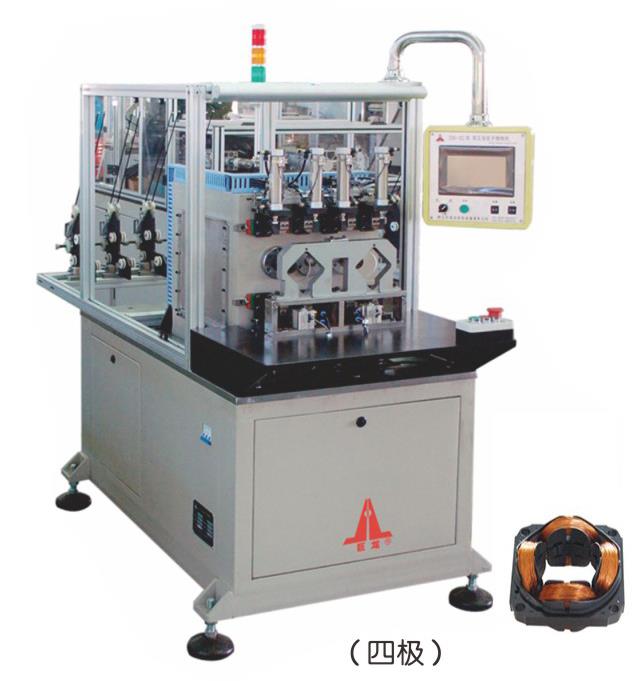
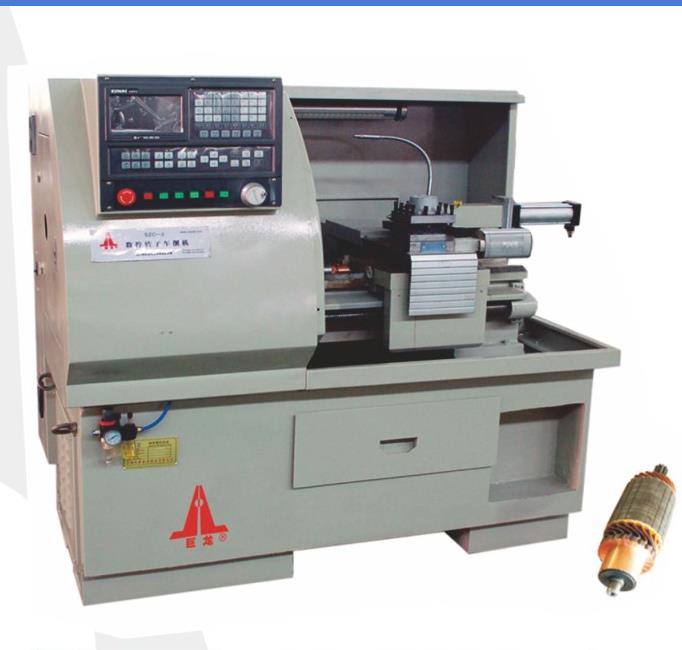
Daejeon serves as the scientific research heartland of South Korea. Mechatronic prototype labs, defense technology research institutes, and university robotics spin-offs require production tooling that offers flexible digital reconfiguration. The multi-axis CNC functionality across our stator winding units allows Korean development engineers to rapidly reprogram slot topologies, transition between multi-pole pitch layouts, and adjust lamination stack heights from 20 mm to over 180 mm without expensive mechanical re-tooling downtime.
Industrial machinery builders and commercial equipment manufacturers located across the Daejeon industrial rim mandate ultra-reliable cold cranking performance for commercial diesel, heavy electric hydraulics, and military auxiliary motors. Rilvo's automated manufacturing systems integrate continuous mechanical coil shaping, dual-stage slot insulation wedge insertion, and precision hot-staking fusing. This completely eliminates loose winding vibration and localized thermal hotspots under high shock loading.
Factory-direct engineering specifications for automated winding, insulating, insertion, and finishing stations.
| Equipment Type / Model | Primary Target Workpiece | Compatible Conductor Profile | Core Cycle Time | Key Automation Feature | Compliance Standards |
|---|---|---|---|---|---|
| CJL-9 Insulation Wrapping | Starter Motor Pole / Stator Coils | Nomex, Kapton, Polyester Film | 3.5 - 4.5 sec/wrap | Closed-loop constant tension control | ISO9001 / CE |
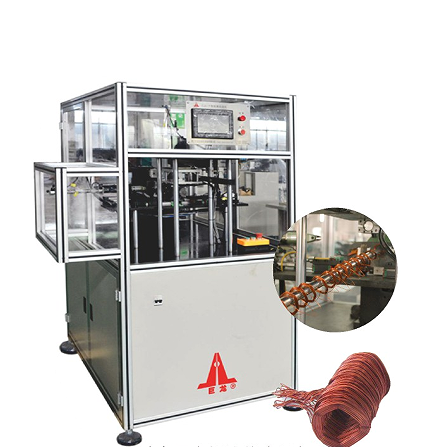
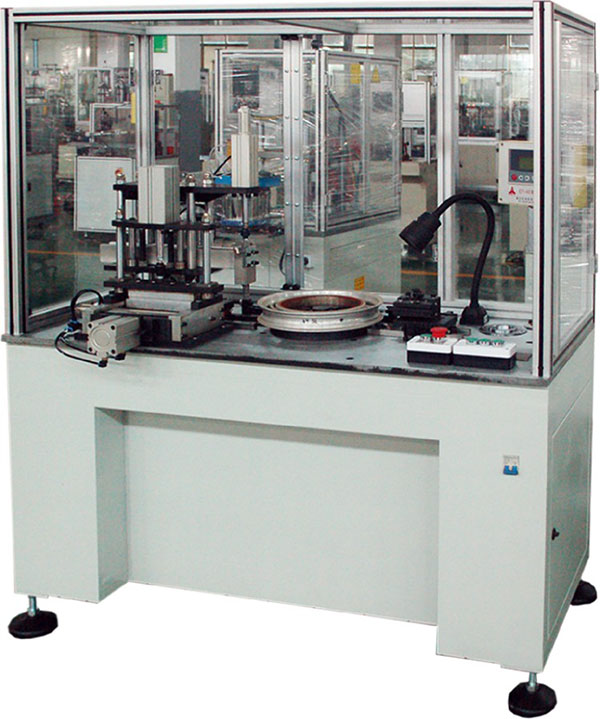
| Servo Stator Coil & Wedge | Multi-Slot Stator Cores (12-48 slots) | Round Enamelled Copper (Ø0.2-1.6mm) | 12 - 25 sec/core | Synchronous push & wedge cut-and-form | ISO9001 / 3C |
| CJL-7 Flat Wire Winder | High-Torque Starter / Alternator Coils | Rectangular Copper (up to 4.5x8.0mm) | Tooling dependent | Anti-torsion guide tooling, no enamel peel | High-Tech Cert. |
| CT-40 Magnet Insertion & Gluing | BLDC & Permanent Magnet Stators | NdFeB, Ferrite Segmented Bars | 1.8 sec/pole | Vision-guided automated polarity verification | ISO9001 / CE |
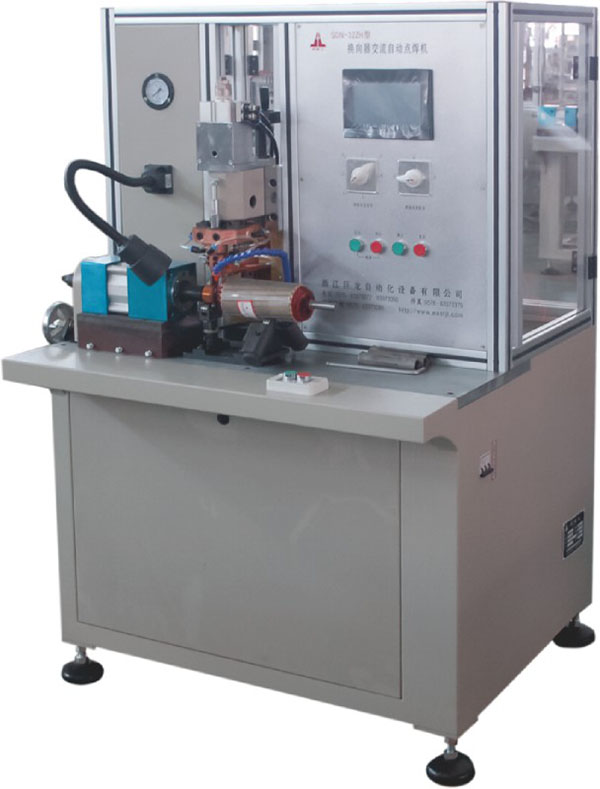
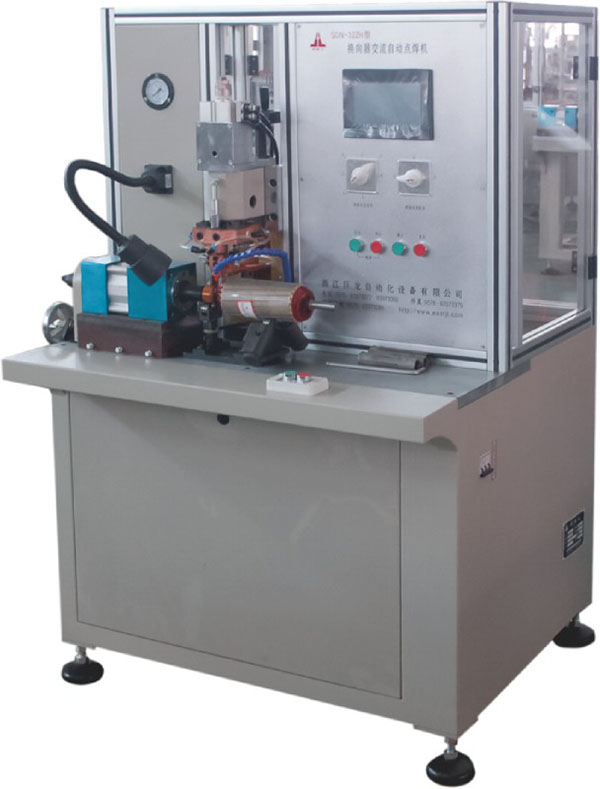
| SDN-32ZH Commutator Fusing | Armature Commutator Risers | Tang, Riser, Hook Commutators | 0.6 - 1.0 sec/hook | Inverter constant current closed loop | Patent Protected |
In-depth analysis of supply-chain shifts, manufacturing standardizations, and digital manufacturing adoption across South Korea.
Traditional round-wire pull-in winding is rapidly being superseded in high-spec starting motors, start-stop generators, and auxiliary EV drives across Korean manufacturing clusters. Rectangular flat copper wire boosts slot fill efficiency from roughly 45% to upwards of 75-80%, drastically mitigating copper loss ($I^2R$) and improving thermal conductivity through laminated stator stacks. Daejeon tier manufacturers are heavily investing in CNC shaping and precision stripping automation to meet this transition.
In accordance with the South Korean national Smart Factory deployment mandates, manufacturing factories in the Daejeon-Sejong technology corridor require high-speed RS-485, EtherCAT, and OPC-UA connectivity directly on the stator shop floor. Automated stator winders and coil inserting machines must stream critical metrics—including peak inserting tonnage, wire tension deviations, wedge depth tolerances, and commutator fusing displacement curves—straight into enterprise cloud databases.
With stringent global carbon neutrality regulations pushing electric component manufacturers toward ultra-low iron loss electrical steel laminations (0.20 mm - 0.35 mm silicon steel), modern stator inserting machines must feature precision mechanical alignment. High-impact insertion can bend tooth tips or trigger micro-burrs that increase eddy current losses. The requirement for multi-axis servo-driven, gradual harmonic insertion tooling has grown exponentially among Korean precision engineers.
Founded in 1998, Zhejiang Rilvo Automation Equipment Co., Ltd. blends 27 years of deep mechanical toolcraft with modern digital automation.
Operating out of our expansive manufacturing base in Shatianyang Development Zone (Sanmen, Zhejiang), our operations house complete in-house CNC machining centers, precision wire-EDM tooling bays, and automated electrical assembly lines.
Supported by 36 dedicated R&D engineers and 8 senior technical titles led by a nationally recognized knowledge-worker model recipient, our factory holds 17 national patents covering servo winding trajectories and intelligent micro-spot welding.
Every single machine undergo 100% incoming component metallurgical inspection, dynamic runout validation, and continuous 72-hour trial dry-runs using custom stator lamination samples supplied directly by clients before overseas dispatch.
Conveniently located within a 2-hour trucking radius from Ningbo Port, we support FOB, CIF (Incheon / Busan / Pyeongtaek), and EXW terms with turn-key overseas commissioning, remote PLC telemetry assistance, and fast air-freight spare components.
Direct technical and commercial answers regarding tool customization, logistics to Korea, safety certifications, and warranty handling.
Yes, absolutely. Over 70% of our equipment output is customized via OEM/ODM engineering agreements. Korean buyers supply 2D/3D part drawings (.STEP, .DWG) showing lamination OD/ID, slot openings, stack height, copper wire gauge, and preferred insulation paper profile. Our engineering team prepares full tooling simulation reports, wedge cut-and-forming dies, and custom guide blades within 10-15 business days.
Due to the close geographical proximity of our factory to Ningbo Port, the ocean transit time to Busan Port or Incheon Port is exceptionally fast, typically taking only 2 to 4 days on direct sea lanes. Complete machinery packaging utilizes heavy-duty moisture-barrier barrier foil vacuum-sealing with export-grade fumigated wooden crates to prevent maritime corrosion.
Yes. Our machines are built with high-grade CE and ISO9001 certified components. For installation inside South Korea, we configure systems for standard Korean industrial three-phase 380V / 220V 60Hz power distribution, incorporate high-reliability safety interlock light curtains, utilize emergency stop relays compliant with safety categories, and offer user interfaces (HMI) in English and Korean.
Before shipment, machines must pass factory acceptance testing (FAT) witnessed either in person or via high-definition live multi-angle video streaming using the buyer's sample laminations. Upon equipment arrival in Daejeon, we provide comprehensive operation schematics, video step-by-step commissioning guides, and remote diagnostic access via secure Industrial Ethernet. When requested, dispatch engineers are available for onsite setup and line balancing.
Submit your stator core geometry, daily throughput target, or target motor footprint to receive a comprehensive turnkey manufacturing proposal from Rilvo’s senior automation engineers.


