High-efficiency automated machinery tailored for high slot fill factors, minimal partial discharge, and tight radial tolerances required by Zurich precision motor manufacturing facilities.








Manufacturing high-efficiency permanent magnet synchronous motors (PMSM) and brushless DC (BLDC) stators requires balancing tight electromagnetic tolerances with resilient insulation systems. For industrial equipment operators, machine designers, and Tier-1 automotive suppliers in the Greater Zurich Area and neighboring cantons (such as Aargau, Zug, and Schaffhausen), production demands exceed typical high-volume tolerances. The Swiss mechanical and electrical engineering (MEM) sector enforces stringent quality standards: high slot fill ratios (>48% in round wire, >65% in hairpin or flat wire configurations), absolute elimination of partial discharge at operating voltages above 400V, and total process repeatability under Industry 4.0 telemetry.
A complete stator assembly line engineered by Zhejiang Rilvo Automation Equipment Co., Ltd. addresses the entire automated cycle through modular integration:
| Stage | Process Station | Technical Objective | Critical Tolerances & Key Parameters |
|---|---|---|---|
| 01 | Insulation Slot Paper Inserting | Automatic cuffing, forming, shearing, and insertion of Nomex, DMD, or Kapton into lamination stack slots. | Insertion yield >99.98%; cuff width uniform within ±0.15mm; prevents enamel scratching during subsequent needle winding. |
| 02 | CNC Multi-Spindle Stator Winding | Flyer or multi-axis needle winding directly into internal or external stator teeth with programmatic layer layering. | Tension closed-loop accuracy ±2g; constant wire straightness; eliminating crossing wires and copper stretch degradation. |
| 03 | Coil Insertion & Wedge Embedding | Simultaneous push-insertion of pre-formed coils and insulating top wedges into internal core profiles. | Zero deformation of tooth tips; synchronous wedge cutting and feeding driven by high-torque digital servos. |
| 04 | End-Turn Forming & Lacing | 3D progressive hydraulic/servo pressing of end coils to guarantee radial clearance against the motor housing. | Axial protrusion height constrained within ±0.2mm; programmatic dual-needle diamond or continuous stitch lacing. |
| 05 | Terminal Resistance Welding & Fusing | Lead termination, hot-staking, and inverter micro-resistance fusing of enameled magnet wire to copper terminals. | Dynamic displacement limit (±0.02mm); zero mechanical spark spatters; contact resistance <1.5 micro-ohms. |
| 06 | Horizontal Trickle Varnishing & Curing | Pre-heating via electric or induction coils, followed by volumetric varnish trickling and rotational thermal curing. | 100% void-free resin penetration into slot crevices; uniform weight distribution; zero drip on core bore. |
| 07 | End-of-Line (EOL) Automated Testing | Four-in-one or five-in-one electromagnetic verification: DC resistance, insulation resistance, AC Hi-Pot, and surge. | Surge impulse waveform area comparison <1% tolerance; Hi-Pot testing up to 3.5kV AC / 50Hz with 0.1mA trip resolution. |
By utilizing specialized rigid mechanical fixtures and hardened tooling ground to ±0.005mm accuracy in our Sanmen machining center, Rilvo automation lines mitigate micro-scratch defects on the polyamide-imide wire overcoat. This preserves dielectric strength and prevents early breakdown caused by high-frequency PWM switching transients in modern SiC and GaN motor inverters.
From Winterthur's heavy mechatronics corridor to the high-precision robotics hubs surrounding ETH Zurich, our stator equipment aligns with Switzerland's diverse manufacturing ecosystem.
Medical device manufacturers in Zurich and eastern Switzerland produce compact, high-RPM slotted and slotless BLDC stators for surgical instruments, implantable pumps, and analytical devices. Our needle winding and hot-staking machines handle ultra-fine copper wire gauges (0.05mm - 0.25mm) while maintaining cleanroom compatibility (ISO Class 7/8).
Focus: Glattbrugg & Schlieren MedTech ClustersAdvanced robotics spin-offs from Swiss technical institutes build frameless torque motors and hollow-shaft stators for robotic joints and automated guided vehicles (AGVs). Rilvo winding lines deliver consistent concentricity and high slot filling in multi-pole (14P, 28P, 42P) stators, ensuring torque density and low cogging torque.
Focus: Technopark Zurich & Winterthur Innovation ParksSwiss rolling stock manufacturers, funicular engineers, and e-mobility Tier-1 suppliers demand stators that withstand extreme vibrations, thermal cycling, and harsh mountain environments. Our automated trickle impregnation lines apply high-grade polyester and epoxy varnishes, providing void-free bonding and environmental protection.
Focus: Oerlikon Rail & Regional Automotive Supply ChainsThe industrial landscape of Switzerland is undergoing rapid transformation under Swiss Energy Strategy 2050 and the European Union's Ecodesign Directives (which Switzerland mirrors via bilateral technical agreements). Zurich's industrial buyers evaluate stator production equipment along three primary operational vectors:
With electric motor systems accounting for over 50% of Switzerland's industrial electricity consumption, Swiss industrial end-users prioritize maximum efficiency. Stator manufacturing must adopt tighter end turns to reduce I²R copper losses, along with increased slot fill factors to maximize electromagnetic flux density. Rilvo's automated shaping and precision embedding machinery delivers repeatable compact end-turn geometries, reducing wire consumption while maximizing active electrical volume.
Unlike massive automotive stator plants in developing regions that run single SKUs for months, Zurich's manufacturing ecosystem thrives on flexibility. Production cells require rapid tooling changeovers—often within 20 to 45 minutes—to switch between differing stator outer diameters, stack heights, and slot configurations. Rilvo utilizes quick-clamp mechanical tooling and modular PLC recipe storage, enabling operators to store up to 500 individual motor programs.
Swiss engineers emphasize digital accountability. Every stator passed through the assembly line must carry an individual 2D Data Matrix or laser-etched serial tracking code. Rilvo assembly systems interface seamlessly with Siemens S7-1500, Beckhoff TwinCAT, or Allen Bradley PLCs via OPC-UA, MQTT, and Profinet. Every process variable—such as wire winding tension, fusing displacement, trickling temperature, and Hi-Pot leakage current—is logged directly into the factory MES.
Swiss environmental regulations govern VOC emissions. Stator assembly systems must support rapid, solventless trickle varnish formulations. Our horizontal trickling machines (such as the SZD-376/63.5) employ localized, component-level resistance and infrared heating, ensuring energy is channeled only into curing active coils rather than heating massive convection ovens.
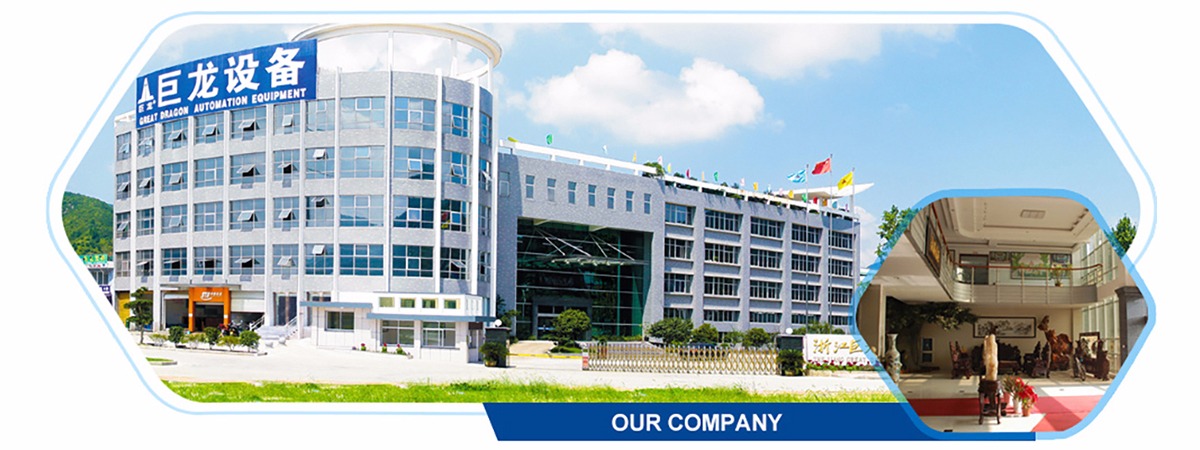
Established in 1998, Zhejiang Rilvo Automation Equipment Co., Ltd. has developed specialized micro-motor equipment, stator winding cells, commutator spot welders, and complete turnkey assembly lines for 27 years. Situated in the Shatianyang Development Zone of Sanmen, Taizhou, our self-owned manufacturing campus spans nearly 60,000 square meters, including 20,000 m² of operational precision engineering shops and 30,000 m² of modern expanding facilities.
Unlike basic equipment brokers, Rilvo maintains complete control over mechanical fabrication, grinding, assembly, wiring, and programming. Our R&D engineering department comprises 36 dedicated engineers, including 8 with Senior Engineering Credentials. The company is recognized as a High and New Technology Enterprise of Zhejiang Province, holding 17 registered national patents, ISO9001 quality management certification, and China Compulsory Certification (3C).



Clear, direct answers regarding Swiss compliance, electrical safety standards, customs clearance, cycle times, and post-delivery support.
Submit your stator lamination drawings, stack heights, wire diameters, and target hourly throughput. Our engineering desk will deliver an optimal machine configuration proposal within 24 business hours.


