


Precision-engineered automation modules configured to European mechanical safety criteria, direct from Zhejiang Rilvo Automation Equipment Co., Ltd.
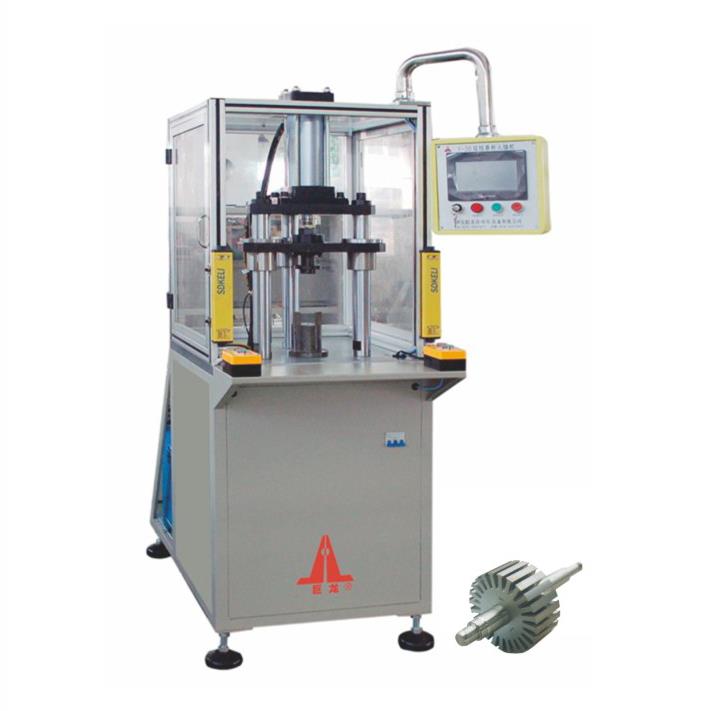
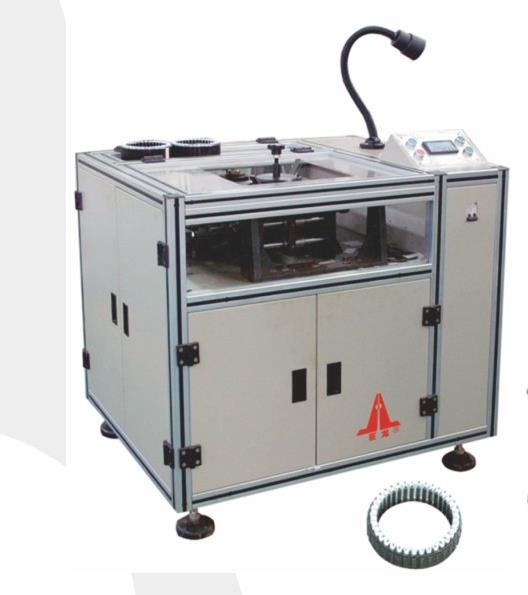
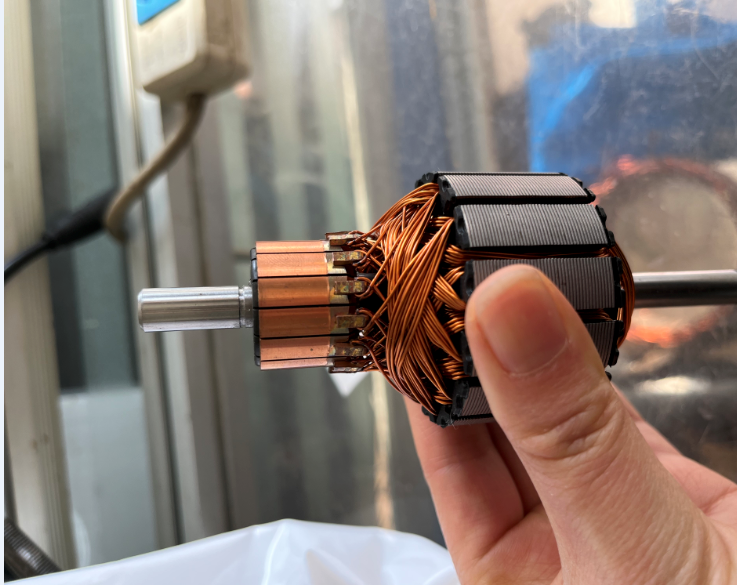
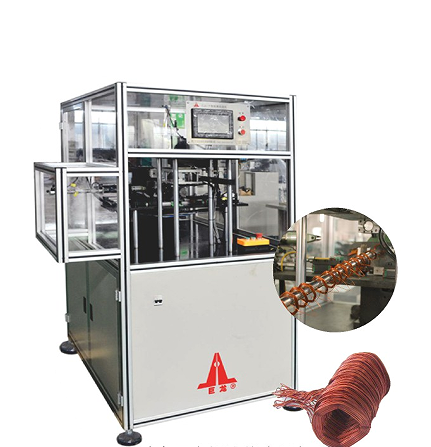
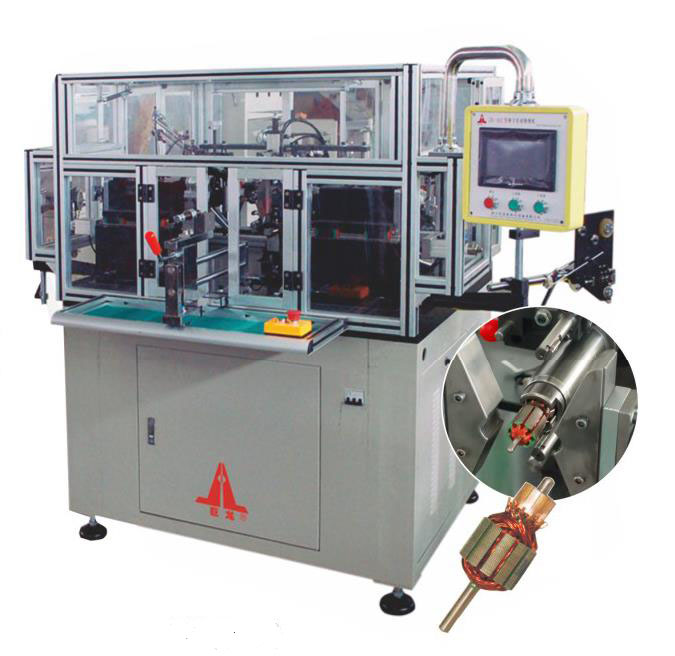
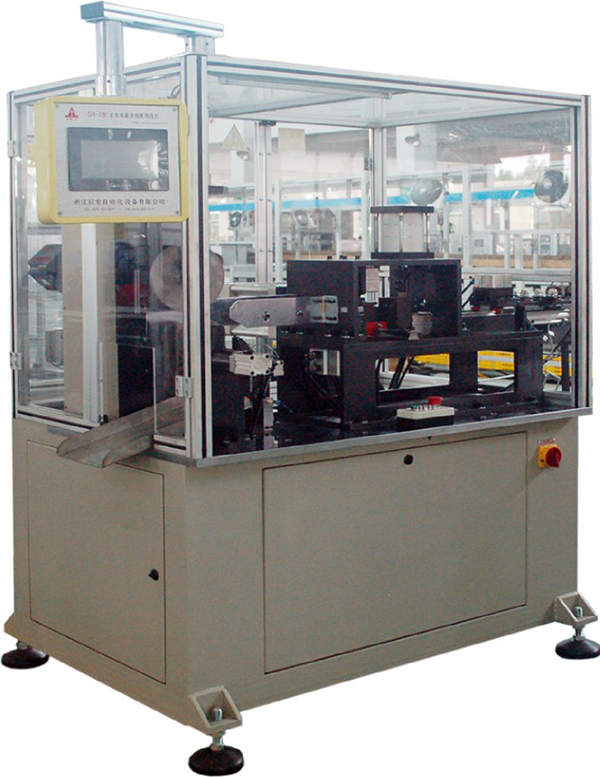
In electric motor assembly, slot cell insulation is the critical dielectric barrier between high-voltage electromagnetic windings and the grounded laminated core pack. In the production of three-phase industrial traction motors, automotive alternators, and hermetic compressor stators, the dielectric breakdown of insulation film constitutes more than 42% of premature motor field failures. Zhejiang Rilvo Automation Equipment Co., Ltd. addresses this manufacturing vulnerability through our high-speed, programmable stator slot insulation machines (exemplified by the industrial-grade DFC-1 Automatic Stator Paper Inserting Series).
Our slot cell inserting equipment automates continuous cold-roll forming, precision edge-cuffing, index stepping, cutting, and pneumatic insertion of diverse composite electrical insulation substrates, including Nomex®, DMD (Dacron-Mylar-Dacron), NMN, and Polyimide (Kapton) films with thicknesses ranging from 0.15 mm to 0.45 mm. Driven by dedicated digital AC servomotors coupled to ground ball screws and multi-station rotary indexing tables, our equipment achieves insertion rates up to 0.5 to 0.8 seconds per slot, delivering a 99.98% qualification yield on lamination inner diameters from 30 mm up to 260 mm.
Integrated mechanical folding tooling pre-cuffs edge margins (2.5 mm to 5.0 mm) with zero notch fatigue, preventing mechanical tears during subsequent copper coil insertion and wedge pounding processes.
Tooling packages support parallel slots, semi-closed traps, skewed slots, and progressive multi-pitch slot geometries with tooling swap times controlled under 25 minutes for agile production shifts.
Integrated photoelectric sensor arrays scan slot count completion and paper seating depth before stator index ejection, eliminating missed slots and protecting downstream winding flyers from collision.
Aligning advanced Chinese automation capability with Eastern Europe's second-largest automotive and electromechanical assembly corridor.
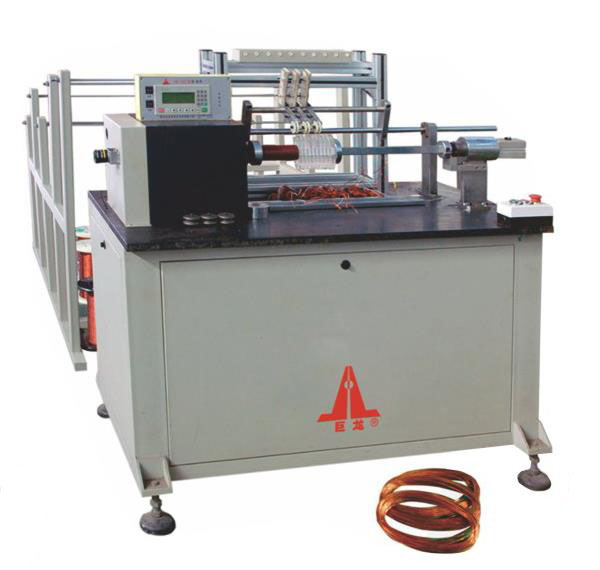
Romania has established itself as an engineering powerhouse within the Central and Eastern European automotive cluster. The presence of assembly hubs in Pitești and Craiova, alongside extensive Tier-1 auxiliary manufacturing clusters in Western Romania (Timiș County, Arad, and Bihor), demands strict compliance with IATF 16494 manufacturing tolerances. Our DFC-1 Automatic Alternator Stator Paper Inserting Machines and ZB-302 / ZB-303 Rotor Winding Series are directly adapted to automotive sub-suppliers producing HVAC blower motors, starter motors, high-efficiency automotive alternators, and steering servo actuators.
Equipped with standardized European industrial components, including Siemens/Mitsubishi programmable logic controllers (PLCs), Schneider electrical protection, and SMC pneumatic logic, Rilvo machinery easily integrates into Romanian plant SCADA architectures. This ensures seamless shop-floor integration across industrial parks such as Industrial Park West Arad and Freidorf Industrial Park in Timișoara.
Across Cluj-Napoca, Sibiu, and Brașov, regional machine manufacturers are modernizing legacy lines to support IE3 and IE4 super-premium efficiency industrial induction motors, submersible sewage pump stators, and agricultural irrigation drives. Rilvo's high-speed coil winding systems (such as the QR-2 Inductor Motor Coil Winder and High Speed Induction Motor Winding Machine) offer adjustable tension brakes that maintain wire insulation enamel integrity during slot stuffing. When coupled with our horizontal paper insertion modules, Romanian machine builders achieve repeatable insulation tightness that eliminates air voids and elevates partial discharge inception voltage (PDIV) ratings.
Capital investment analysis for Romanian plant directors navigating the European Green Deal and nearshoring pressures.
Under EU Regulation 2019/1781, motors between 75kW and 200kW placed on the European market must meet the IE4 level. Achieving higher copper slot-fill ratios necessitates thinner, more resilient slot liners inserted with absolute precision to avoid crimping or tear-outs during needle winding.
European OEMs are increasingly shifting assembly operations away from high-cost regions to Romania to reduce supply chain fragility. Romanian factories require turnkey equipment that combines low capital expenditures with European machine safety and fast tooling delivery.
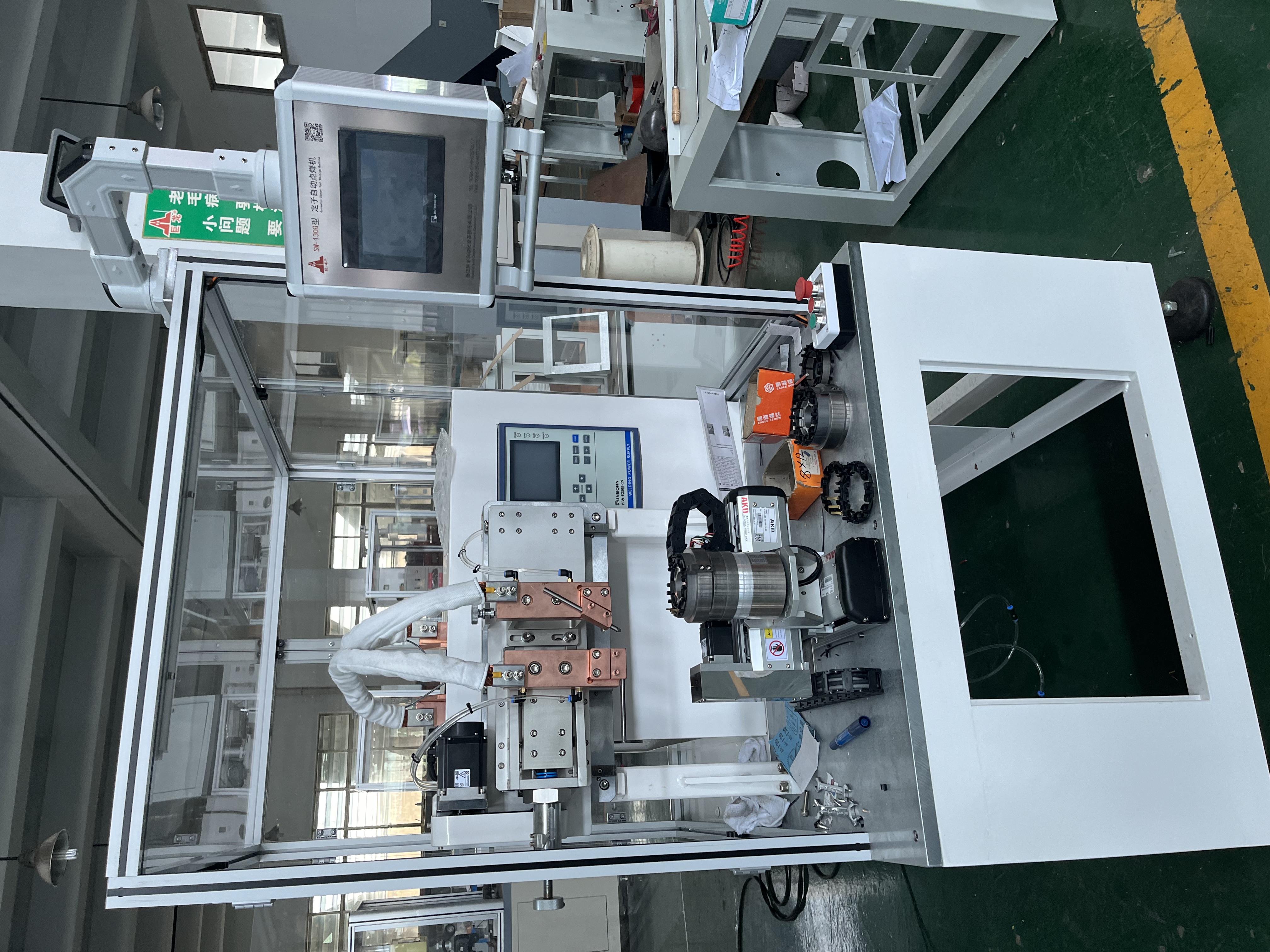
The acceleration of light electric vehicles (LEVs) and e-bike propulsion in Europe creates high demand for machines like the SW-130G Brushless Motor Stator Welder and CJL-7 Flat Wire Winders, supporting hairpin and segmented stator topologies.
Combining 27 years of dedicated electro-mechanical equipment innovation with ISO9001 quality management and global engineering support.
Spanning nearly 60,000 m² in the Shatianyang Development Zone, Sanmen, Taizhou, our infrastructure comprises 20,000 m² of operational workshops and 30,000 m² under expansion, featuring over 150 precision CNC units.
Led by our President and Chief Engineer—honored with the National Knowledge-Worker Model Award—our 36-member engineering department holds 17 national invention and utility patents for winding and inserting automation.
Rilvo operates under an audited ISO9001 Quality Management System, possesses China Compulsory Certification (3C), and holds formal Provincial High and New Technology Enterprise credentials.
Over a decade of OEM/ODM leadership allows us to customize tool steel dies, cuffing wheels, and inserting pushers directly from your CAD/STEP files, wire gauges, and cycle time targets before assembly.
Every stator slot insulation and winding machine is test-run using your core laminations and insulation rolls. Detailed dimensional reports and run-off video footage are provided prior to export dispatch.
Located just 2 hours from Ningbo Port, we offer FOB, CFR, CIF (Port of Constanța), and EXW terms, with multilingual support (English, German, Russian, French) for seamless technical coordination.
Addressing the technical, regulatory, and trade considerations of importing high-performance stator machines to Romania.
Our equipment handles all commercial electrical insulation materials used across European motor plants, including DMD, NMN, polyester films (Mylar®), Nomex® aramid paper, and vulcanized fiberboard. Material thickness capabilities range from 0.15 mm to 0.45 mm.
Yes. All machines exported to Romania are built for three-phase 400V (+/-10%), 50Hz electrical supplies, with 24V DC control voltages. Circuitries utilize CE-marked switchgear, thermal overloads, and dual-channel E-stop safety relays conforming to EU Machinery Directives.
Yes. Our engineering division creates specialized tooling for skewed alternator slots, stepped cores, and closed-slot stators. Send your 2D DXF or 3D STEP drawings, and we provide a tooling proposal and cycle time estimate within 48 hours.
Standard machines require 30 to 45 business days for assembly, custom tooling production, and sample validation. Ocean freight from Ningbo Port to the Port of Constanța takes roughly 28 to 35 days, or 18 to 22 days via overland rail freight.
Each unit ships with complete English schematics, pneumatic diagrams, and modular wear-part replacements. We provide remote video-guided commissioning and PLC remote diagnostics, with field-service engineer dispatch available for production line installations.