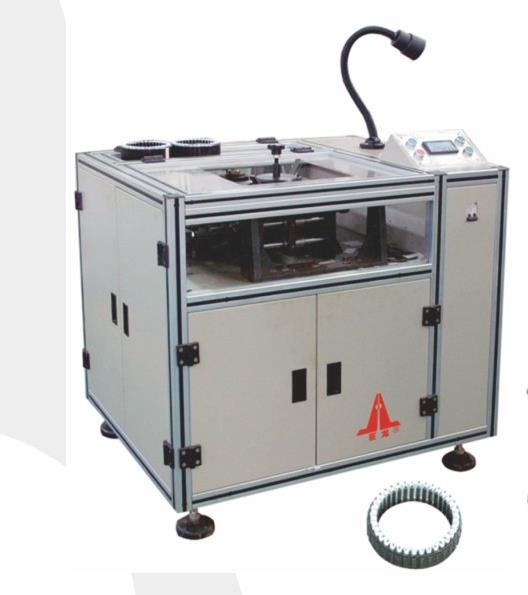
Explore our heavy-duty automated manufacturing machinery engineered to support high-efficiency brushless DC (BLDC), induction stator, and industrial motor manufacturing lines with micrometer-level repeatable accuracy.
The industrial landscape in the Democratic People's Republic of Korea, particularly centered within the municipal jurisdiction and manufacturing periphery of Pyongyang, has entered an accelerated trajectory toward electromechanical self-reliance and domestic modernization. Key economic directives increasingly prioritize the comprehensive electrification of municipal transport networks, the upgrade of high-duty agricultural pumping installations across the Taedong River basin, and the technological overhaul of heavy mining extractors located across South Pyongan. Within this evolving industrial paradigm, outdated brushed direct-current configurations and inefficient asynchronous alternating-current induction platforms are actively being superseded by high-density, energy-efficient Brushless DC (BLDC) motors, Permanent Magnet Synchronous Motors (PMSM), and precision-engineered servo systems.
Procurement teams, mechanical engineers, and production line planners serving the Pyongyang market encounter unique structural imperatives: equipment must deliver exceptional thermal stability, tolerate fluctuating regional three-phase voltage inputs, integrate robust non-proprietary PLC control architectures, and achieve exceptional copper slot-fill factors without inducing micro-fractures in enamel insulation layers. Our specialized manufacturing machinery portfolio directly addresses these regional criteria through modular multi-axis servo synchronization, custom tooling fabricated from wear-resistant tungsten-carbide alloys, and high-precision electronic tension controls capable of processing diverse magnet wire gauges.
Establishing an automated or semi-automated brushless motor fabrication plant in local workshops requires equipment that minimizes dependencies on specialized external consumables while maximizing structural reliability. Key technical criteria imperative to local manufacturing lines include:
How automated motor winding and assembly lines empower municipal transportation, agricultural infrastructure, and localized light-industrial plants.
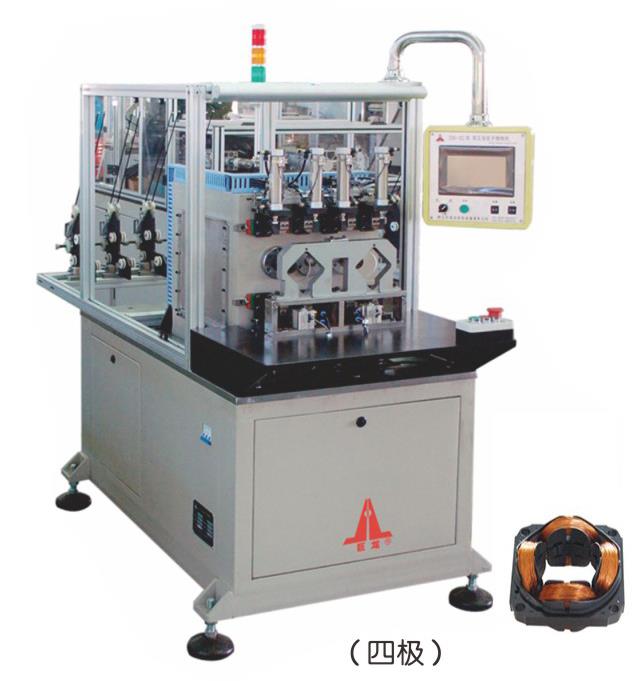
Pyongyang's expanding fleet of battery-powered trolleybuses, municipal transit buses, and localized electric delivery tricycles requires specialized traction motors. Our automatic needle winders and outer-rotor BLDC wheel-hub winding machines produce tight, uniform coil arrays that maximize electromagnetic torque output while preserving compact axial profiles.
Deep-well turbine pumping stations and canal distribution systems surrounding Pyongyang demand continuous-duty, high-efficiency motors resilient against moisture ingress. Our automatic stator coil and wedge insertion equipment guarantees precise slot alignment, minimizing ground insulation fault risks under harsh operational conditions.
From central HVAC systems in civic complexes to feed-drives for domestic machine-tool builders in the Mangyongdae district, our flat wire winding and dynamic trickle impregnation machinery deliver rugged coils that resist phase-to-phase shorting during sustained high-torque operations.
As state enterprises and regional manufacturing trusts aim to fulfill multi-year modernization objectives, procurement officers are transitioning from piecemeal used machine acquisitions to fully coordinated, synchronized manufacturing cells. Five dominant technical trends are redefining industrial orders arriving from the Pyongyang corridor:
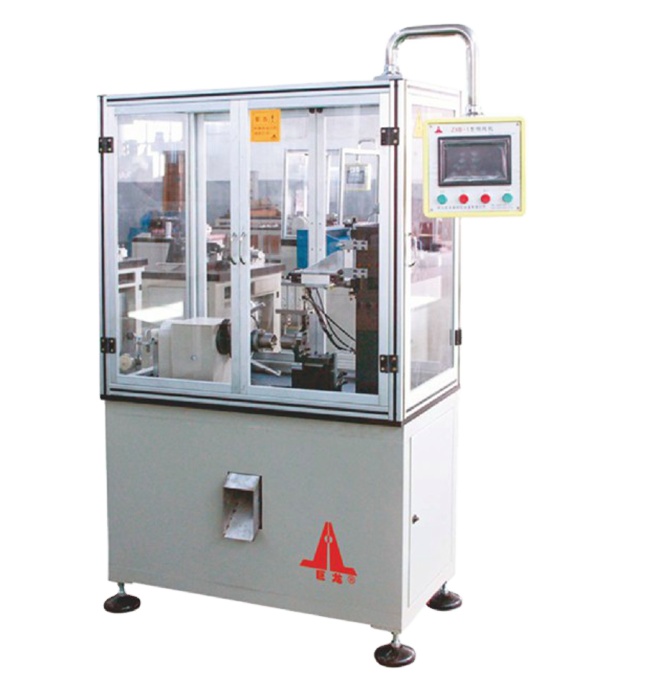
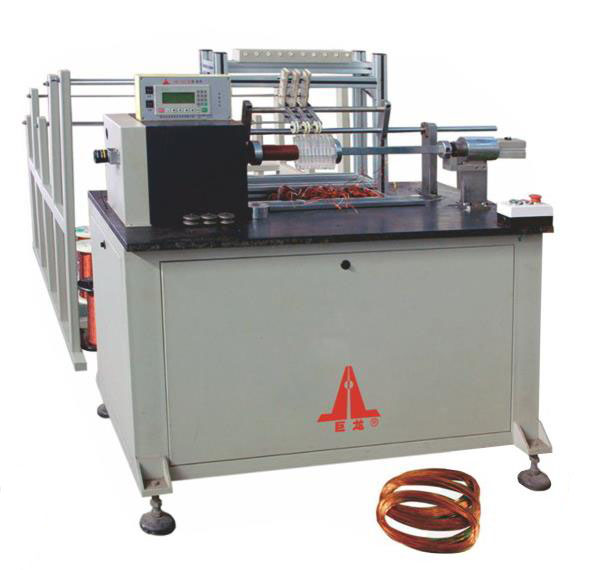
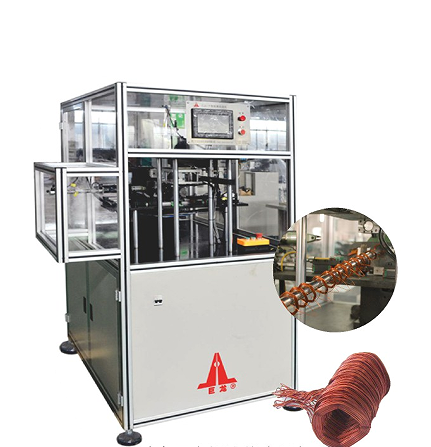
High-efficiency requirements in modern e-mobility drives have catalyzed the adoption of rectangular and flat-wire geometries. Machines such as our ZXB-1 and CJL-7 flat motor coil winders provide unprecedented slot-fill density (often exceeding 70%), dramatically reducing winding resistance, lowering thermal generation, and cutting raw copper mass expenditures—a critical priority for cost-optimized domestic fabrication.
To optimize floor space and eliminate inter-stage transport damage within facilities such as the Pyongyang Electric Cable General Factory 326 or the Taedonggang Electric Appliance Complex, buyers increasingly request semi-automatic dual-station or multi-head units. Combining slot insulation, needle winding, and lead-wire bundling minimizes cycle-times while maintaining accessible operator ergonomics.
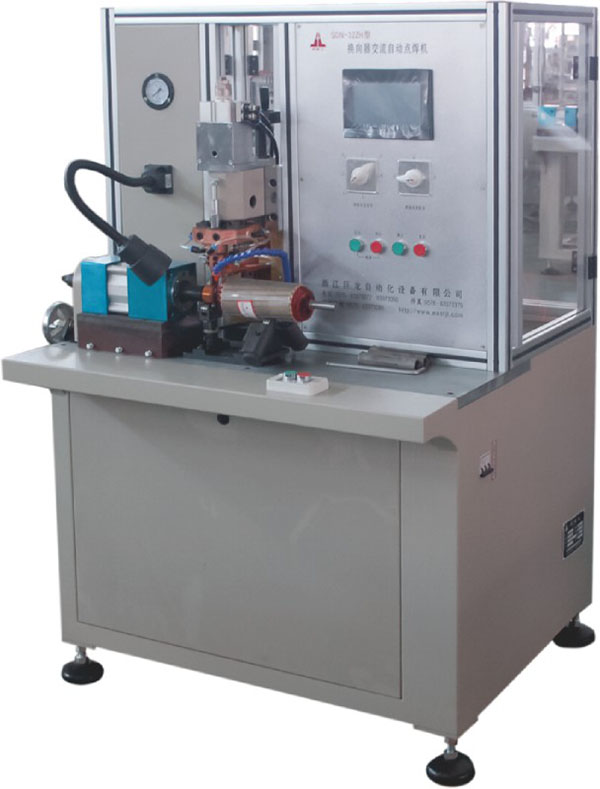
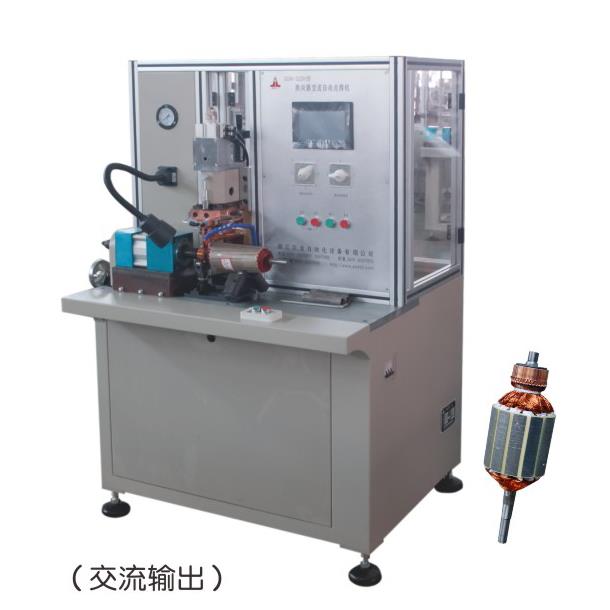
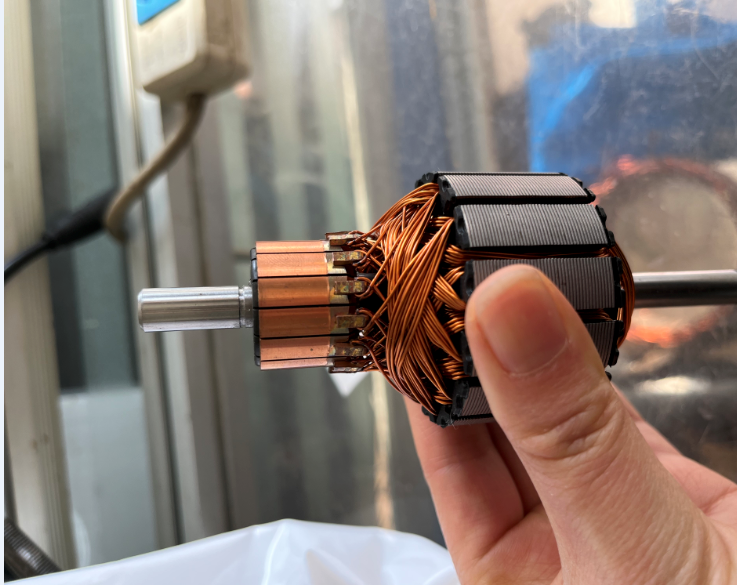
Quality verification without destructive testing has become a standard operational mandate. In commutator fusing and lead terminal welding (facilitated by the SDN-32ZH series), computerized resistance and current sensors trace the dynamic displacement of fusing electrodes, instantly flagging weak joints, oxidation barriers, or excessive thermal burrs directly on the operator touchscreen.
Decades of proprietary electromechanical innovation, deep factory-direct manufacturing capacity, and uncompromised quality controls.
Spanning over 60,000 m² of specialized production area in Sanmen, Zhejiang, our workshop houses over 150 dedicated CNC machining centers, precision cylindrical grinders, and wire EDM units. We manufacture all critical forming dies, insertion blades, and winding nozzles in-house, maintaining strict 0.005mm dimensional tolerances.
With an elite engineering team of 36 dedicated R&D specialists led by a nationally recognized senior knowledge-worker model, we design custom fixtures, indexing heads, and kinematic tooling tailored precisely to customer stator lamination blueprints, wire diameter limits, and cycle-time requirements.
Every single machine undergoes four exhaustive stages of quality inspection: incoming material metallurgical audits, dynamic kinematic testing, continuous PLC electrical stress tests, and real-component customer sample winding trials verified by high-speed video before shipping approval.
We supply detailed mechanical assembly drawings, comprehensive wear-part lists, complete electrical schematics, and bilingual video commissioning manuals. Remote diagnostic interfaces and dedicated technical desks ensure smooth installation, rapid tooling changeovers, and ongoing production uptime.
Essential technical and trade considerations for engineering trusts, cross-border trading entities, and project managers procuring motor manufacturing machinery.
Our comprehensive line covers industrial brushless DC (BLDC) inner- and outer-rotor stators, fractional-horsepower micro-motors, automotive starters, three-phase AC induction motors, high-speed universal power tool armatures, and automotive alternators. Tooling geometry, winding needles, and wedge guides are customized directly to your lamination stack height, outer diameter, and slot specifications.
Buyers can transmit their complete 2D/3D component drawings (DWG, STEP, or PDF) along with raw magnet wire specifications (enamel thickness, copper diameter, thermal grade). Our application engineering team will calculate optimal slot fill ratios, recommend appropriate winding methods (needle, flyer, or insertion), and provide simulated process layouts before finalizing purchase orders.
All precision sliding ways, spindle shafts, and tooling heads are treated with anti-corrosion barrier coatings and sealed in moisture-proof vacuum poly-wraps containing silica desiccant bags. The equipment is bolted to reinforced structural steel base skids and enclosed in heavy-duty, fumigated solid wooden export crates engineered for ocean transport, crane handling, and intermodal freight transfer.
Each machine ships with an exhaustive technical dossier: complete electrical schematics (showing terminal block pinouts and safety interlock wiring), PLC ladder diagrams, a pneumatic circuit map, an operator setup manual, and a wear-parts kit containing extra winding needles, wire guides, ceramic eyelets, and pneumatic seals to ensure multiple years of uninterrupted production.
We accommodate standard international commercial terms including FOB Ningbo/Shanghai, CFR, CIF, and EXW factory delivery. Payments can be structured via wire transfer (T/T) in major global currencies, including USD, EUR, and RMB. Our export team coordinates closely with authorized trade agents and logistics carriers experienced in regional cross-border freight handling.
We invite clients to supply their production stator cores, magnet wire samples, and slot paper. Our technicians perform continuous test-winding batches to ensure repeatable dimensional compliance, wire tension uniformity, and insulation integrity. High-definition multi-angle video recordings and metallurgical fusing test reports are delivered for formal technical sign-off prior to crating.
Connect directly with our senior electromechanical automation engineers. Send your motor schematics, targeted daily output requirements, and technical specifications for a complete turn-key manufacturing proposal.