


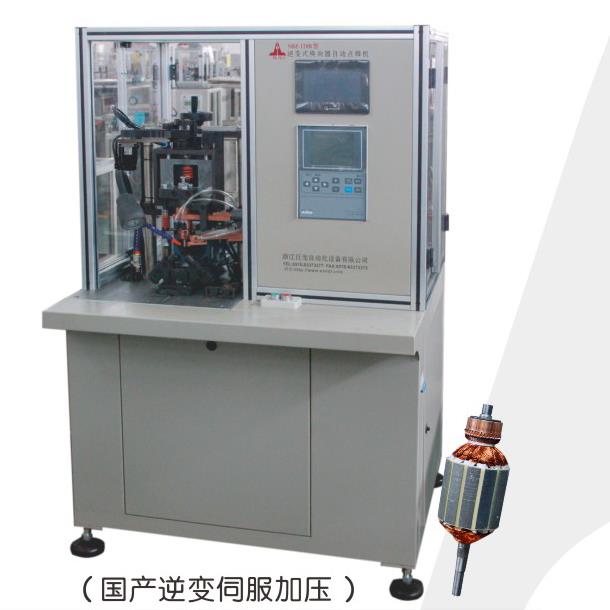
Custom-tooled systems compliant with CE-directives, configured specifically for low iron-loss coils, traction rotors, and micro-electrification lines across the Community of Madrid.
Years of Engineering Mastery
National Invention Patents
Advanced Industrial Campus
Tooling Alignment Precision
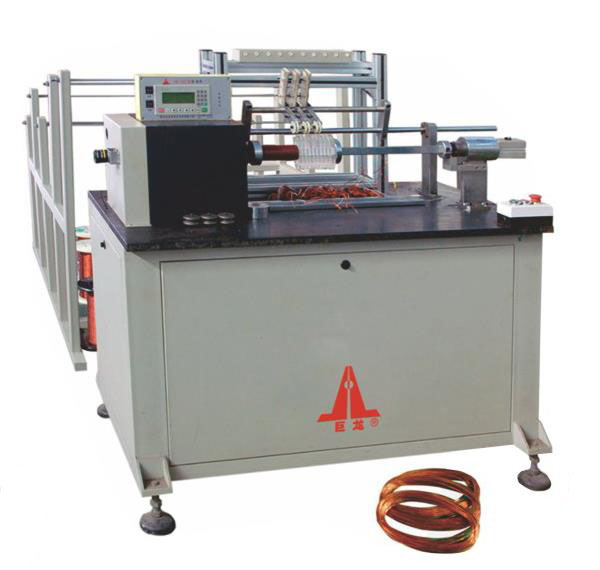
The manufacturing of stator coils for modern electric powertrains, HVAC air-handling blowers, industrial pumps, and sub-fractional servomotors requires extreme mechanical consistency and electrical integrity. In high-efficiency asynchronous and synchronous motor layouts, the slot fill factor often exceeds 78%. Achieving this density without micro-fracturing the primary dielectric insulation enamel (Polyurethane-Polyamide or Polyesterimide coatings) requires multi-axis coordinated servo motion, continuous dynamic closed-loop wire tension tracking, and non-abrasive tungsten-carbide mechanical wire guides.
Zhejiang Rilvo Automation Equipment Co., Ltd. addresses the physical challenges of localized strain relief, high winding speeds (up to 3,000 RPM), and tight geometric slot shapes through proprietary mechanical frameworks. Rather than using off-the-shelf generalized equipment, each stator coil winding machine, flyer winder, and needle winding center is designed around specific mechanical stress curves. This approach maintains uniform copper elongation across all layers, preventing thermal hot spots caused by localized wire narrowing or internal phase short-circuits under continuous operating cycles.
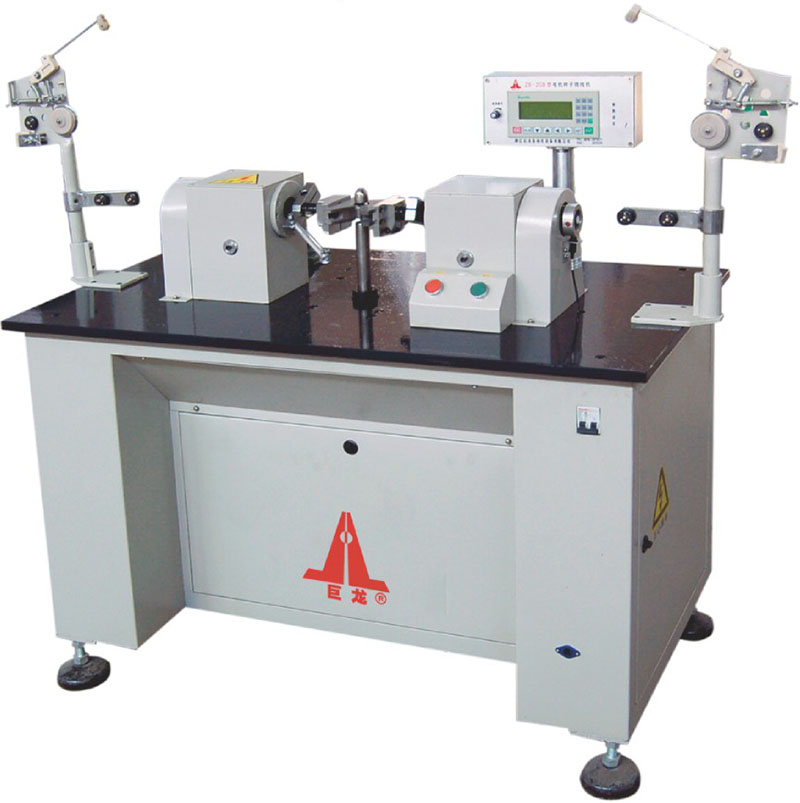
Direct electronic closed-loop feedback continuously monitors wire pay-off reels, preventing tension spikes during rapid acceleration and deceleration profiles across complex square-tooth profiles.
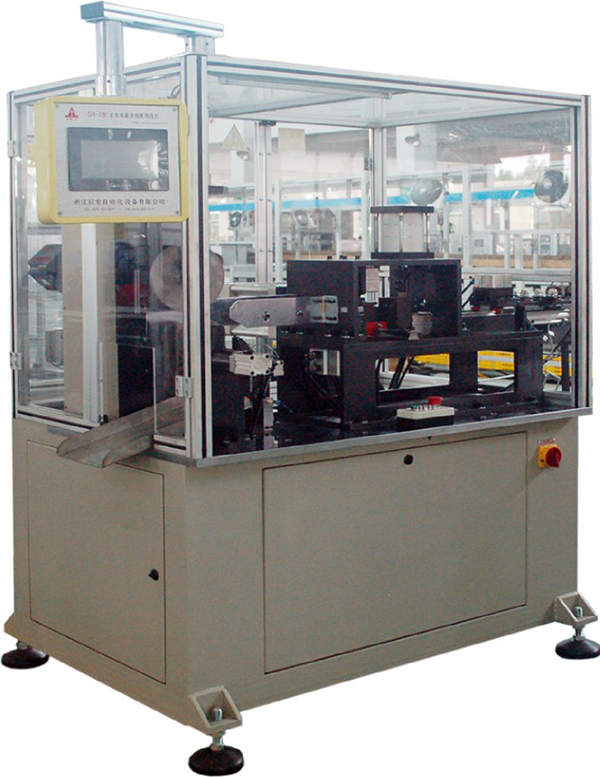
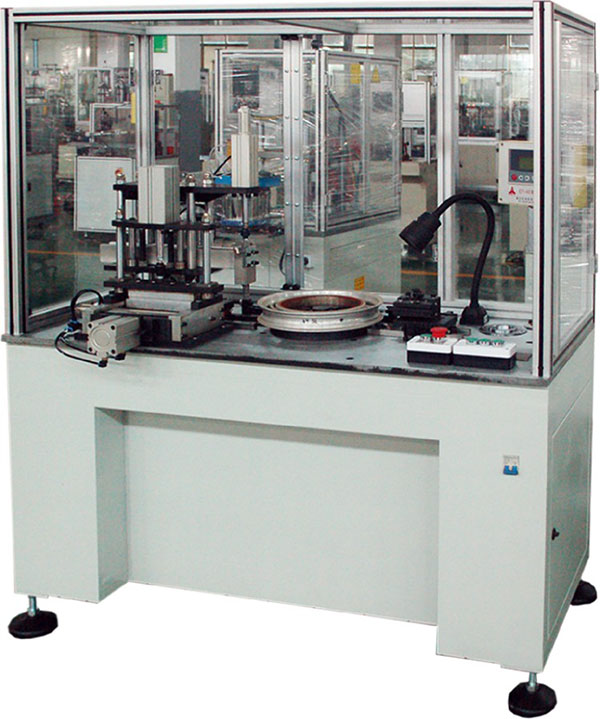
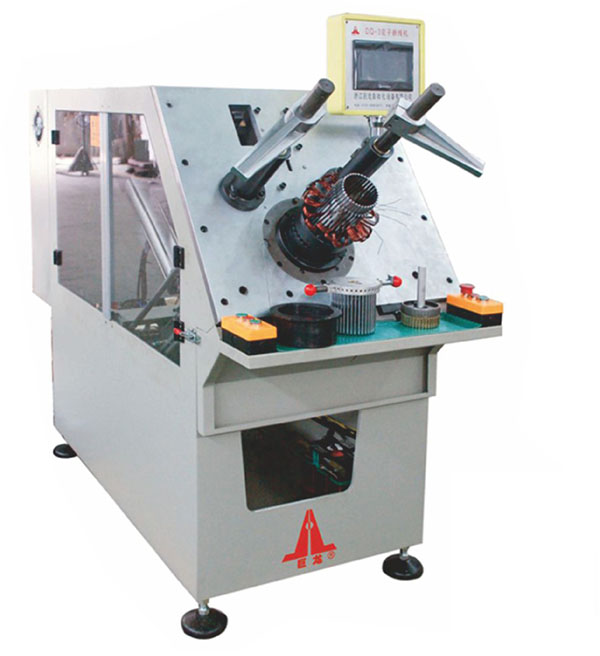
Combined coil insertion and slot wedge forming stations (like the DQ-series) seat enameled wire arrays and Nomex/DMD insulation liners in one pass, eliminating phase-cross scuffing.
Quick-release chucks and modular indexing heads allow changeovers between distinct stack heights (15mm to 160mm) and slot configurations in under 20 minutes, minimizing line downtime.
The Community of Madrid (Comunidad de Madrid) remains one of Southern Europe's primary industrial and logistics centers. Manufacturing corridors such as the Corredor del Henares (Alcalá de Henares, Torrejón de Ardoz, San Fernando), the southern manufacturing belt (Getafe, Leganés, Fuenlabrada, Pinto), and the Alcobendas technology zone host major industrial supply chains. These operations produce automotive components, industrial ventilation systems, aerospace actuators, passenger rail auxiliaries, and commercial equipment.
As Madrid's industrial centers invest heavily in automation to counter rising energy costs and maintain competitive turnaround times, automated stator winding equipment is being integrated directly into advanced manufacturing environments:
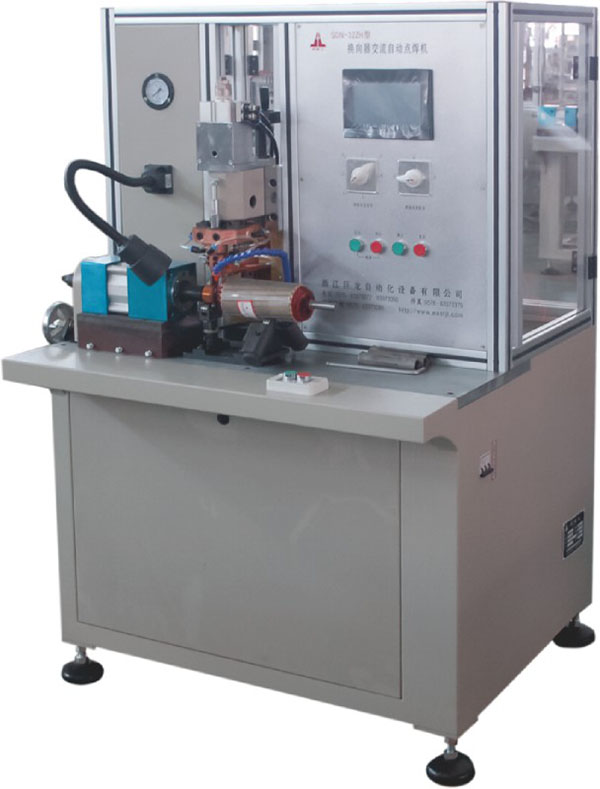
Facilities across Villaverde and Getafe rely on automatic commutator fusing (SDN-32ZH) and flat copper wire shaping (5-SC-2B) to assemble starters, high-amp alternators, and secondary vehicle accessory motors.
Producers serving Mediterranean and export infrastructure markets install high-speed induction winders to manufacture multi-speed fan blowers, booster pumps, and industrial compressor motor stators.
Aerospace suppliers centered near Getafe's specialized aerospace cluster require precision BLDC motor winding, clean magnet insertion (CT-40), and low-imbalance armatures for mission-critical flight actuation.
The shift toward clean electrification is changing equipment selection in Central Spain. With the backing of Spain's PERTE VEC (Strategic Project for the Recovery and Economic Transformation of the Electric and Connected Vehicle) and the NextGenerationEU framework, production facilities are upgrading legacy lines to build high-efficiency components locally.
Three technical trends dictate modern machine investments across Madrid:
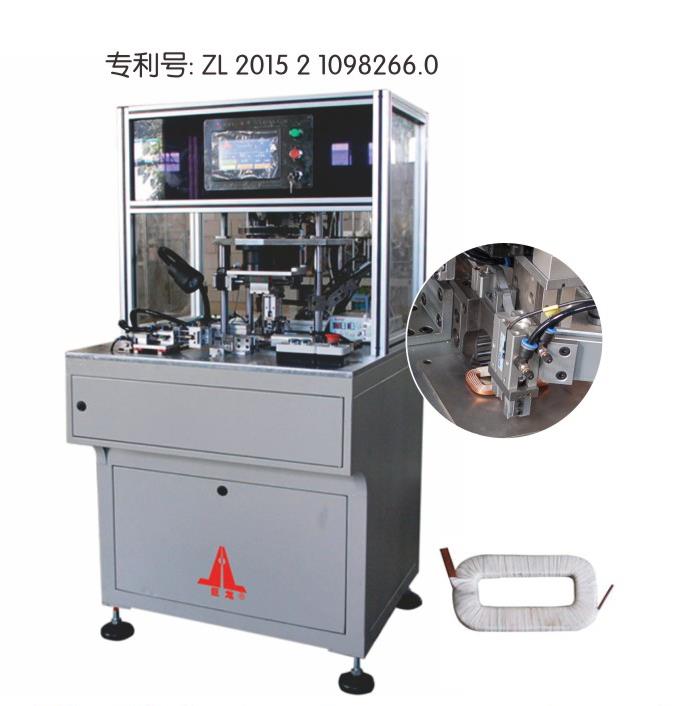
1. The Move Toward Brushless DC (BLDC) & Permanent Magnet Architectures: Industrial designers are transitioning from brushed universal motors to BLDC and permanent magnet synchronous motors (PMSM). This shift requires stator winding equipment capable of handling needle winding on inner stators, precise tooth-concentrated pole windings, and robotic magnet bar insertion systems like the CT-40 Model.
2. Adoption of Flat Copper Wire (Hairpin) Stator Designs: Compact electric drivetrains require a superior slot fill ratio and improved heat dissipation. Traditional round enameled wire is increasingly supplemented with flat rectangular copper profiles. This requires automated cold-shaping machines, precision bending stations, and stable spot welding without degrading the surrounding dielectric properties.
3. Smart Quality Tracking & In-Line Process Verification: Madrid's automated manufacturing cells demand Industry 4.0 data exchange. Machine tooling must support in-line surge testing, resistance measurement, and cycle-by-cycle logging. Rilvo's modern systems feature programmable industrial logic controllers with standardized communications outputs for centralized plant networks.
Selecting an overseas machine-building partner requires documented engineering depth, reliable after-sales service, and verified manufacturing capability. Operating from our industrial production base in the Shatianyang Development Zone of Sanmen, Taizhou, Zhejiang, Zhejiang Rilvo Automation Equipment Co., Ltd. has spent more than 27 years designing, assembling, and exporting dedicated motor manufacturing machinery.
Our engineering division includes 36 specialists and 8 senior titleholders led by an award-winning Chief Engineer. We own 17 invention and utility model patents covering advanced winding algorithms and wire-guiding mechanics.
With more than 150 machining tools on site, critical winding jigs, nozzle assemblies, and forming dies are produced internally. This keeps dimensional tolerances within ±0.015mm and eliminates third-party supply delays.
Every industrial unit shipped to Spain is built to ISO9001 quality systems and conforms to European machinery directives, including appropriate safety guards, safety light curtains, and CE-marked components.
Direct technical answers addressing the logistical, commercial, and operational questions commonly raised by Spanish engineering teams:
Yes. Every unit ordered for installation in Spain is engineered with native European industrial electrical standards: 400V AC, 3-phase, 50Hz neutral-grounded configuration. Auxiliary circuits, sensor networks, and PLC architectures utilize 24V DC for full compatibility with standard facility safety systems.
We manage standard international trade terms including FOB (via Ningbo/Shanghai), CFR, and CIF. Cargo destined for inland Madrid typically arrives through the Port of Valencia or the Port of Barcelona, proceeding by bonded rail or highway freight straight to your industrial premises or Puerto Seco de Madrid.
Prior to shipping, buyers provide sample stator laminations, slot insulation paper, and enameled copper wire. Our engineers complete full-speed trial runs, generating high-definition video documentation, tension-strain logs, and slot fill measurements. Upon arrival, we assist with remote video setup or on-site commissioning visits for multi-machine cells.
High-wear components—including wire-guiding nozzles, eyelets, cutting blades, and pneumatic gripping fingers—are standard interchangeable parts shipped with initial backup packages. Critical pneumatic cylinders, linear slides, and core electronics utilize globally recognized industrial brands, ensuring prompt local maintenance support in Madrid.
Send us your stator lamination drawings, wire diameters, slot dimensions, and production targets. Our 36-member R&D team will evaluate your process requirements and provide a detailed technical layout and equipment proposal within 24 hours.