Leveraging over 27 years of dedicated electromechanical machine engineering to empower tier-1 automotive starter, power tool, and industrial DC motor manufacturing worldwide.
From single-workstation servo winding units to complete commutator hot-staking fusing stations, each system is calibrated for minimal wire degradation and superior concentricity.








An authoritative engineering breakdown of technical requirements, architectural transitions, and total cost of ownership factors governing industrial armature automation investments.
In high-speed flyer and dual-spindle armature winding (such as the ZB-302 series), inconsistent dynamic line tension is the primary cause of internal winding shorts and micro-cracking in the magnet wire coating. Modern procurement teams must specify closed-loop servo magnetic braking rather than mechanical friction pads to maintain micro-gram tension consistency across acceleration, deceleration, and high-speed hook indexation stages.
Achieving automotive-grade mechanical pull strength and electrical conductivity across copper segments requires sub-millisecond inverter energy regulation. Specialized systems like the SDZ-130GS incorporate inverter power supplies that modulate weld profiles dynamically based on electrode thermal expansion and instantaneous voltage drop, completely preventing the dangerous delamination common in Copper-Clad Aluminum (CCA) processing.
Next-generation fractional horsepower and automotive traction motors demand slot fill factors exceeding 75%. Utilizing high-speed automated coil inserting machines equipped with tungsten carbide push blades guarantees that dense copper bundles are guided gently past lamination teeth into the bottom of the slot cavity while inserting folded slot insulation paper in a synchronized mechanical pass.
| Process Stage | Conventional Machinery Benchmark | Next-Gen Rilvo Automation Standard | Procurement Quality Metric |
|---|---|---|---|
| Armature Core Slot Insulation | Pneumatic indexing; mechanical paper cut; ±0.5mm edge variance | CNC servo-fed paper profiling, automated cuffing & insertion | Dielectric breakdown voltage > 2500V; zero skewed cuffs |
| Rotor Winding (Flyer / Spindle) | Single cam drive; passive friction tensioners; 2200 RPM max | Multi-axis electronic cam servo; dynamic magnetic braking; 3500+ RPM | Winding resistance balance < 0.5% deviation across opposite coils |
| Lead Wire End Twisting | Manual or semi-automatic pneumatics with high operator variance | Servo-driven dual-axis rotary chuck with programmable twist count (SN-1S) | Zero wire necking; repeatable hook engagement angle ±0.2° |
| Commutator Fusing / Hot-Staking | AC tap transformer; time-based trigger; manual spark inspection | Medium Frequency Inverter (SDZ series); closed-loop dynamic resistance | Hook deformation tolerance < 0.03mm; zero copper splash; 100% metallurgical bond |
| Commutator Turning & Undercutting | Stand-alone mechanical lathe with secondary mica saw workstation | Integrated diamond tooling turning + optical CCD vision positioning | Total Indicated Runout (TIR) < 0.003mm; mica undercut depth ±0.02mm |
Anticipate critical design evolutions across electric vehicle subsystems, brushless upgrades, and smart factory integrations to future-proof capital expenditures.
While traditional round enameled wire remains standard for micro-motors, heavy-duty automotive starter systems and mild-hybrid starters/alternators are rapidly shifting toward rectangular copper bars. Machines such as the CJL-7 and 5-SC-2B are leading this shift, providing cold-forming precision that minimizes cross-sectional deformation and optimizes copper fill factors up to 85%.
Modern production facilities can no longer afford offline destructive testing. High-speed optical systems mounted directly to winding heads and fusing electrodes now inspect commutator hook placement, wire crossover alignment, and weld nugget thermal signatures at line speeds exceeding 60 units per hour, feeding real-time statistical process control (SPC) data to factory MES architectures.
High-mix low-volume (HMLV) manufacturing demands that armature lines retool within 15 to 30 minutes. Sourcing trends prioritize standardized fixture quick-release mechanisms, digital servo parameter recipe storage on intuitive touchscreens, and universally adaptable collet sets to eliminate extensive mechanical tear-downs when changing shaft diameters or stack heights.
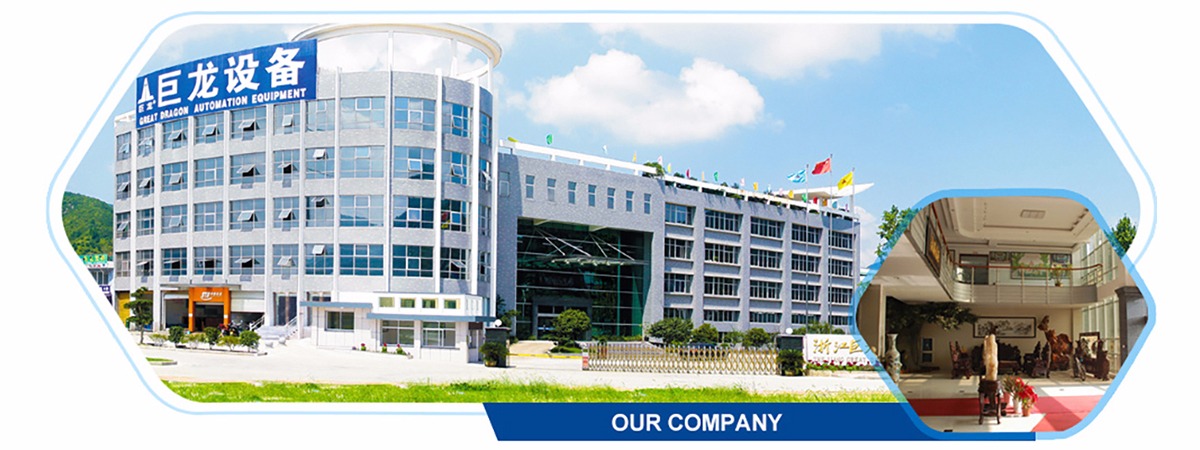
Founded in 1998 in the Shatianyang Development Zone of Sanmen, Zhejiang, Rilvo Automation has grown from a specialized tooling workshop into a vertically integrated manufacturer occupying 60,000 m² of modern industrial space. We combine in-house precision machining, custom electrical engineering, and end-to-end process validation under an ISO9001 certified quality infrastructure.



Direct technical clarifications on machine configuration, tooling lead times, and post-delivery acceptance criteria.


