High-speed, multi-axis winding systems, precision slot insulation machinery, and robotic magnetic insertion units calibrated to the highest tolerance requirements.
As one of the core manufacturing epicenters of the Keihin Industrial Area in Kanagawa Prefecture, Kawasaki stands globally recognized for ultra-precision engineering, robotic actuators, high-efficiency automotive peripherals, and micromobility assemblies. In an industrial landscape dominated by tier-one electromechanical integrators and specialized subcontracting machine shops, the demand for sophisticated, defect-free micro motor manufacturing equipment has reached unprecedented levels.
Building miniature permanent magnet DC (PMDC) systems, brushless DC (BLDC) motors, precision stepper units, and flat-wire armatures requires machinery capable of sub-micron positional repeatability, uniform slot tension control, and consistent thermal bonding. Standard winding and manual assembly configurations are no longer capable of meeting the stringent low-cogging-torque, low electrical noise, and high power-density profiles demanded by Kawasaki's advanced mechatronics plants.
Modern micro motor fabrication requires a synchronized workflow from core stamping through final trickle impregnation. Our product line brings integrated kinematic synchronization to every stage of motor sub-assembly:
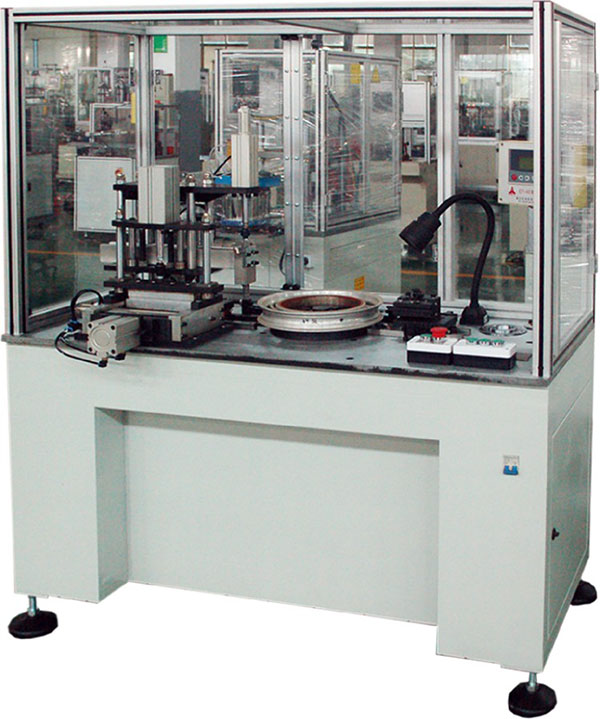
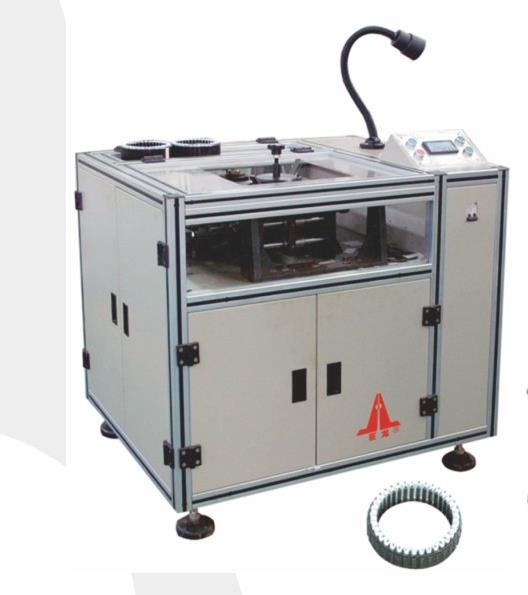
1. Stator Lamination & Slot Insulation: Utilizing equipment such as our DFC-1 Slot Insulation Machine, micro-stators benefit from automated servo feeding, precision creasing, cutting, and localized insertion of insulating papers (DMD, Nomex, or polyimide films). This eliminates dielectric breakdowns caused by edge burrs or unseated insulation barriers, even in complex narrow-slot miniature motor topologies.
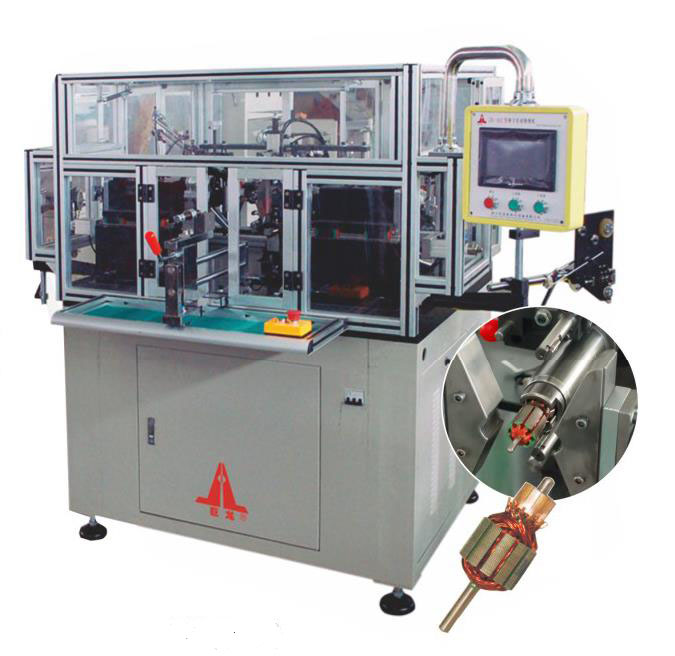
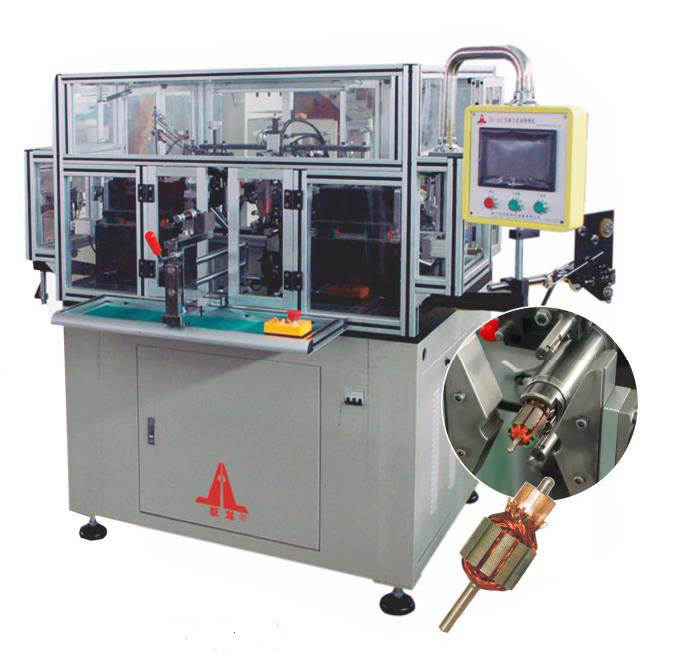
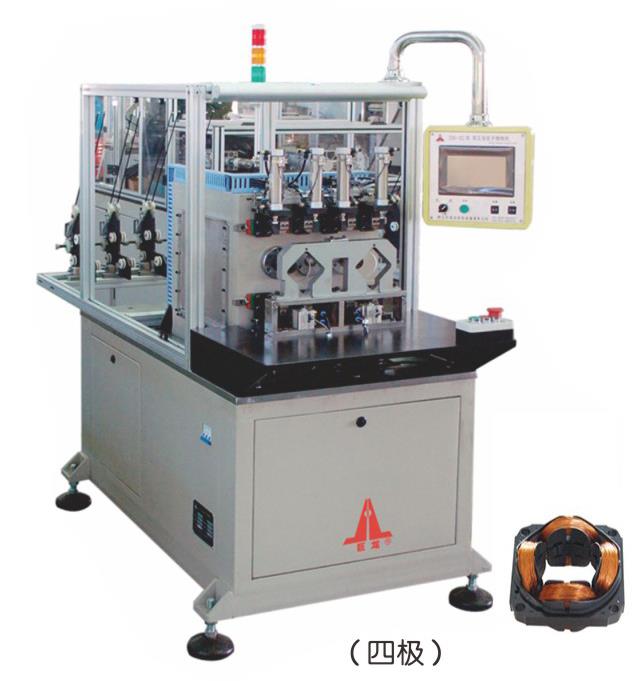
2. High-Tension Micro Winding & Coil Embedding: The winding of micro-rotors and slotless/slotted stators demands precision multi-axis tension governors. Systems like the ZB-302 Micro Armature Winding Unit and XB-1GZ Coil Winding Machine employ programmable closed-loop servo tensioners that prevent insulation stretching, minimize elongation, and guarantee uniform coil packaging within ultra-confined lamination spaces.
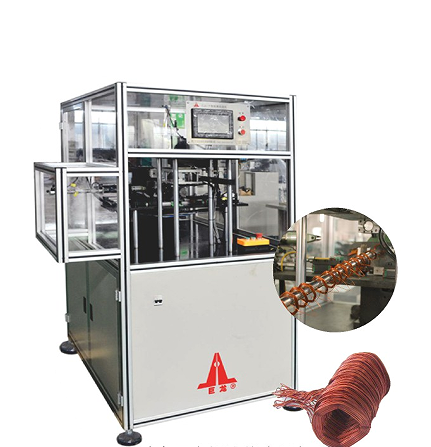
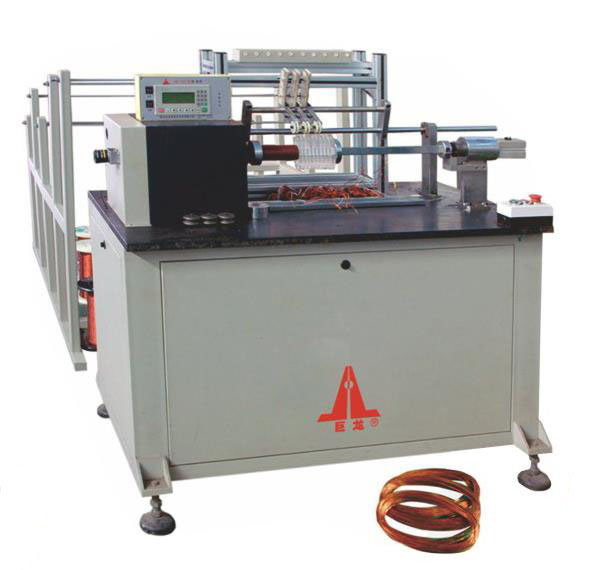
3. Hairpin & Flat Wire Processing: Addressing modern requirements for high space-factor motors, our CJL-7 Flat Motor Coil Winding Machine effortlessly executes complex cross-sectional forming, hairpin shaping, and automated stacking without mechanical stress concentration on critical dielectric coatings.
4. Automated Magnet Dispensing, Insertion & Bonding: Brushless DC motor rotors depend on balanced magnetic flux distribution. The CT-40 Automatic Brushless Motor Magnet Bar Insertion and Gluing Machine applies adhesive with nanoliter precision, followed by automated bar insertion and pneumatic clamping to ensure zero radial deviation and complete prevention of magnet run-out during high-RPM operation.
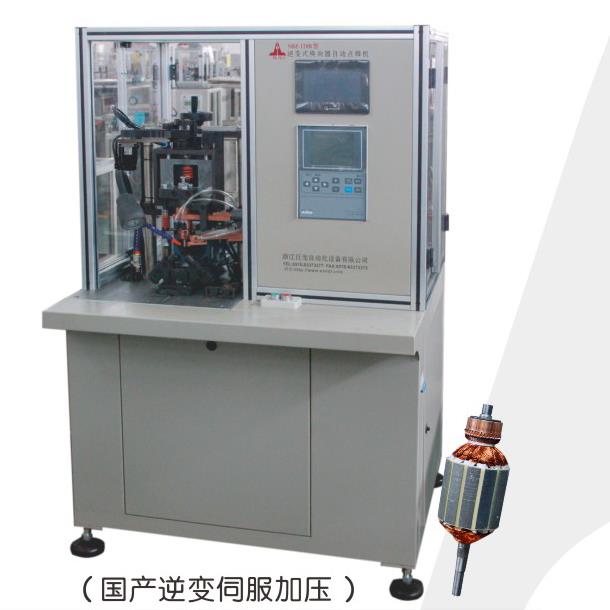
5. Micro-Inverter Resistance Welding: When fusing fine copper or copper-clad aluminum (CCA) leads to commutator tangs, conventional welding causes embrittlement or partial thermal vaporization. Our SDZ-130GS Inverter Controller Spot Welder applies programmable dual-pulse current profiles and microsecond displacement monitoring, producing consistent molecular bonding with negligible thermal heat-affected zones (HAZ).
Engineered to align directly with the high-reliability specifications established by Kanagawa's premier manufacturing and design entities.
Providing precision winding and magnet insertion tooling for compact frameless torque motors and harmonic joint actuators deployed in next-generation robotic arms manufactured along the Kawasaki coastal zone.
Supplying fully automated armature production lines for electronic throttle controls, micro-braking actuators, active suspension motors, and automated HVAC flaps for tier-1 automotive parts manufacturers.
High-speed coil winding systems tailored to produce miniature stepper motors, optical scanner drives, and cleanroom-compliant linear servo actuators deployed in Kanagawa's semiconductor assembly equipment.
Configured micro-winding platforms designed specifically for dental surgical handpieces, micropump drives, endoscopy positioning actuators, and diagnostic centrifuge brushless assemblies.
Equipping advanced production cells with automated slot-wedge inserting and wave coil winding to deliver high-torque, ultra-lightweight hub motors and aerial propulsion units.
The micro motor manufacturing sector across Japan, particularly within Tokyo Bay industrial networks, is shifting rapidly toward carbon neutrality, micro-miniaturization, and uncrewed line operations. Procurement officers and plant development engineers in Kawasaki are adapting their capital expenditure toward automated systems that meet three distinct industry transitions:
1. Shift Toward Hairpin & High-Density Flat Copper Wire: To reduce copper loss and dramatically elevate efficiency, motors are migrating from traditional round enameled wire to flat conductor profiles. This conversion requires automated machinery capable of multi-dimensional CNC bending without localized work hardening or microscopic insulation fracturing.
2. Edge Data Monitoring and Inline Defect Trapping: With stringent zero-defect regimes in domestic precision markets, Japanese manufacturers mandate inline quality inspection. Our modern equipment suites feature integrated sensor matrices tracking real-time wire tension, welding voltage-current curves, visual AI glue trajectory checks, and torque response per winding pass, instantly flagging non-conforming items.
3. Compact Modular Floorprints for Smart Cell Manufacturing: As plant space along coastal industrial zones command top-tier capital investments, our systems are engineered with space-optimized, modular footprints that seamlessly interface with automated guided vehicles (AGVs) and standard robotic handling cells.
Direct manufacturer capabilities, internal design ownership, and decades of electromechanical engineering mastery.
All machinery is built under certified ISO9001 quality management regimens, ensuring mechanical durability, standardized safety compliance, and comprehensive CE/3C electrical conformity.
Led by senior technical fellows and model innovators recognized by national bodies, our engineering wing produces custom tooling, complex kinematic software, and custom tooling layouts within days.
We do not simply ship off-the-shelf catalog machinery; we analyze customer stator drawings, slot geometry, and duty cycles to machine bespoke tooling and fixtures in-house.
With over 150 dedicated machine tools across our 60,000 m² campus, every critical guide, spindle, and fixture is precision machined on site to maintain extreme geometric runout tolerances.
Full support for international trade terms (FOB, CFR, CIF, EXW) coupled with overseas commissioning, full English/Japanese parameter interfaces, and guaranteed rapid wear-part fulfillment.
Direct answers addressing technical configuration, sample verification, export delivery, and maintenance support.
Yes. All electrical systems, power supplies, servo transformers, and control logic circuits can be tailored directly for the Japanese grid (200V / 220V, switchable 50Hz for Eastern Japan including Kawasaki/Tokyo, or 60Hz for Western Japan). Control interfaces are equipped with multilingual touchscreens supporting both Japanese and English operational modes.
We execute rigorous Factory Acceptance Testing (FAT) using the buyer's actual stamped stator laminations, rotor shafts, copper wire, and insulation materials. High-resolution multi-angle video logs, tension variance reports, and CMM dimension verification data are provided for sign-off prior to crating and export dispatch.
Standard automated machines typically complete assembly and testing within 30 to 45 business days. Full turnkey production lines or complex custom hairpin bending units requiring bespoke mold tooling generally require 60 to 75 days, complete with initial process qualification.
Our machines utilize globally recognized industrial standard components (including Omron, Mitsubishi, SMC, and Schneider electrics), ensuring rapid off-the-shelf availability. In addition, we deliver comprehensive wear-part kits (nozzles, wire guides, cutters, welding electrodes) alongside every machine, supported by our remote engineering diagnostics team.
Our minimum order quantity is a single set. We regularly dispatch from Ningbo Port (located within 2 hours of our production base) directly to Yokohama or Tokyo ports via express container vessels, offering transit timelines of only 3 to 5 days on the water.